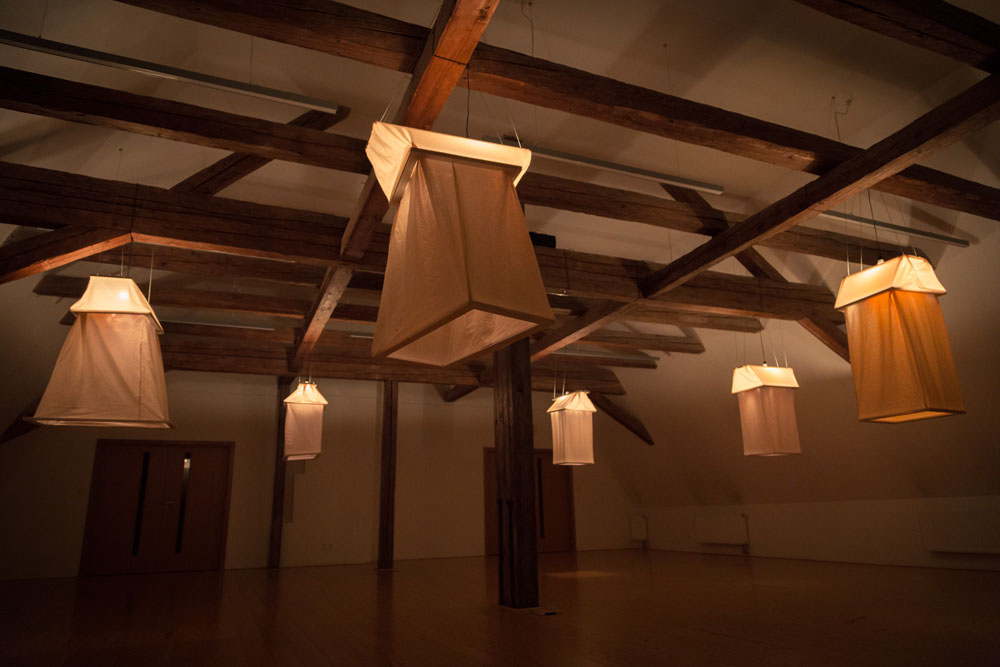
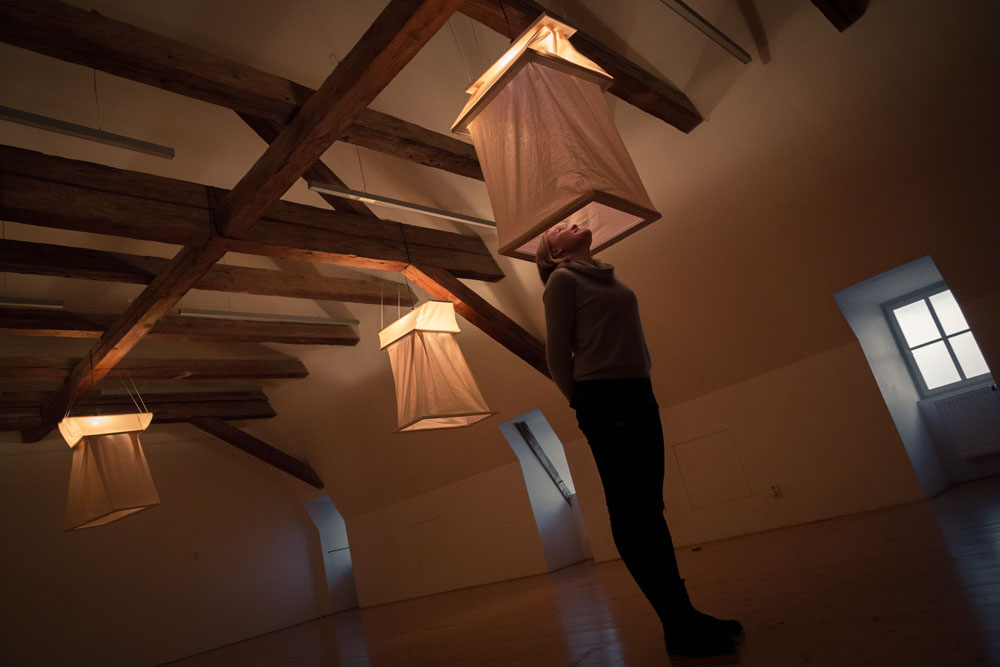
Sediments Collection
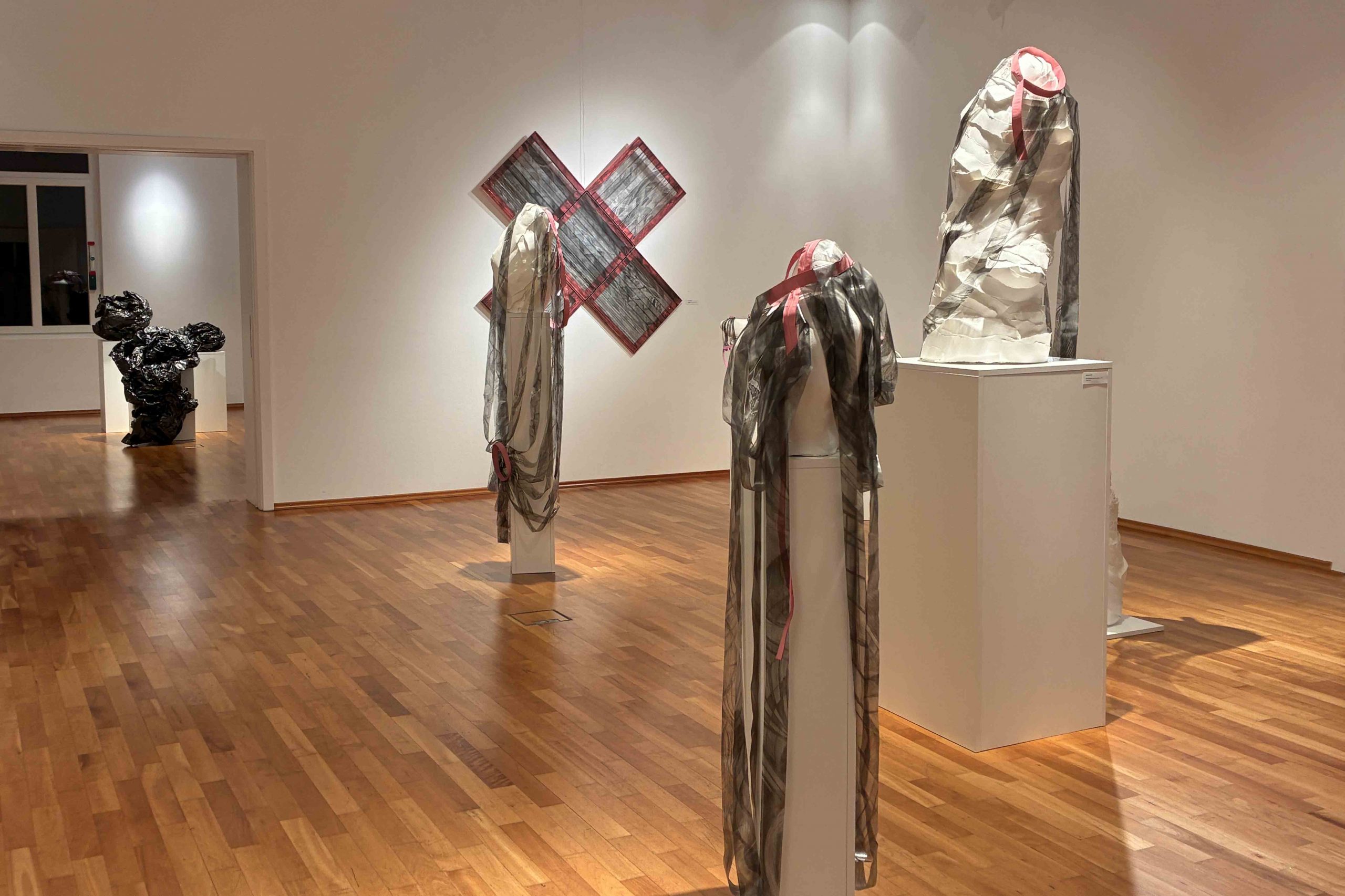
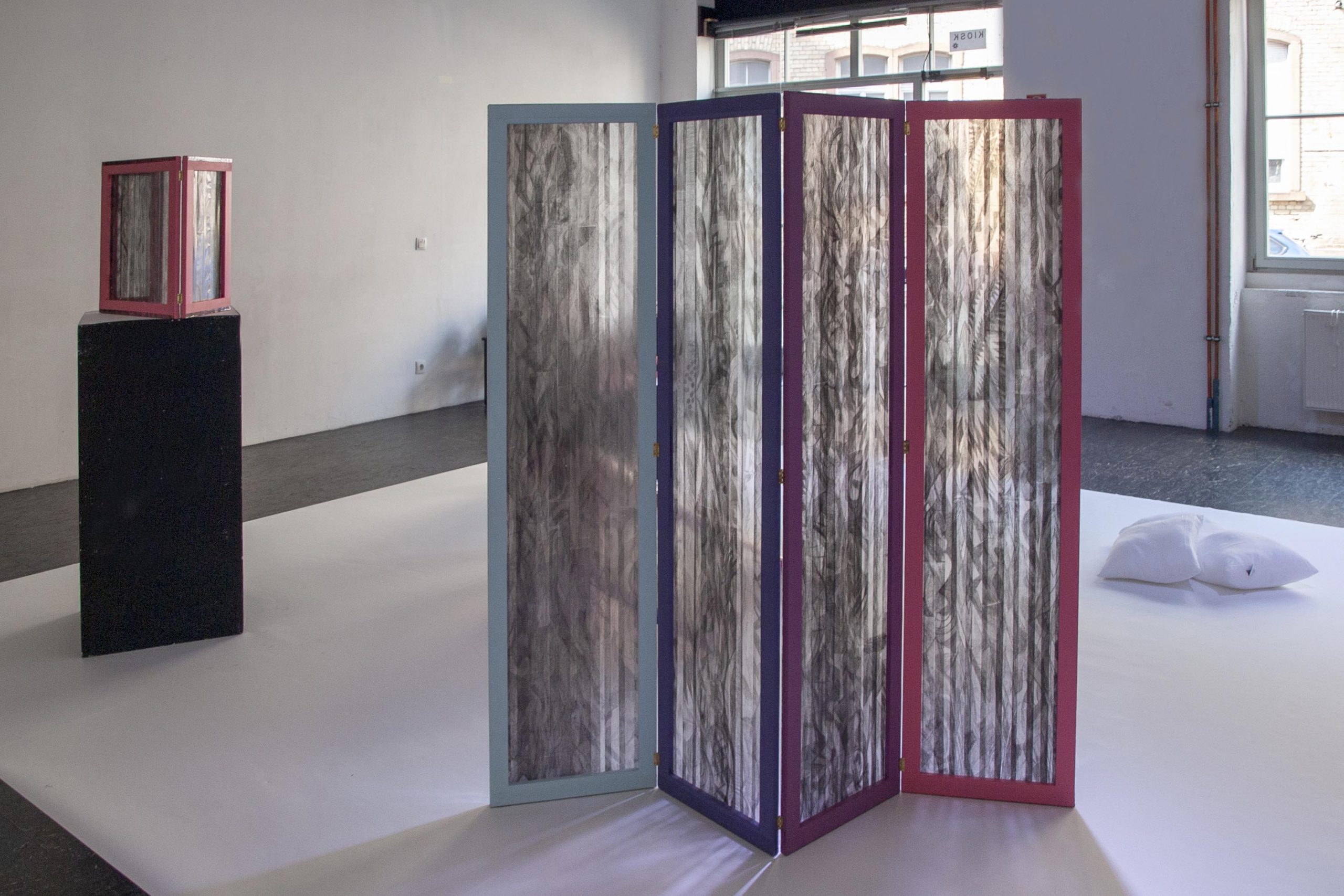
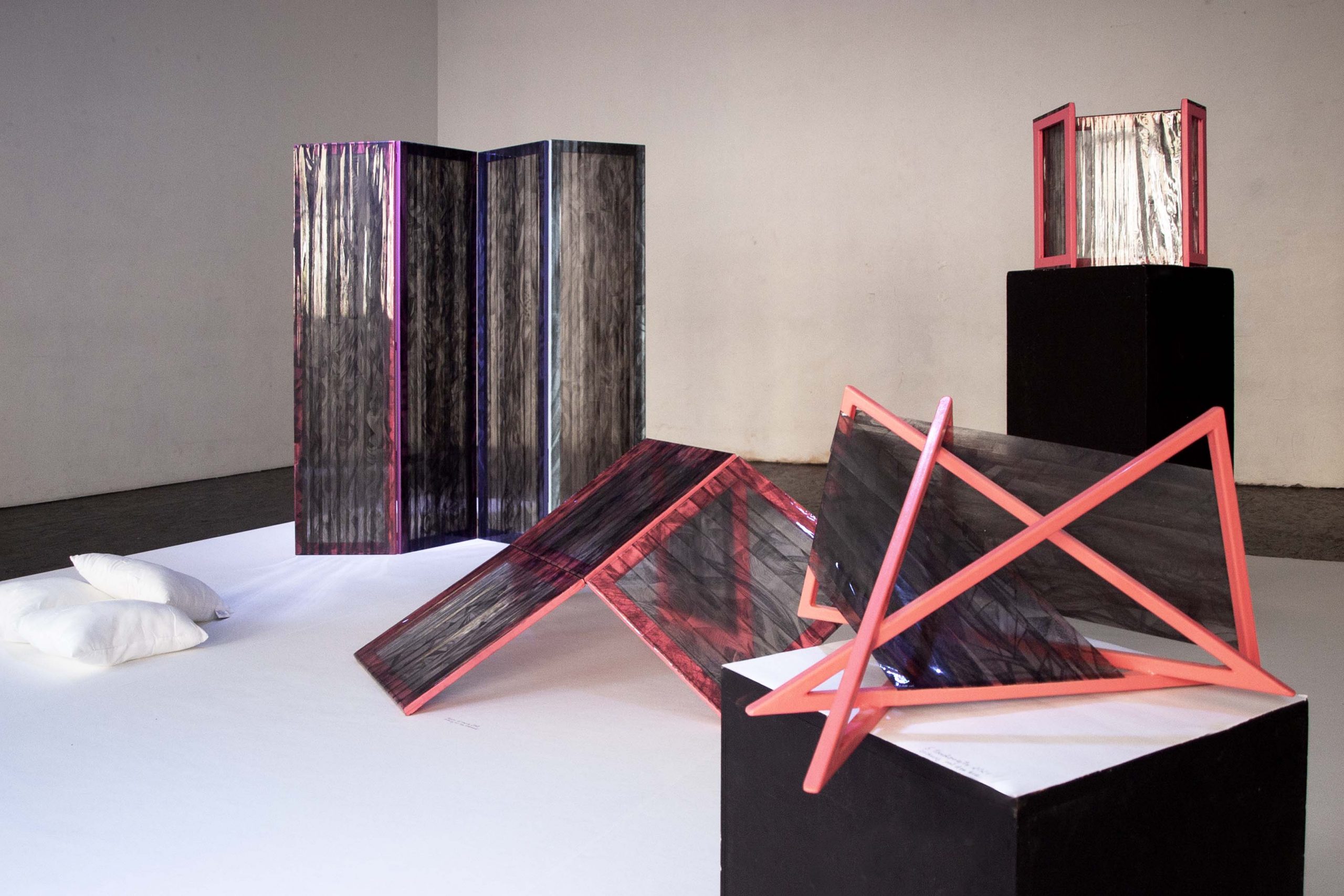
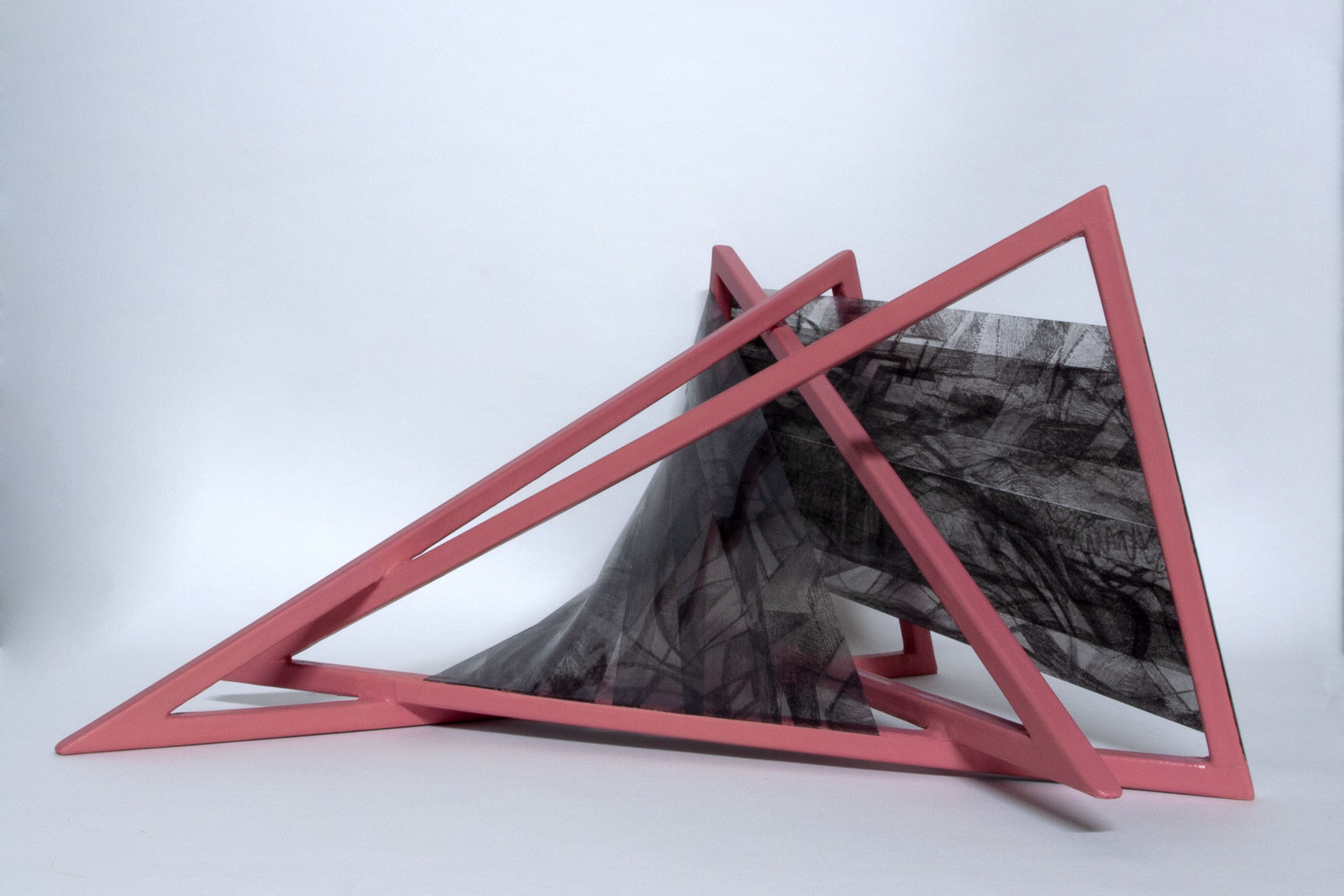
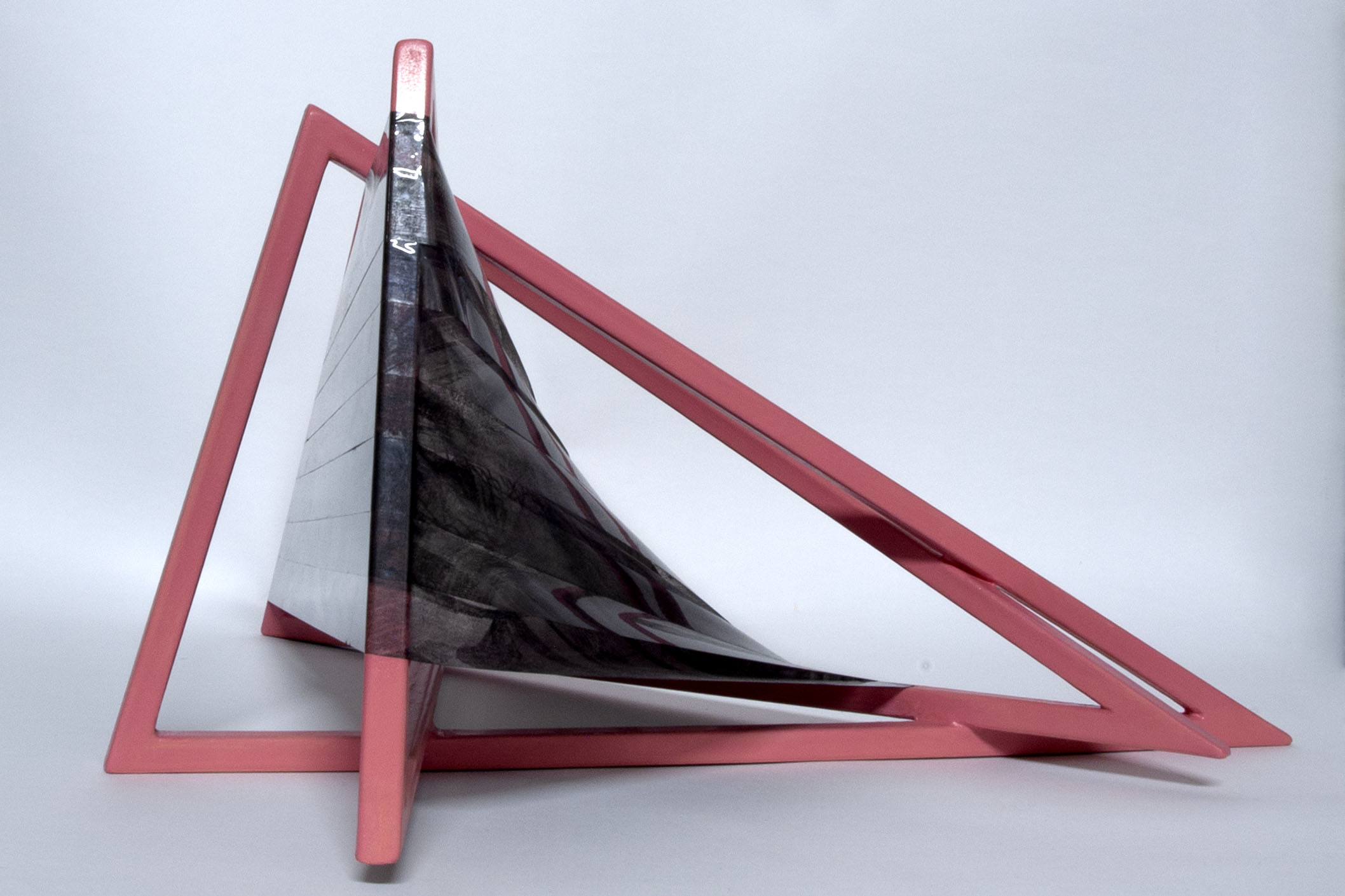
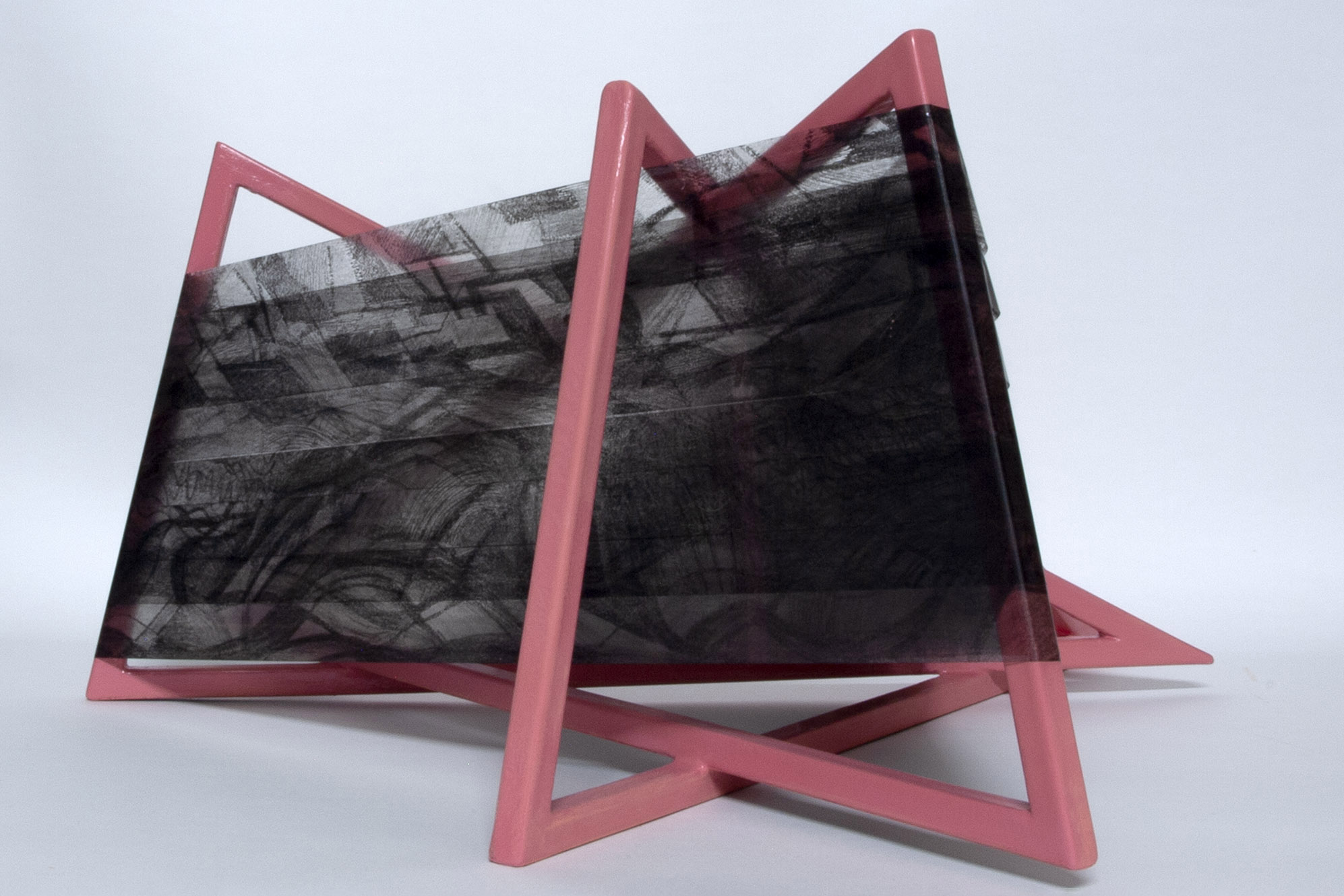
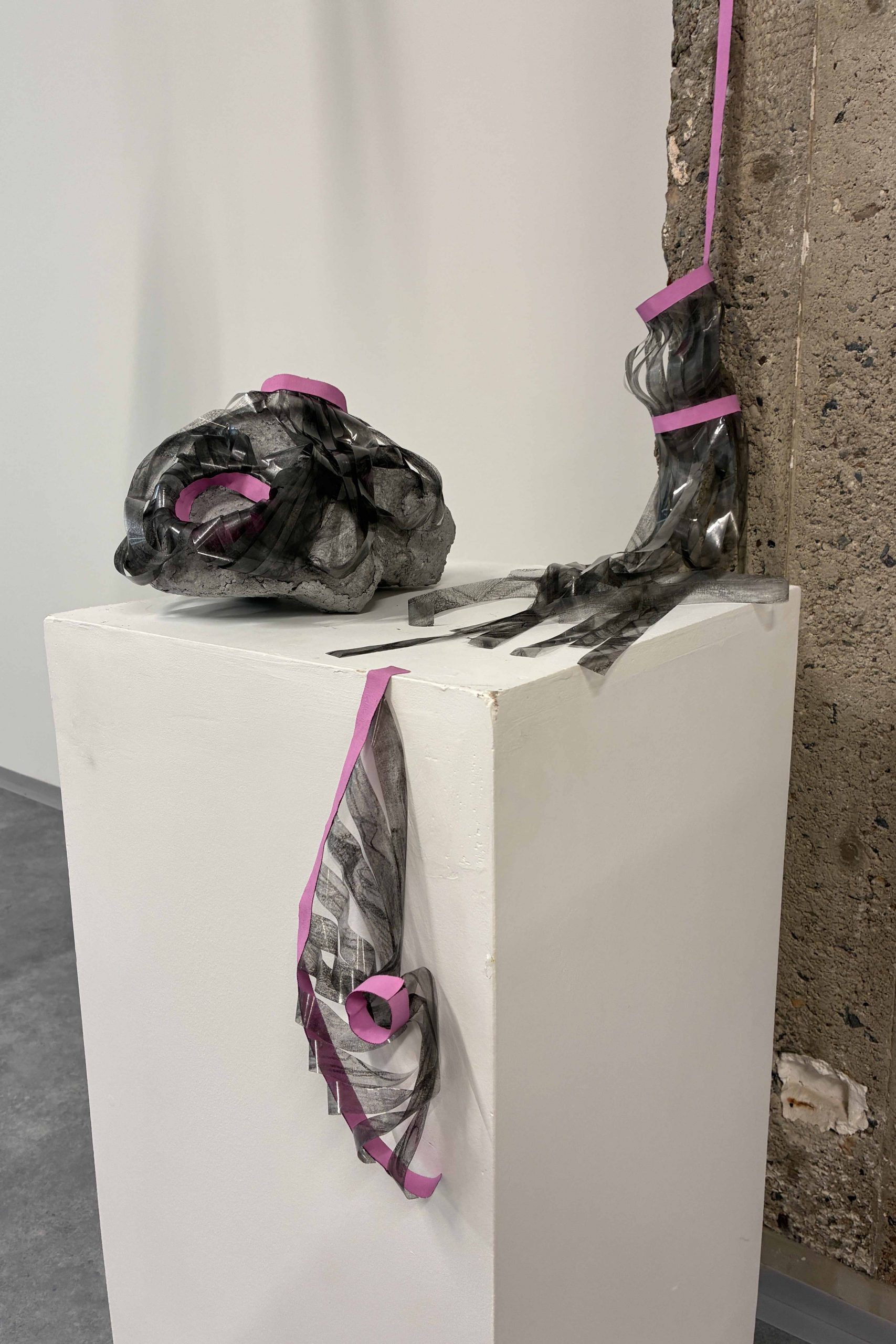
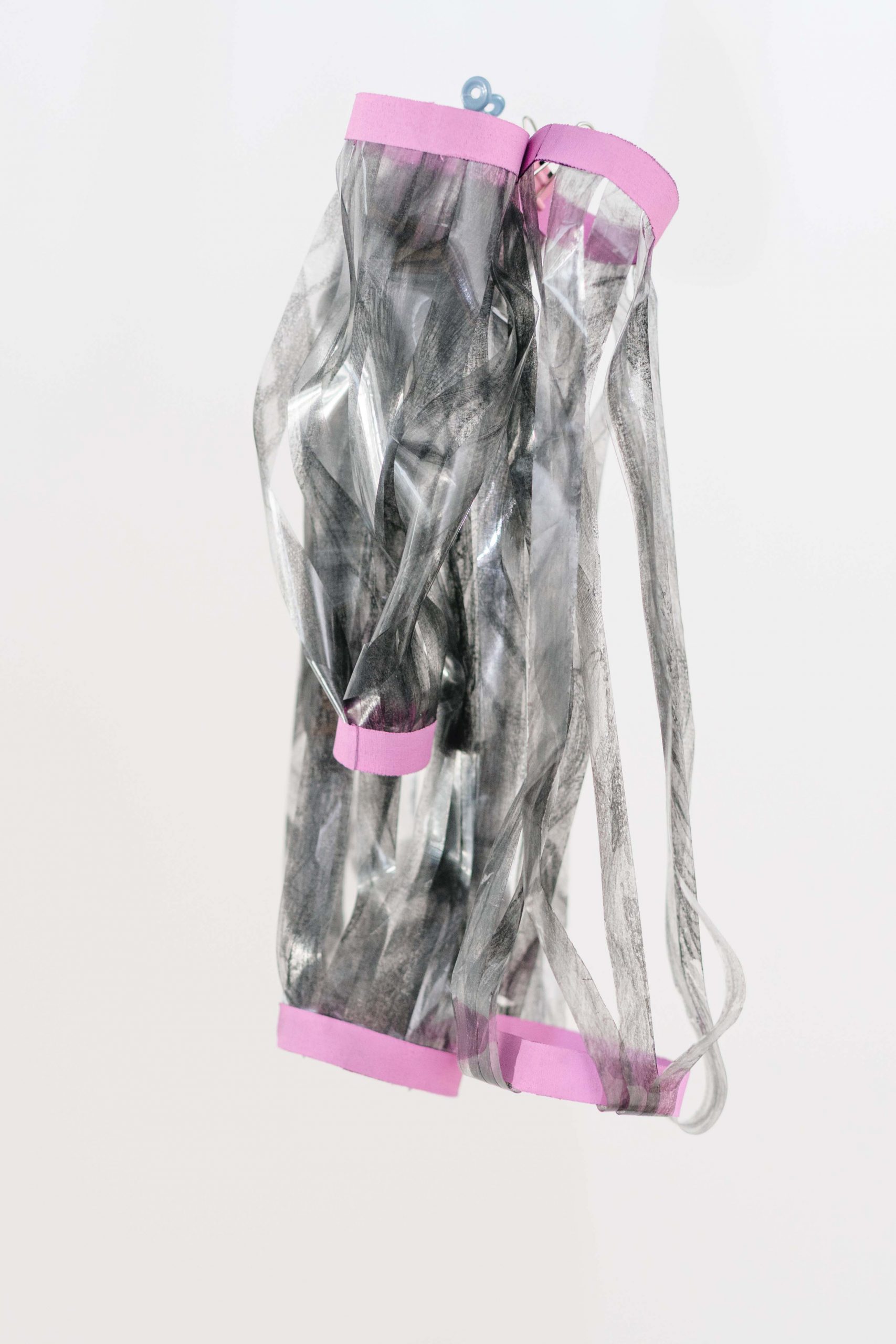
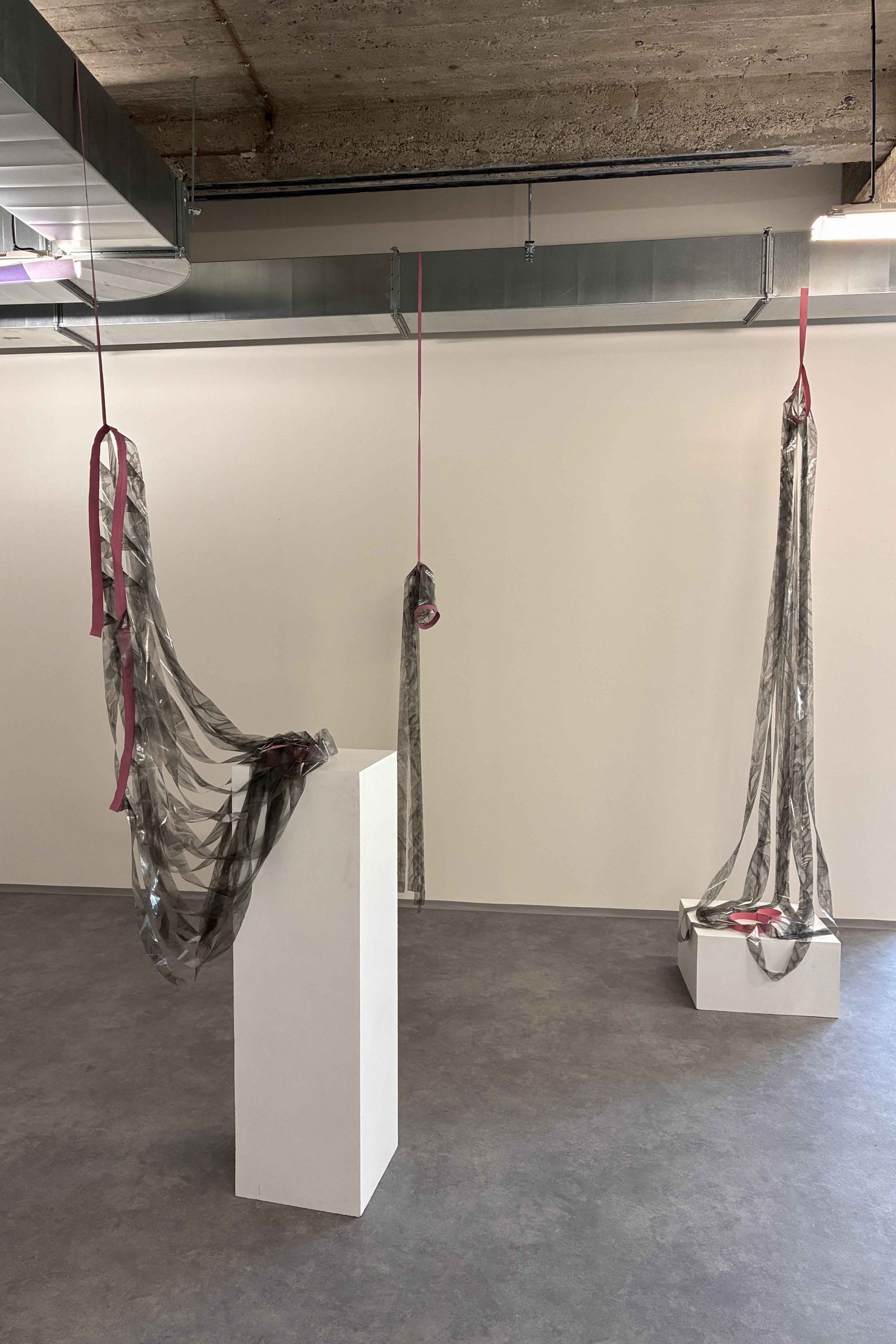
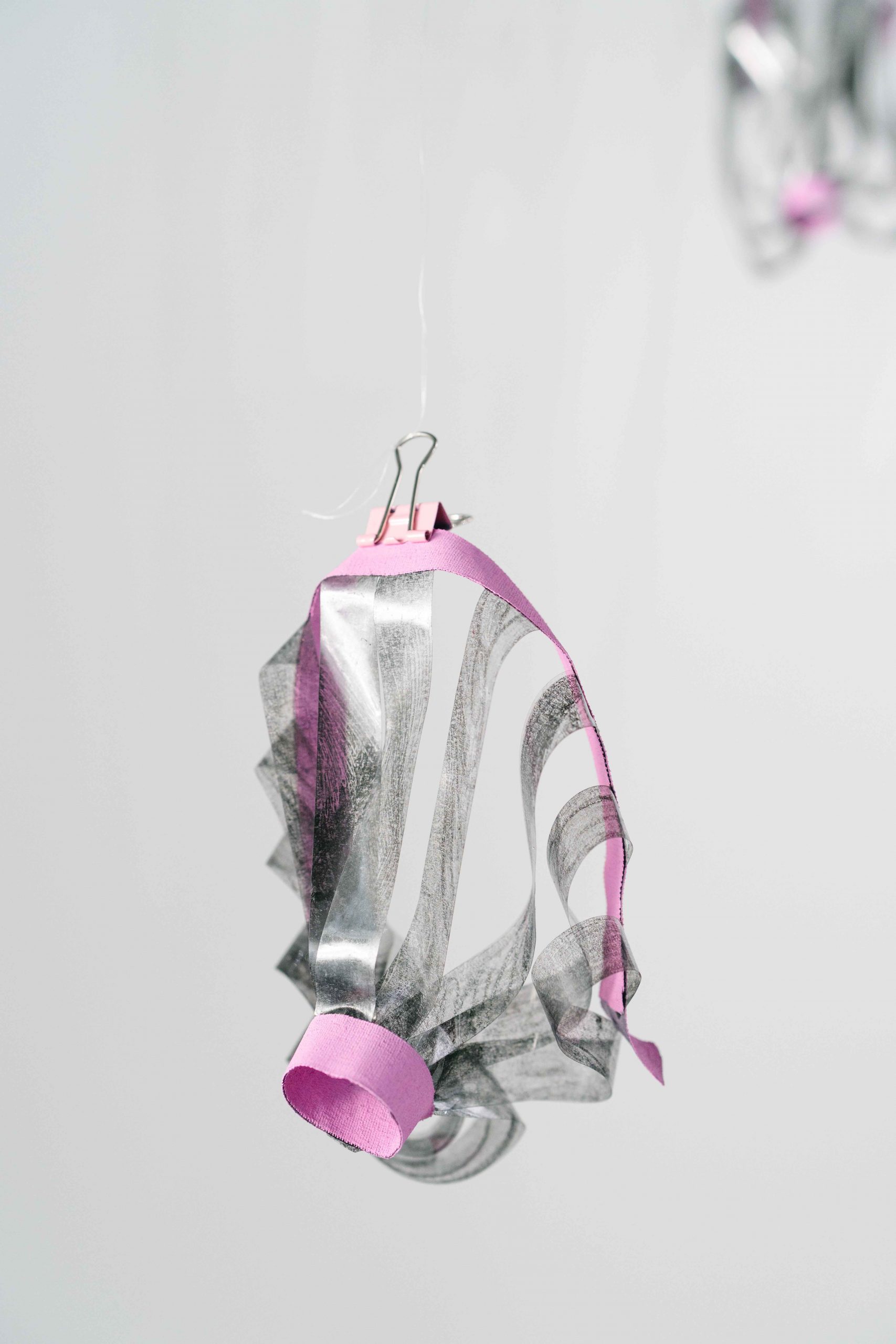
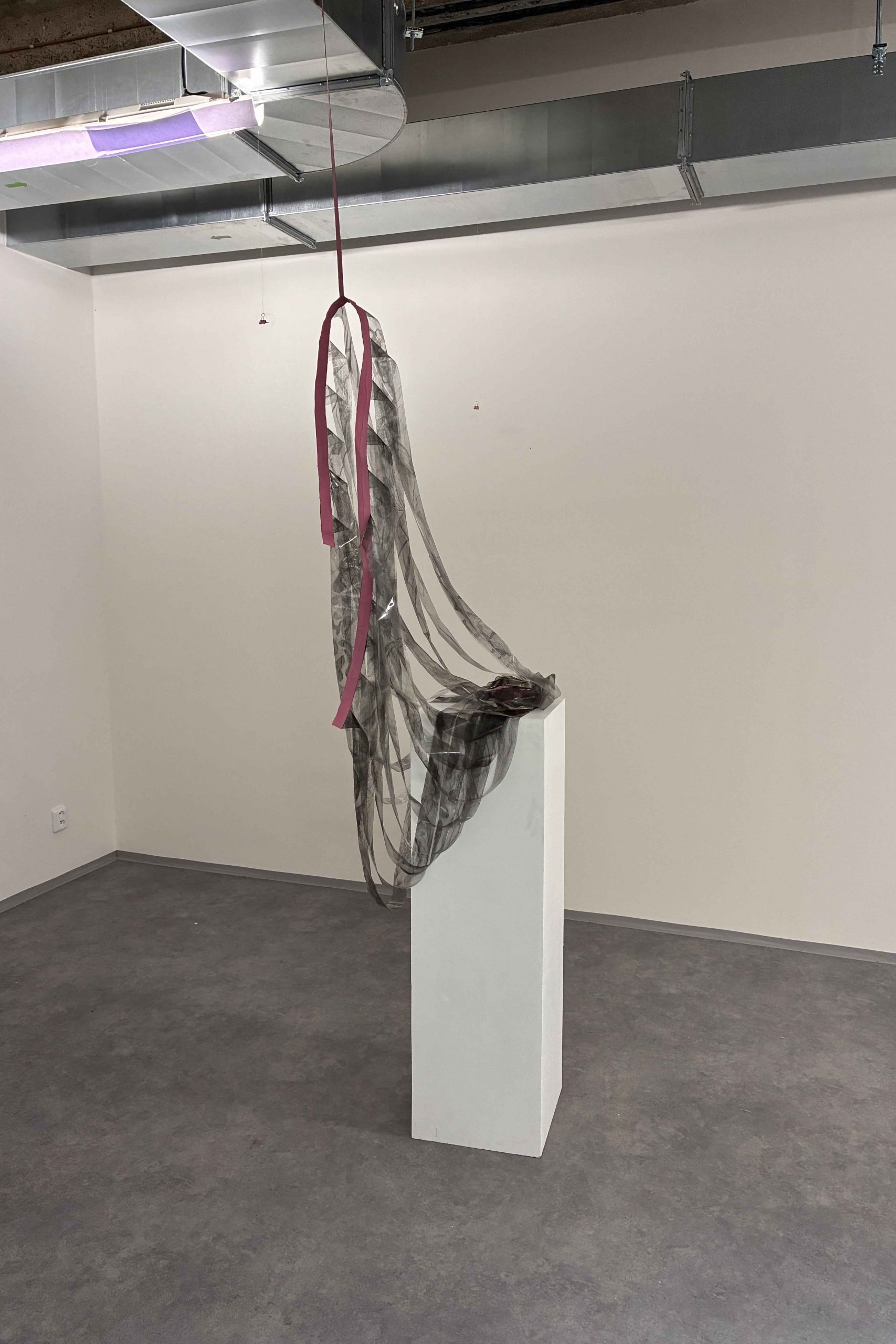
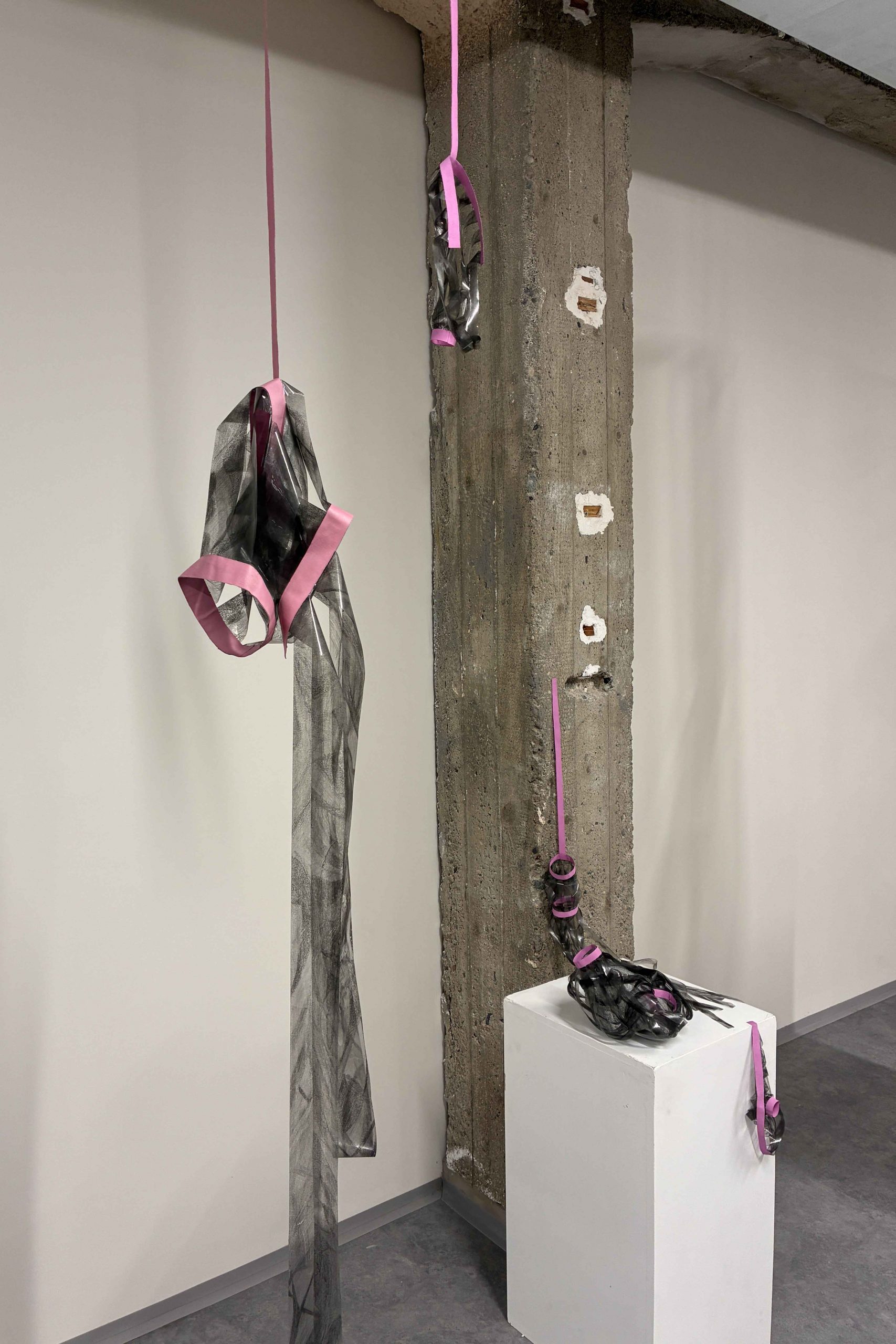
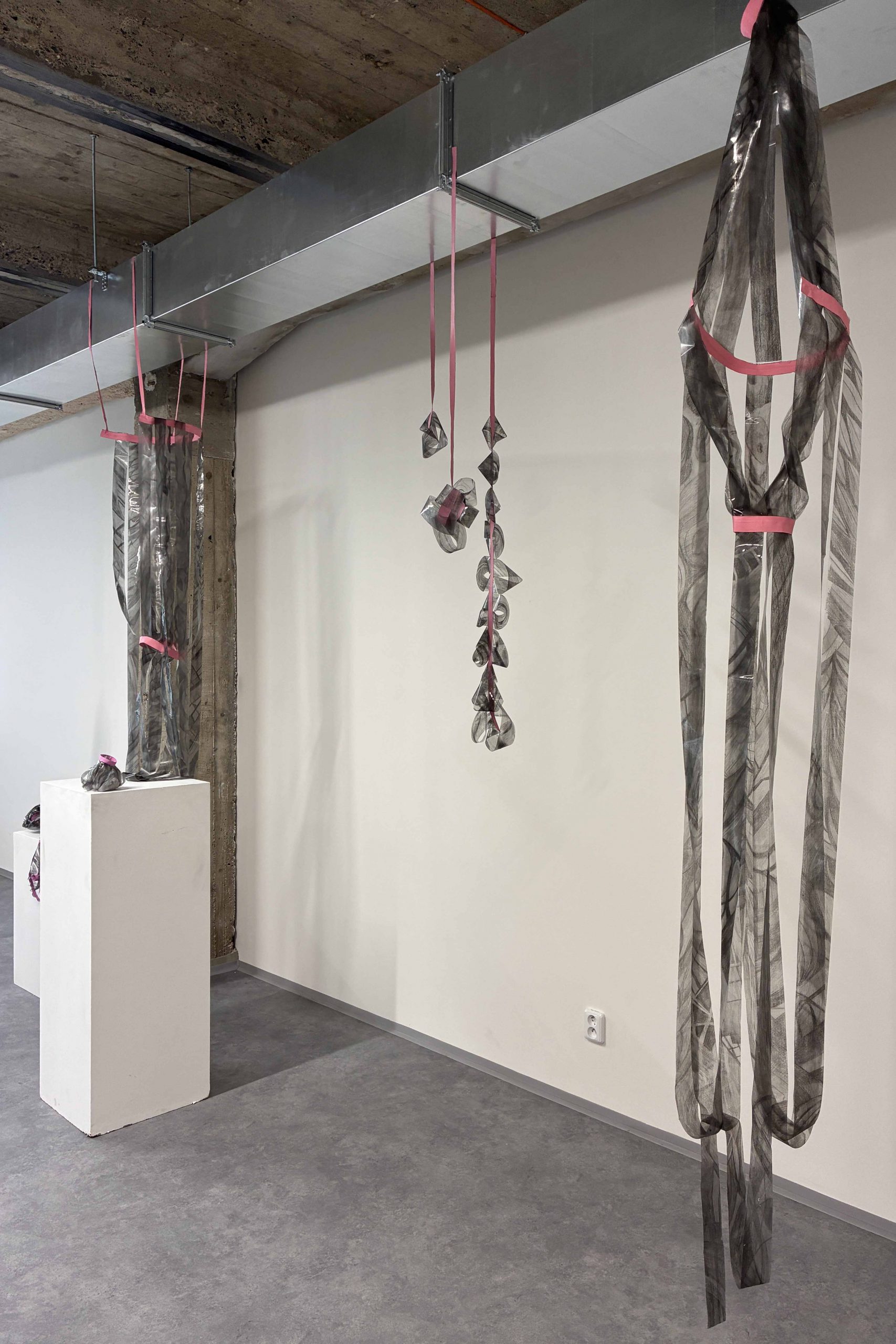
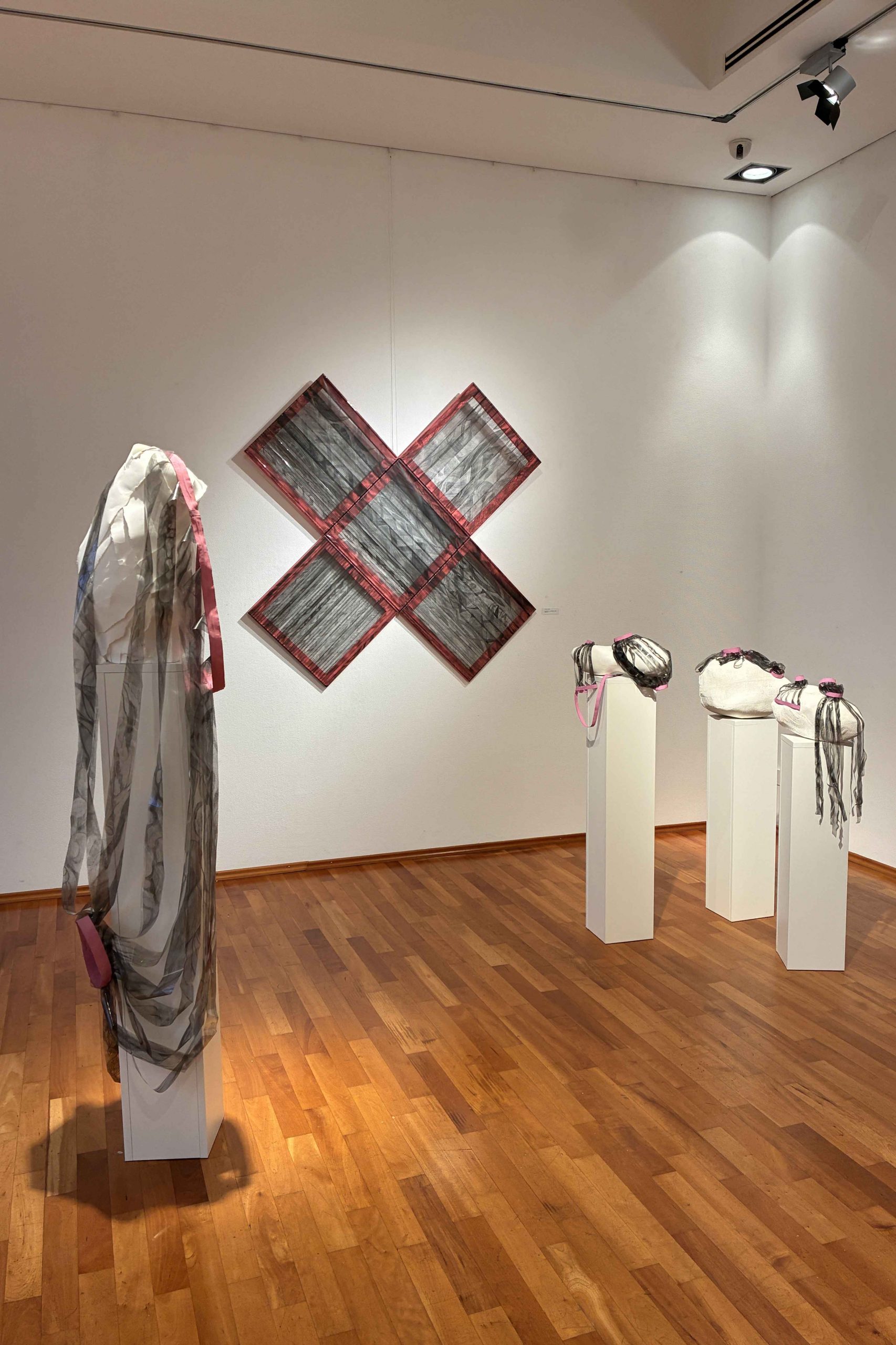
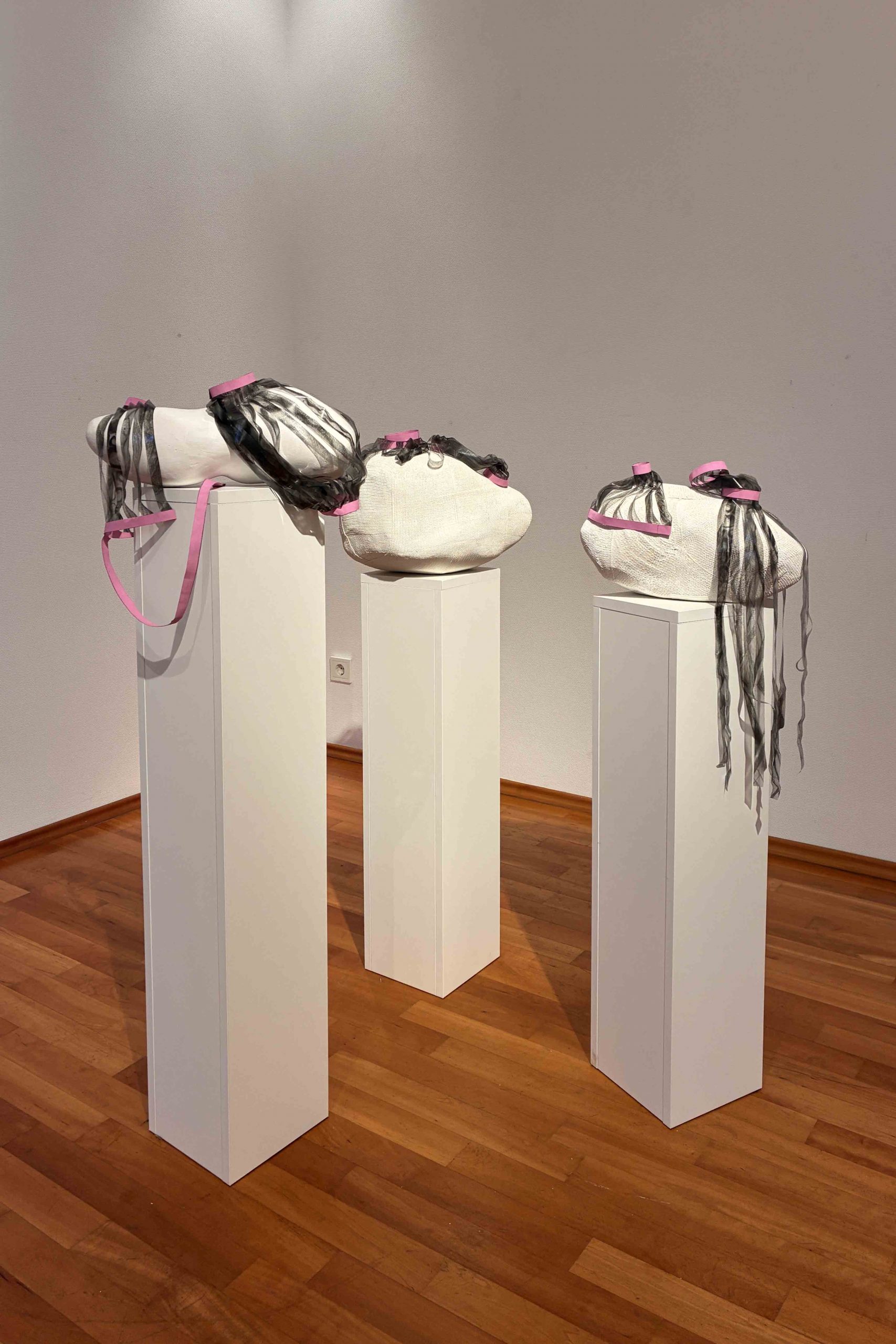
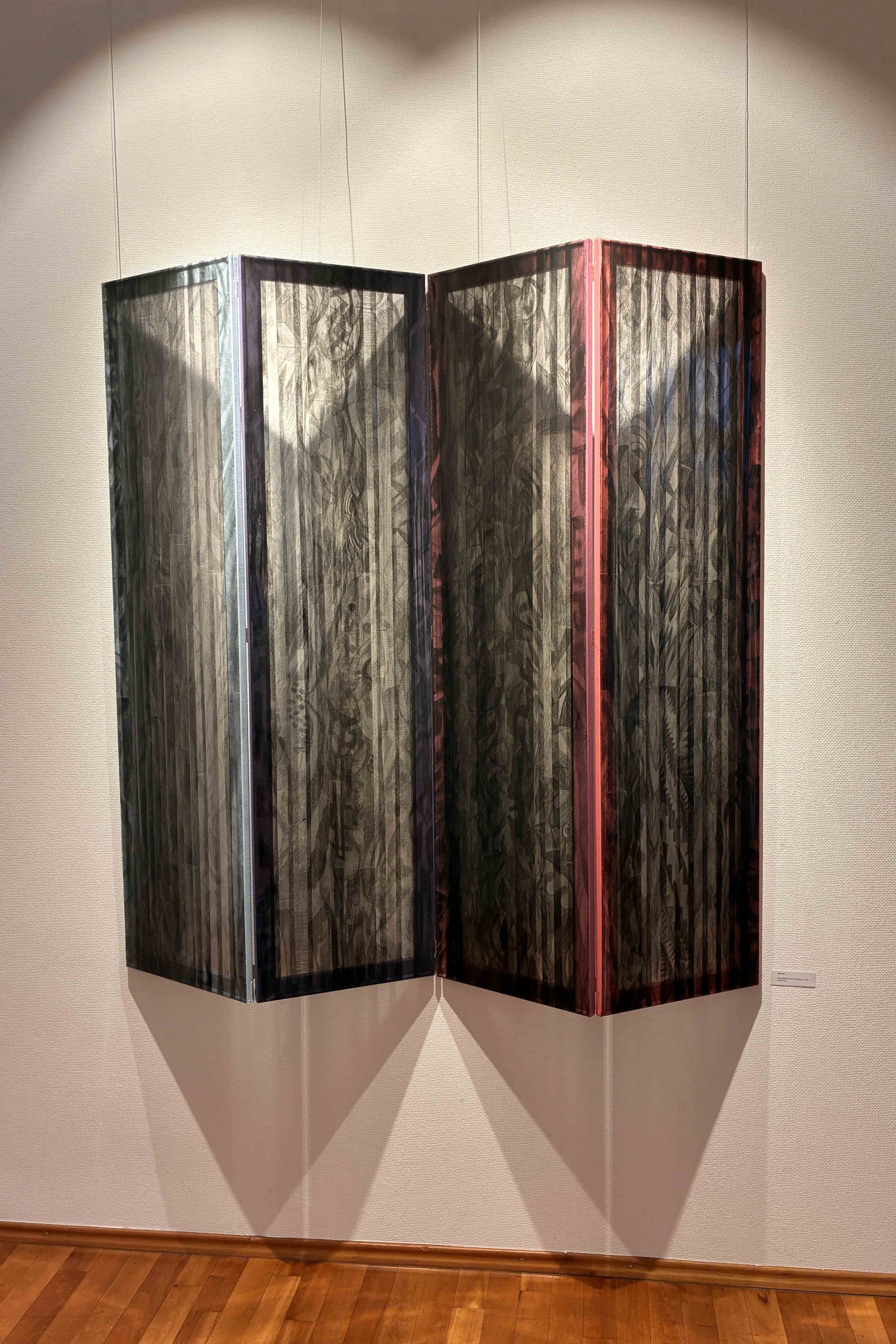
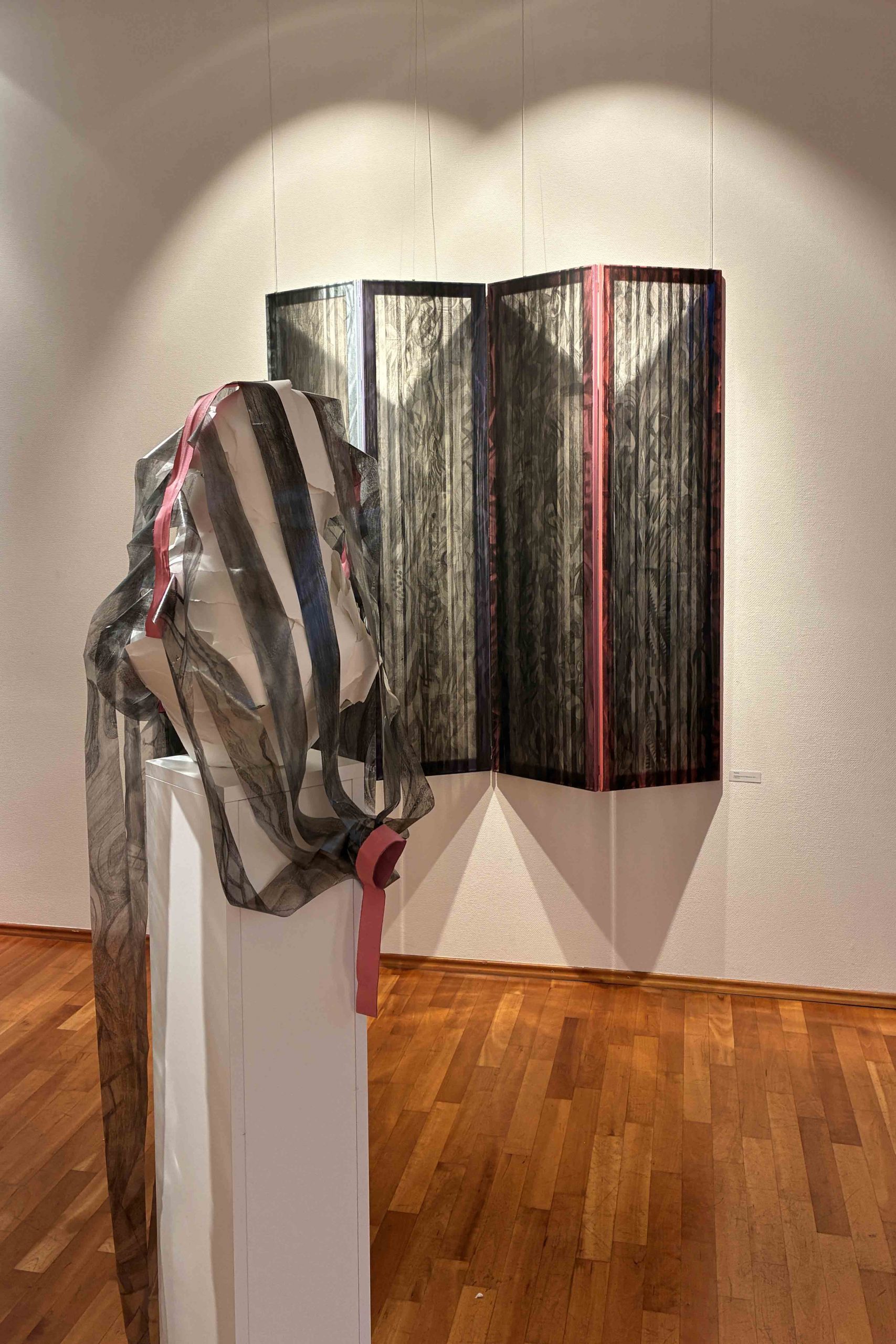
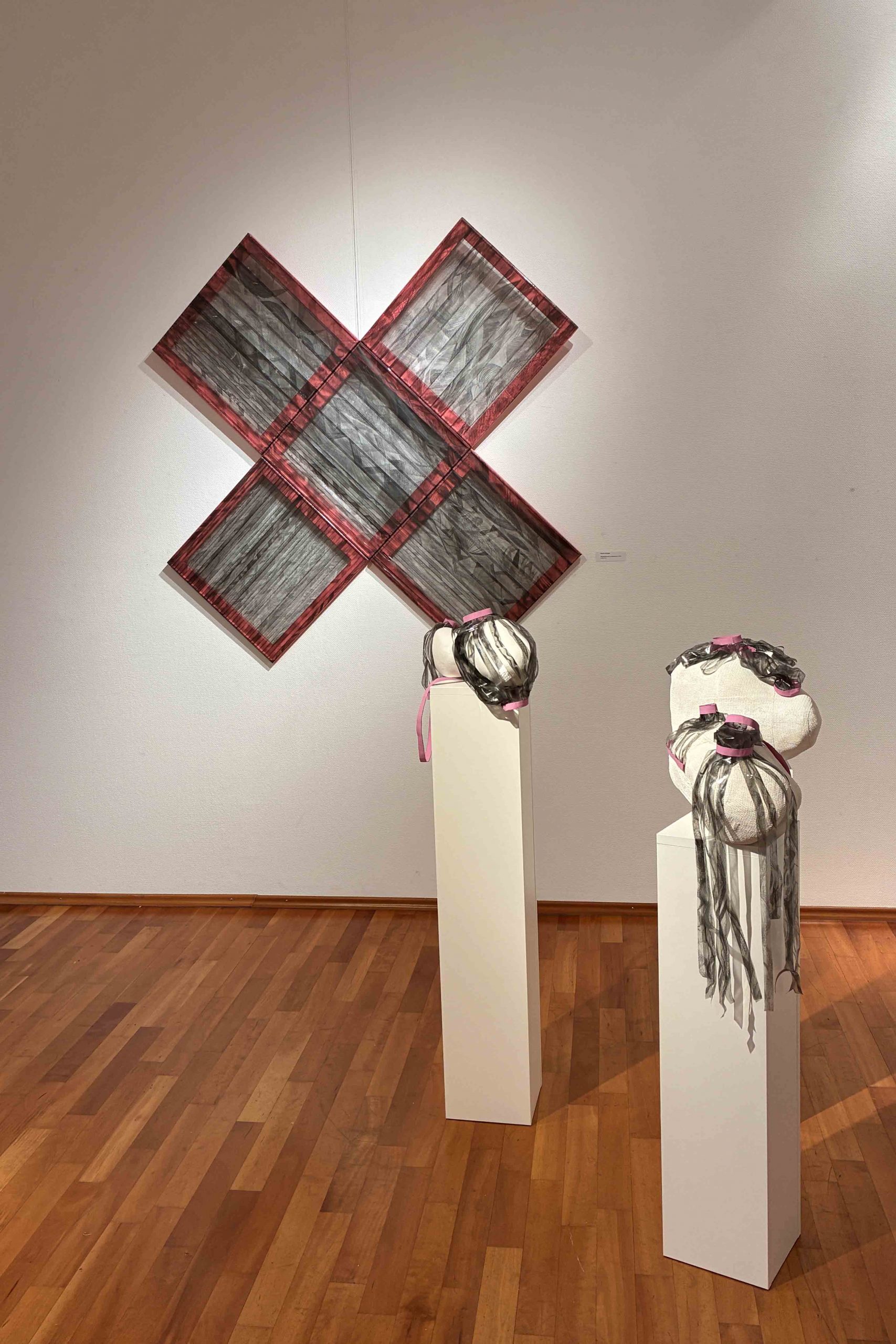
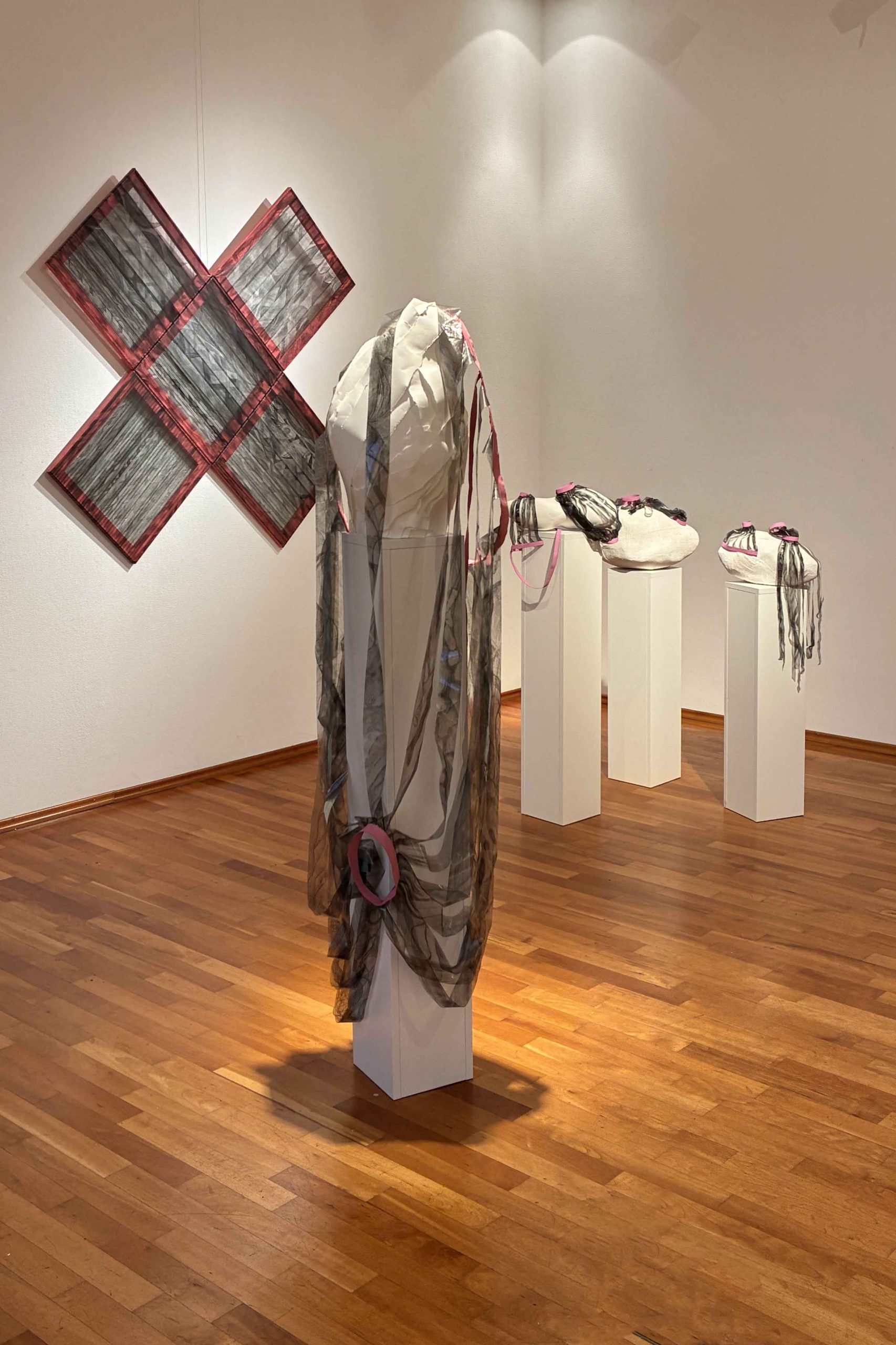
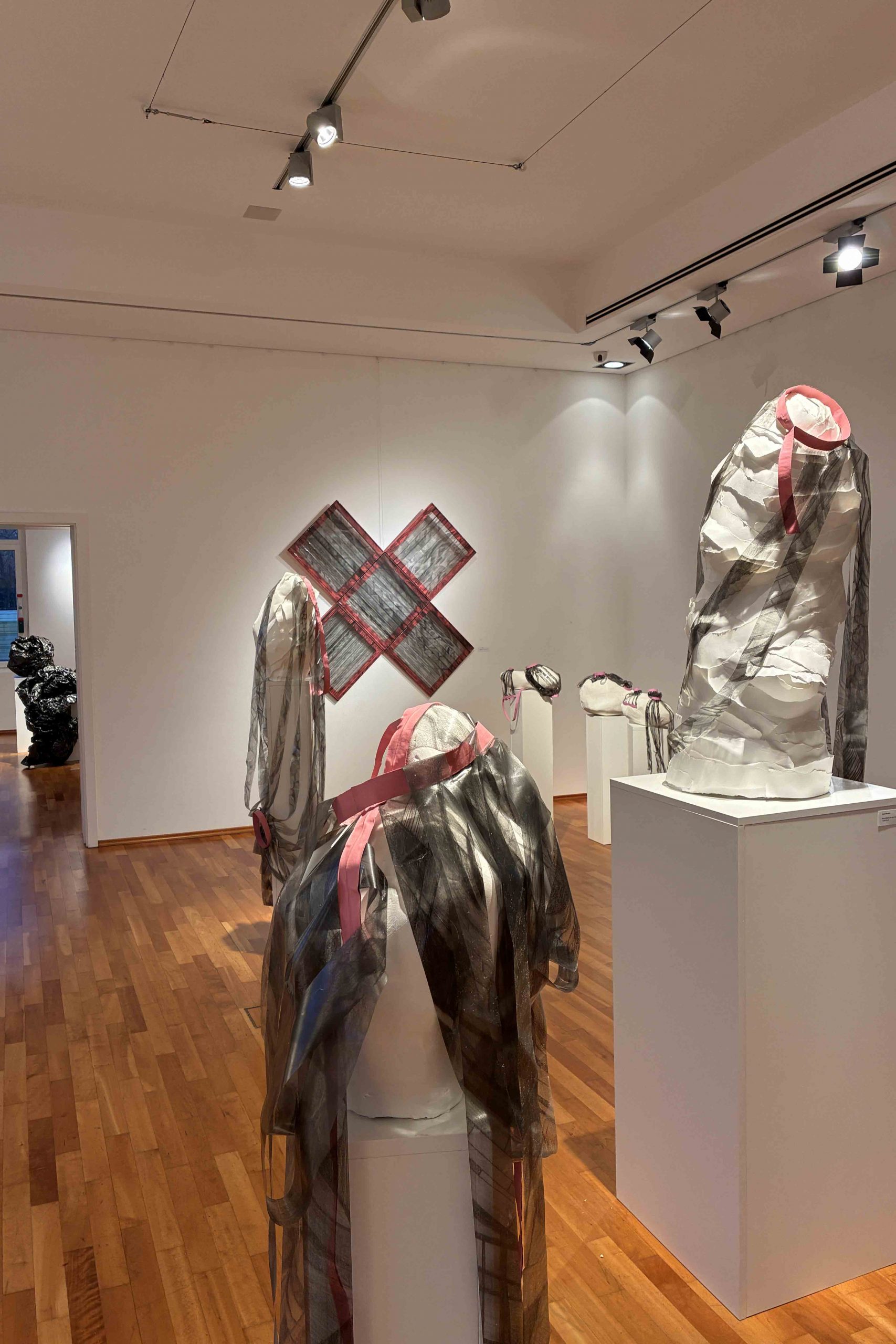
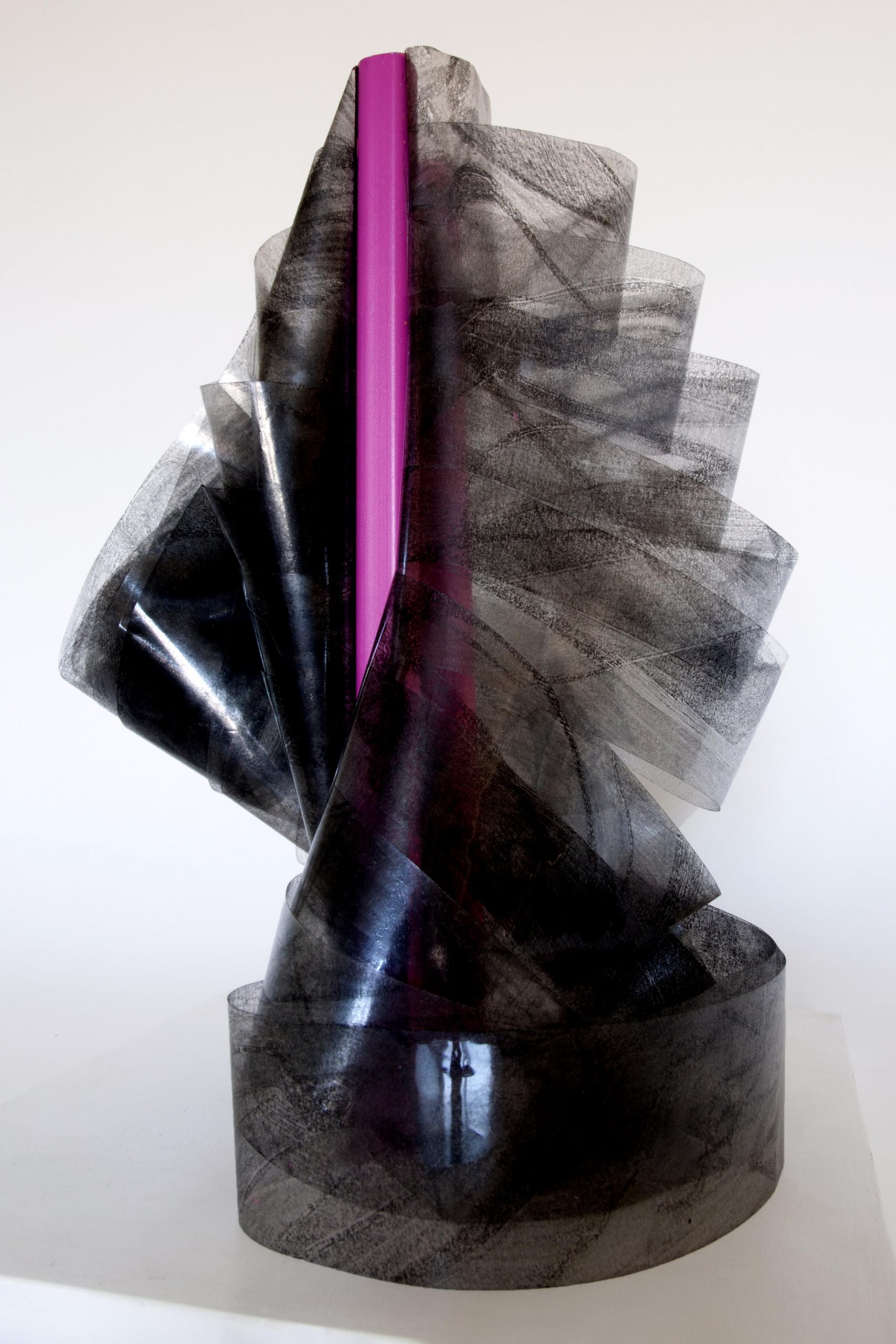
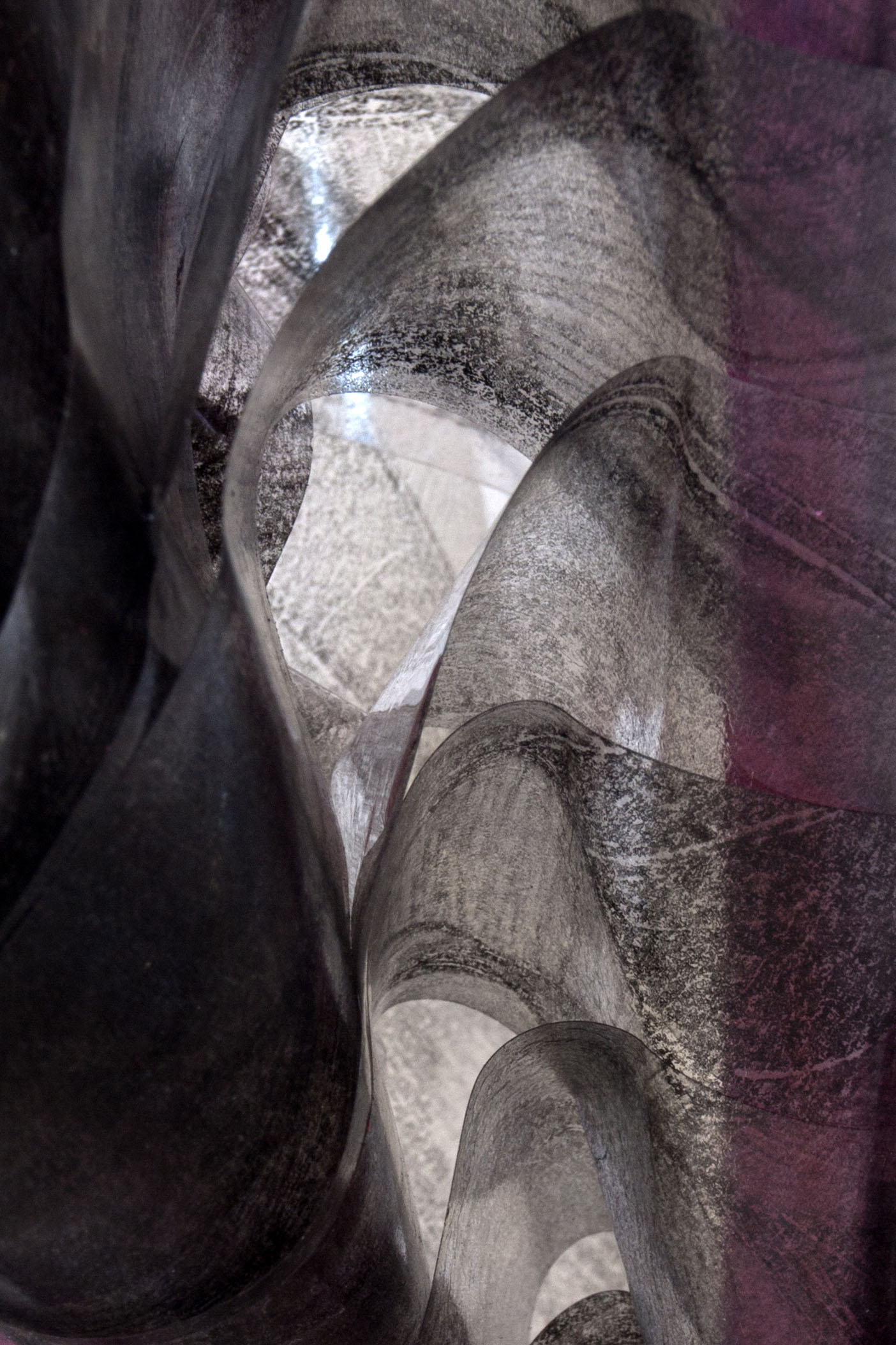
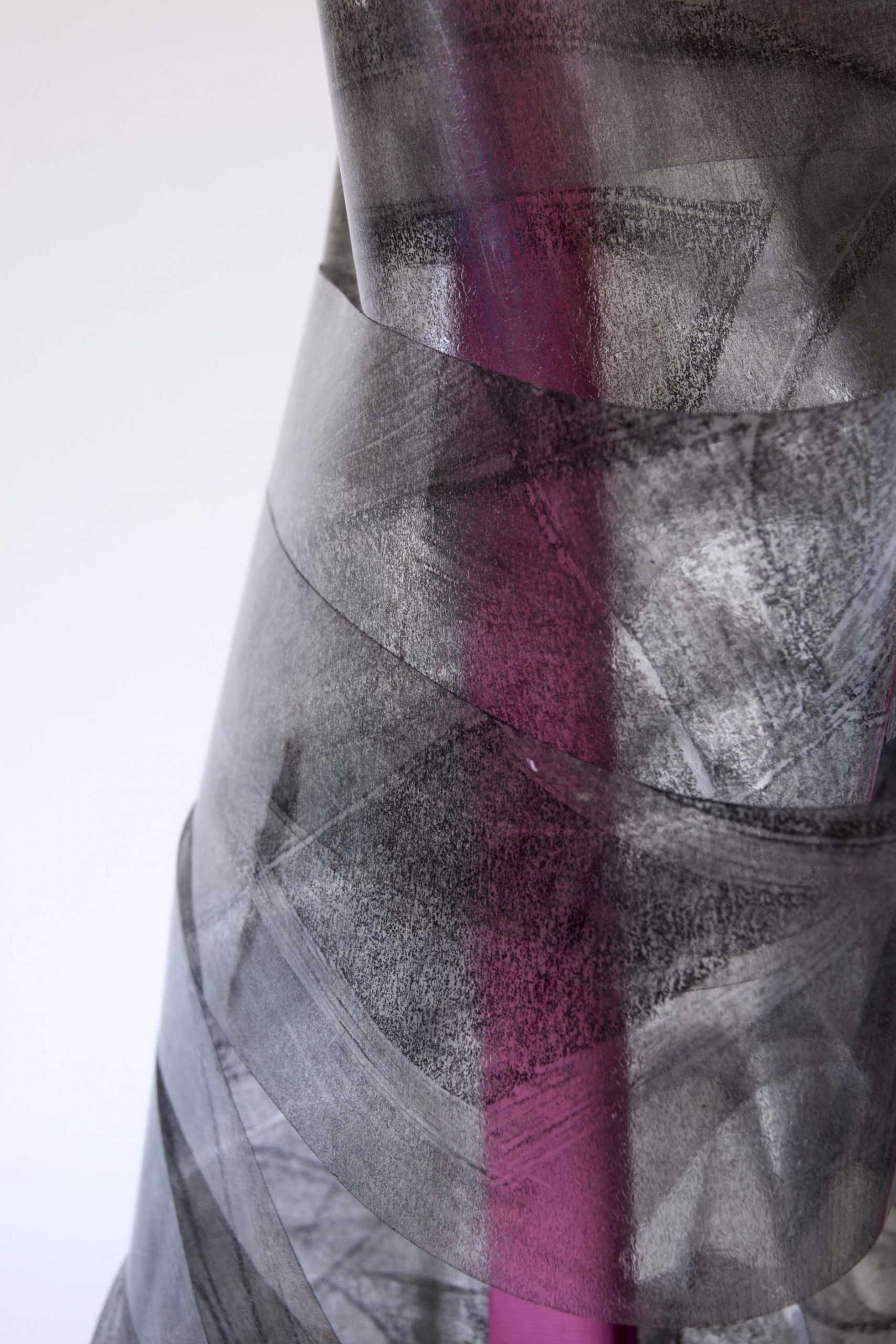
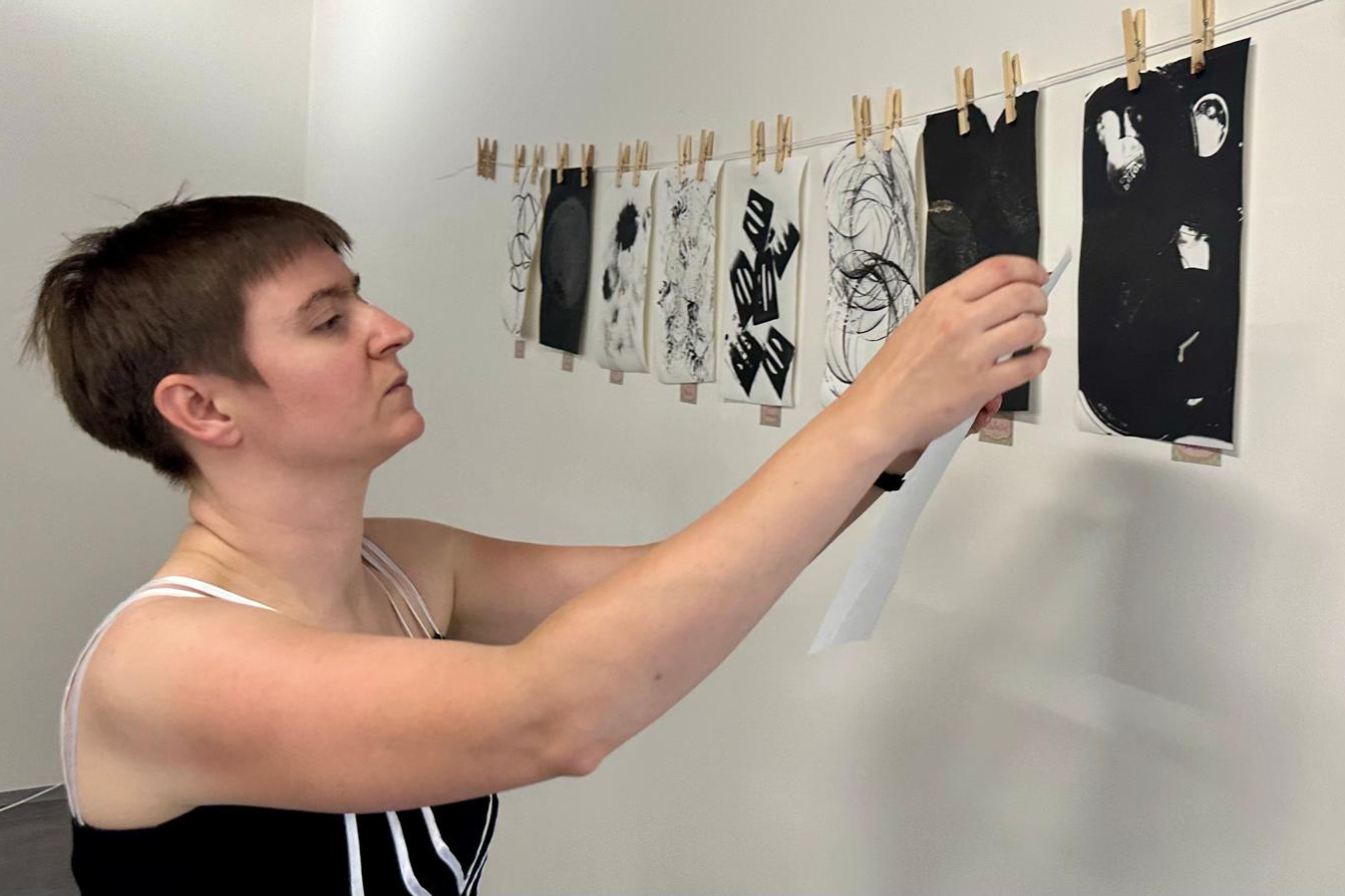
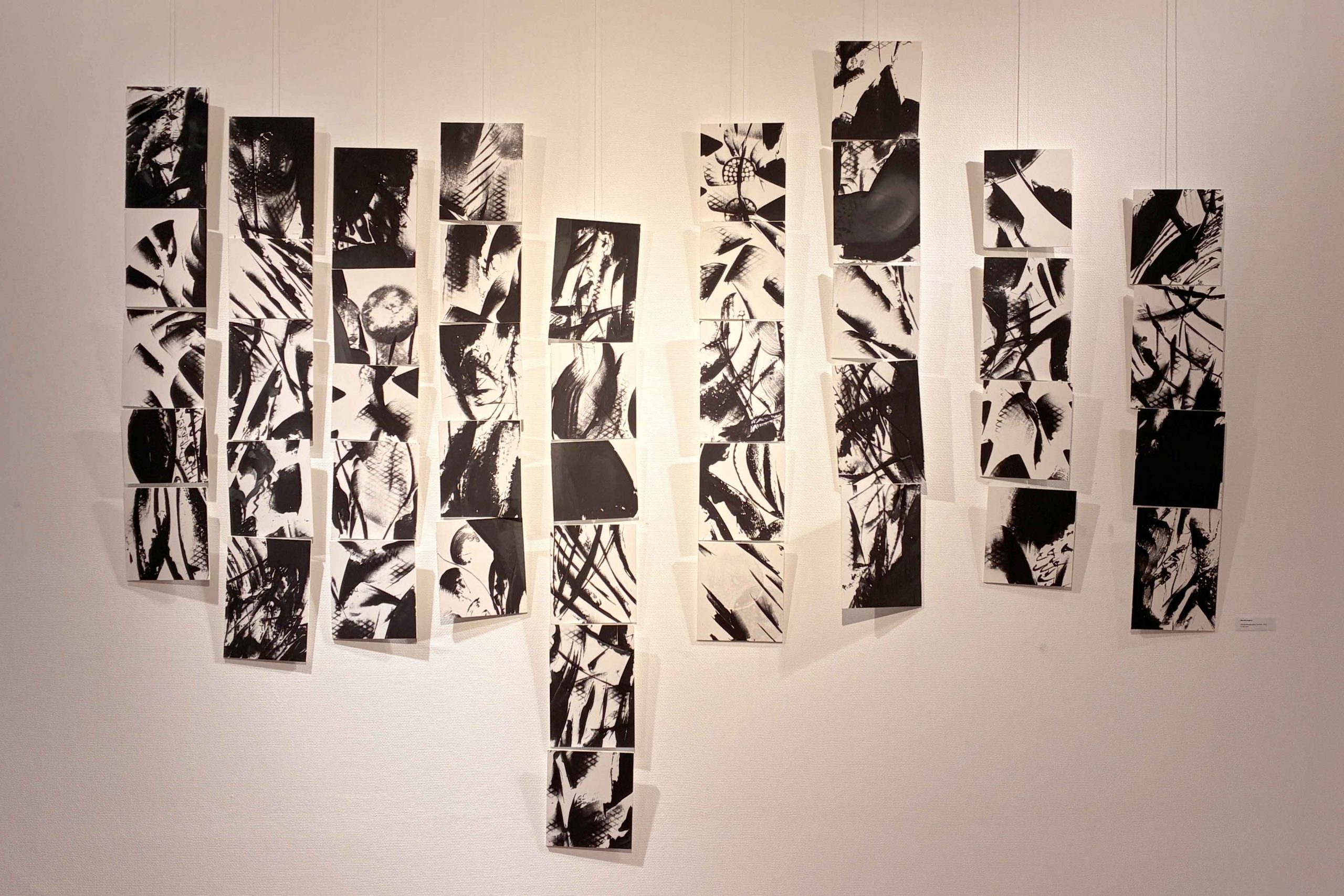
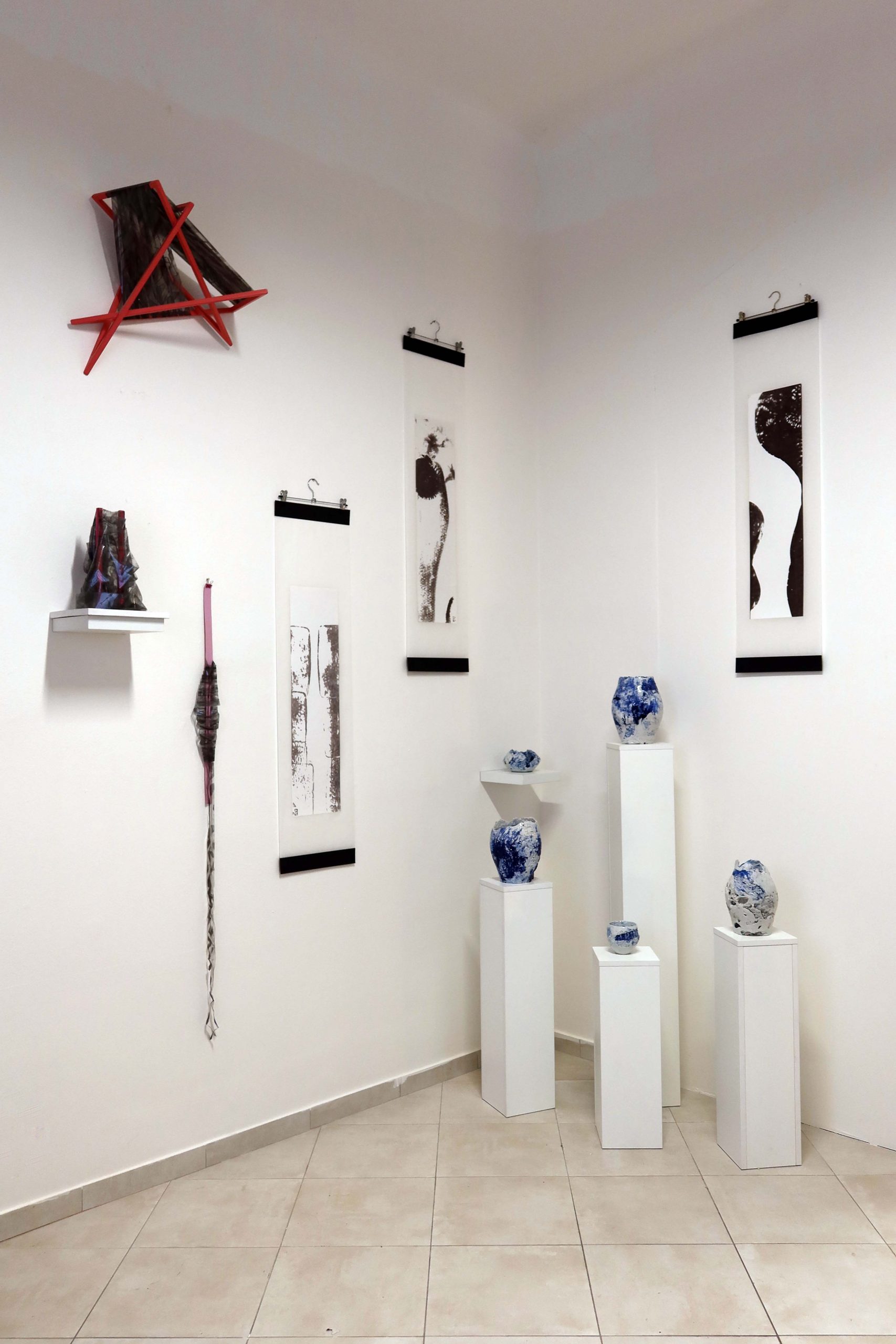
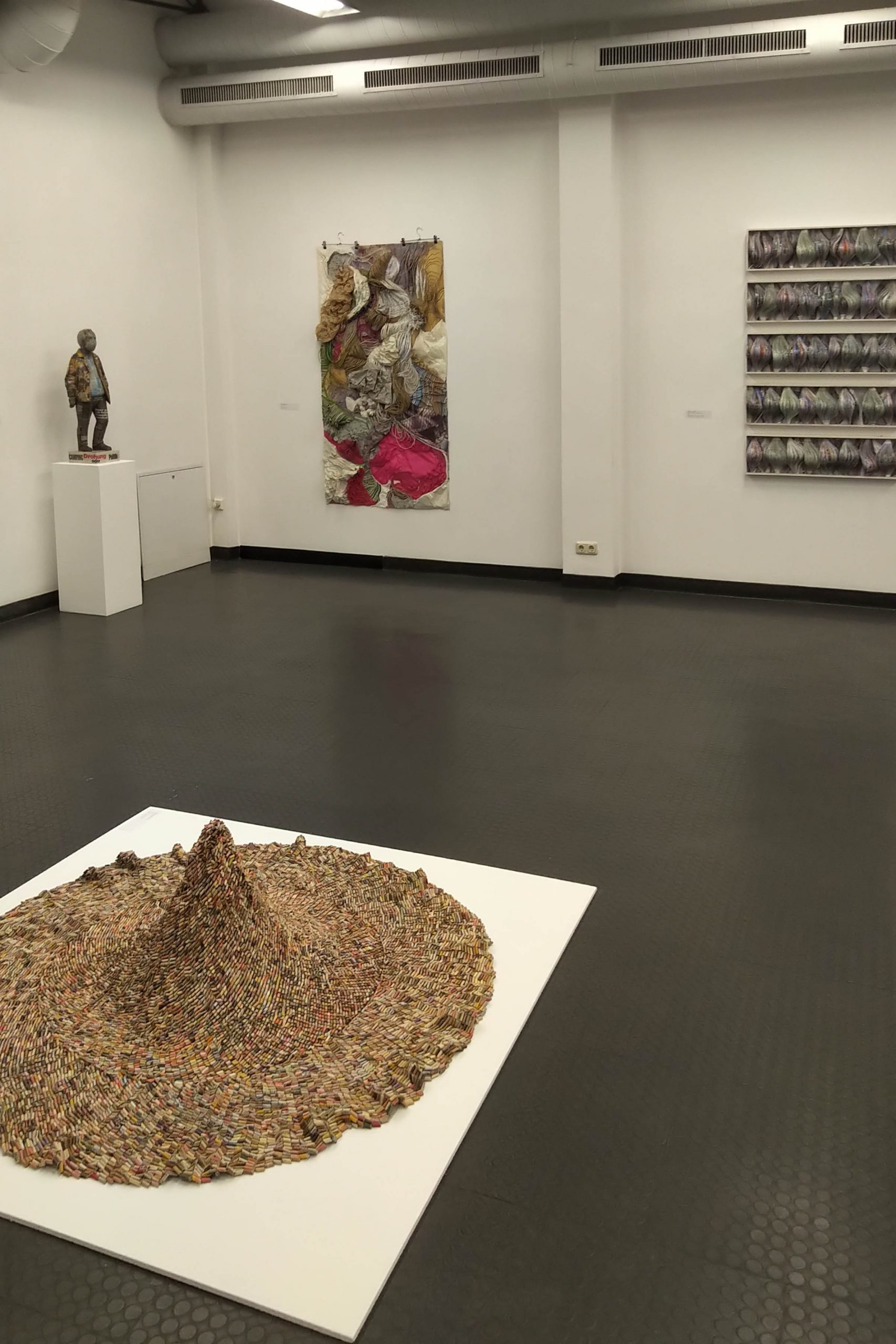
Imprinted drawings on adhesive tape, 2017- 2025
I am sure you know this annoying scenario: You are packing a box and you happen to touch the sticky tape. Your fingerprint will stay there forever as a DNA stamp which says who packed the box.
I am sure you know this annoying scenario: You are packing a box and you happen to touch the sticky tape. Your fingerprint will stay there forever as a DNA stamp which says who packed the box.
Through contact with a sticky tape my hand leaves small particles of skin and cells on the surface, which creates an imprint. The same situation happens when I touch unshaved wood, for sure I will get a splinter. Probably my body will be infected when I inhale in an infected environment, and also when I exhale, my pathogens will be spread out into the environment again. Therefore, we are not at all separated from the surroundings and they are not separated from us. The same also applies to objects themselves. As Ruba Kathrib stated in her essay „Materials, Talking and Walking: Pakui Hardware“, this shared imprint and transformation of microscopic layers of material, i.e. when materials share the particles with each other and change into something new, marked the beginning of recording touch through a sticky tape and a graphite layer a.k.a. drawing. In case of my long-term project called Sediments, I tried to give the third dimension to two-dimensional drawings, based on the example of the Möbius strip.
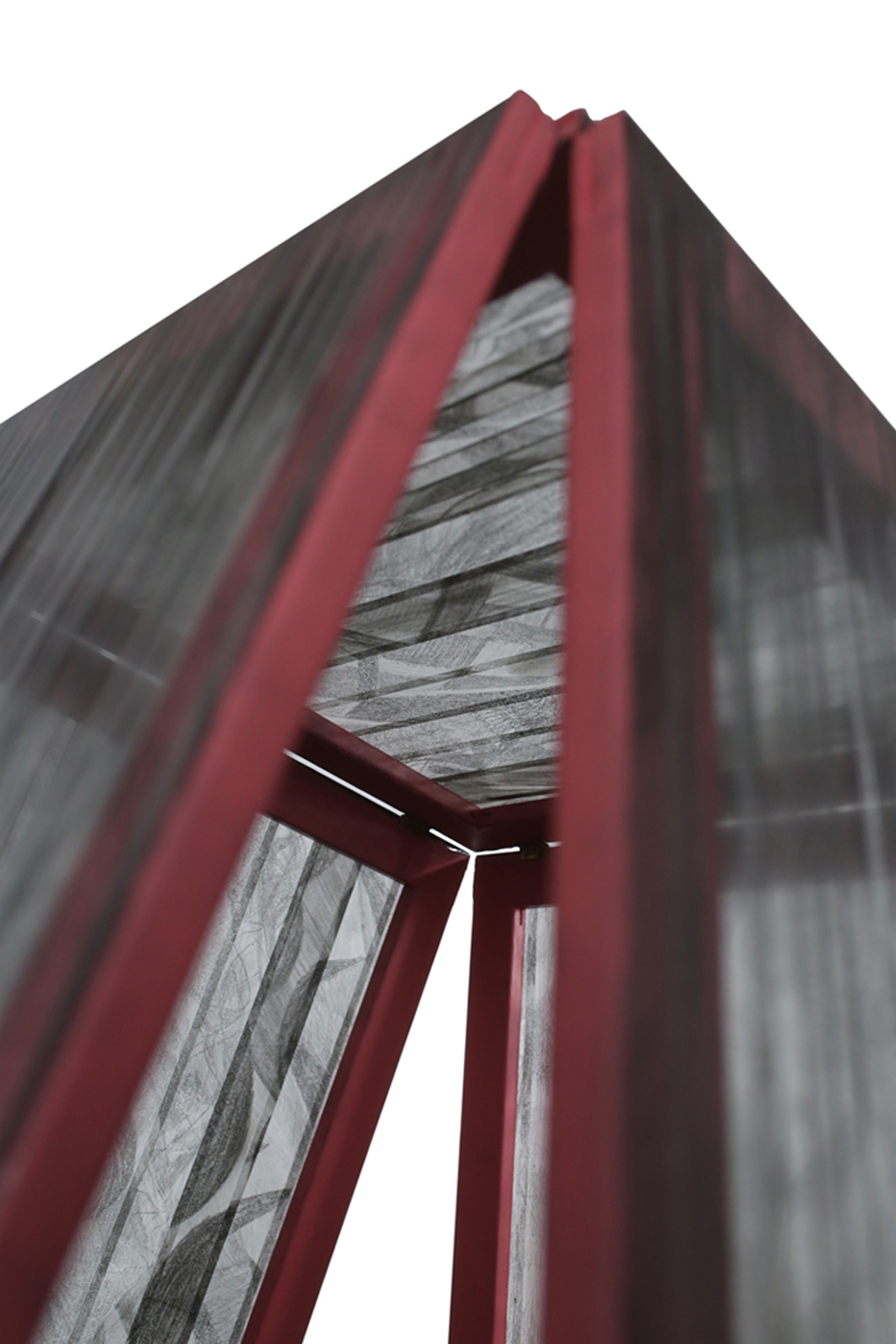
The Möbius strip is a mathematical phenomenon where a two-dimensional surface becomes three-dimensional by bending itself, while it only consists of one face and one edge.
The aim of the Sediments was therefore to combine the thesis of Ruba Kathrib with a mathematical concept, on the basis of which the surface can be deformed into the third dimension. For this purpose, the drawing was imprinted on a tape and stretched using frames or constructions, which had the form of planes. Thanks to them, the drawing then took on its final shape.
Sedimenty – kolekce děl
obtisk kreseb na lepící pásce, konstrukce 2017- 2025
Je to k vzteku, když se při balení krabice nedopatřením dotknete lepivé strany lepící pásky. Otisk prstů tam navždy zůstane jako pečeť z částeček kůže a buněk a nezmizí, dokud nebude páska zničena. Již navždy tak bude podávat zprávu o tom, kdo krabici zabalil. Skoro určitě si taky odnesu třísku, když pohladím neohoblované dřevo. Pokud se nadechnu v infikovaném prostředí, nejspíš onemocním, a při výdechu své patogeny zase šířím do okolí zpět. Skrz dotek a dech již nejsme odděleni od prostředí a prostředí není oddělené od nás, a to stejné platí i pro objekty navzájem.
Jak píše Ruba Kathrib v eseji „Materials, Talking and Walking: Pakui Hardware“. Tento otisk neboli sdílení a transformace mikroskopických vrstev materiálů, kdy si materiály navzájem vyměňují částice a proměňují se tak v něco nového, stála za začátku vytváření záznamu doteku skrz lepící pásku a grafitovou vrstvu neboli kresbu. V rámci mého dlouhodobého projektu Sedimenty jsem se pokoušela po vzoru Möbiovy pásky propůjčit dvojrozměrným kresbám třetí rozměr.
Möbiova páska je v matematice fenomén, kdy dvojrozměrná plocha nabývá vlastním ohnutím třetího rozměru, zatímco má pořád jen jednu stranu a jednu hranu.
Cílem Sedimentů bylo proto zkombinovat teze Ruby Kathrib s poznatky matematiky, na základě nichž lze plochu deformovat do třetího rozměru. Z toho důvodu byla kresba obtisknutá na pásce a napnutá na rámy či konstrukce, které měly podobu rovin. Podle nich pak kresba získala svůj finální tvar.
Sediments Kollektion
Zeichnungsabdruck auf dem klebeband, 2017- 2025
Sie kennen bestimmt dieses Szenario: Sie packen ein Paket ein und es passiert, dass Sie das Klebeband auf der Klebseite berühren. Ihr Fingerabdruck bleibt dort für immer als DNA-Stempel. Es bleibt dort, bis das Band nicht ganz zerstört wird.
Falls ich mit baren Händen ein Klebeband berühre, lasse ich auf der Oberfläche einen Abdruck von mikroskopischen Hautzellen. Die gleiche Situation wiederholt sich, wenn ich ungehobeltes Holz anfasse, bekomme ich bestimmt einen Splitter. Möglicherweise wird mein Körper infiziert, falls ich in einer infizierten Umgebung atmen werde. Auch beim Ausatmen werden die Pathogene zurück in den Raum ausgebreitet. Infolgedessen sind unsere Körper nicht mehr von ihrer Umwelt separiert, sondern die Körper sind Teil der Umwelt und die Umwelt ist Teil von ihnen. Gleiches gilt auch für die Objekte selbst.
Wie Ruba Kathrib in ihrem Essay„Materials, Talking and Walking: Pakui Hardware“ feststellt, dieser gemeinsame Abdruck und nachherige Transformation mikroskopischer Schichten des Materials bedeuten, dass die Materialien ihre Partikeln miteinander teilen und so sich in etwas Neues transformieren. Nach der Berührung wird ein Objekt oder Mensch von der stofflichen Seite nie mehr gleich wie vorher sein. Diese inspirative These gilt als Ausgangspunkt meiner Aufzeichnungen von Berührung durch ein Kleberband und eine Graphitschicht, als Zeichnung benannt. Bei meinem Langzeitprojekt namens Sedimente habe ich versucht, zweidimensionalen Zeichnungen nach dem Vorbild des Möbiusbands die dritte Dimension zu verleihen.
Das Möbiusband ist ein mathematisches Phänomen, bei dem eine zweidimensionale Fläche durch Biegung dreidimensional wird, während sie nur aus einer Seite und einem Rand besteht.
Das Ziel der Sedimente war es daher, die These von Ruba Kathrib mit einem mathematischen Konzept so zu verbinden, dass die Fläche die dritte Dimension betritt. Aus diesem Grund wird das Band mit dem Zeichnungsabdruck über die Rahmen oder Konstruktionen angespannt, die eine Ebene formieren. Je nach denen erhaltet dann die Zeichnung die feste Form.
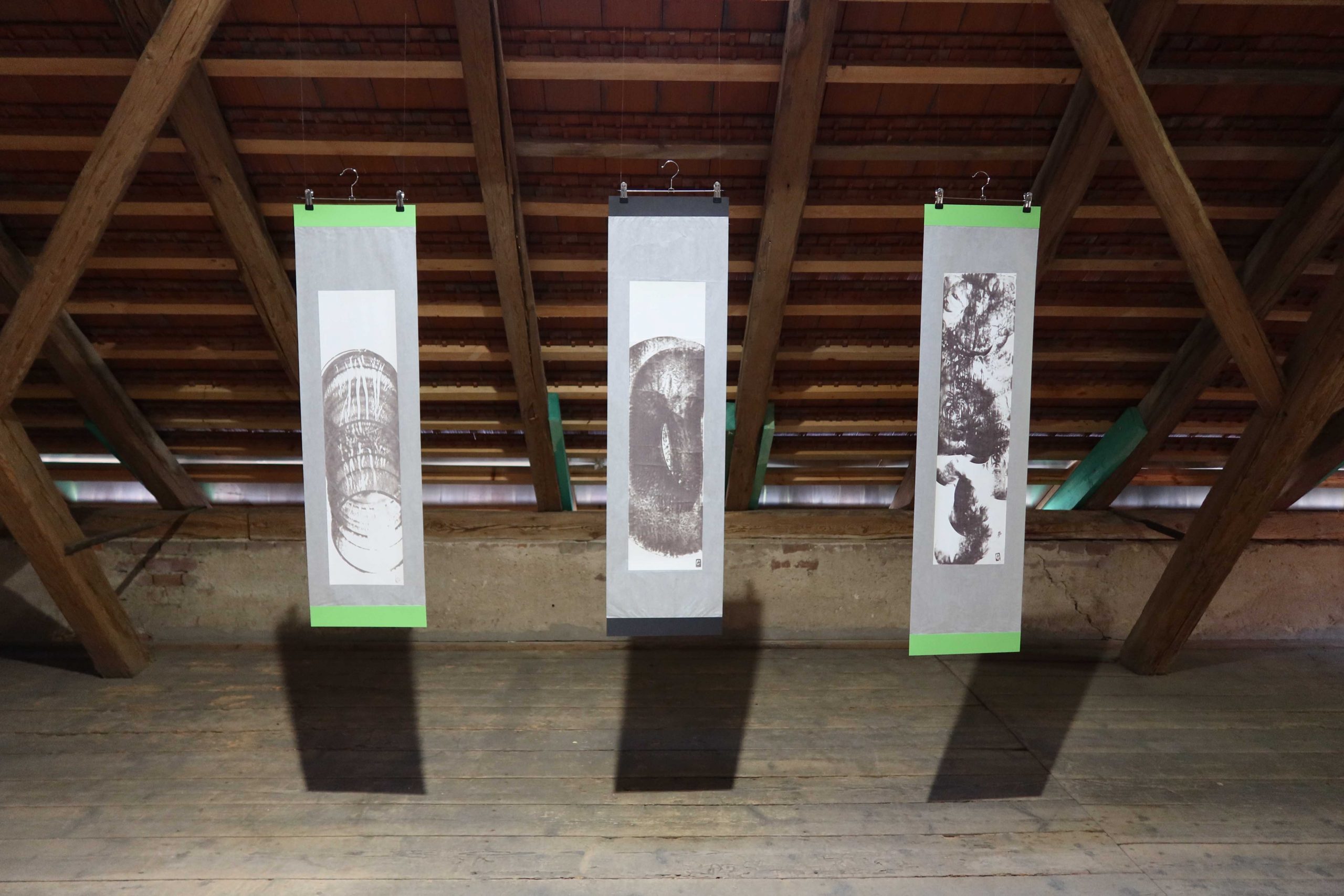
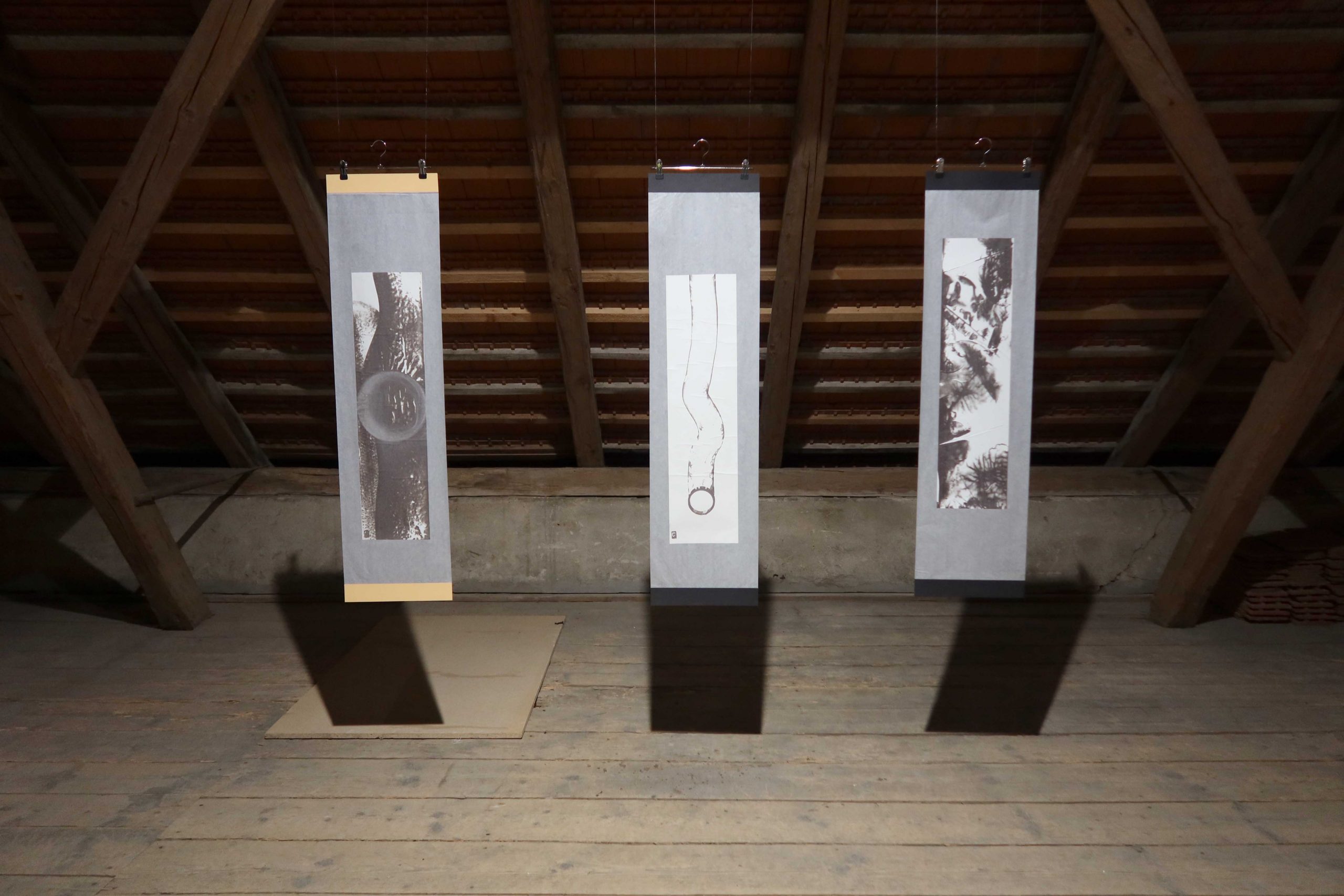
Hausfraukunst
Drawings on thermosensitive paper, performance,
2019 - 2025
As soon as you finish, it begins again!
Hausfraukunst
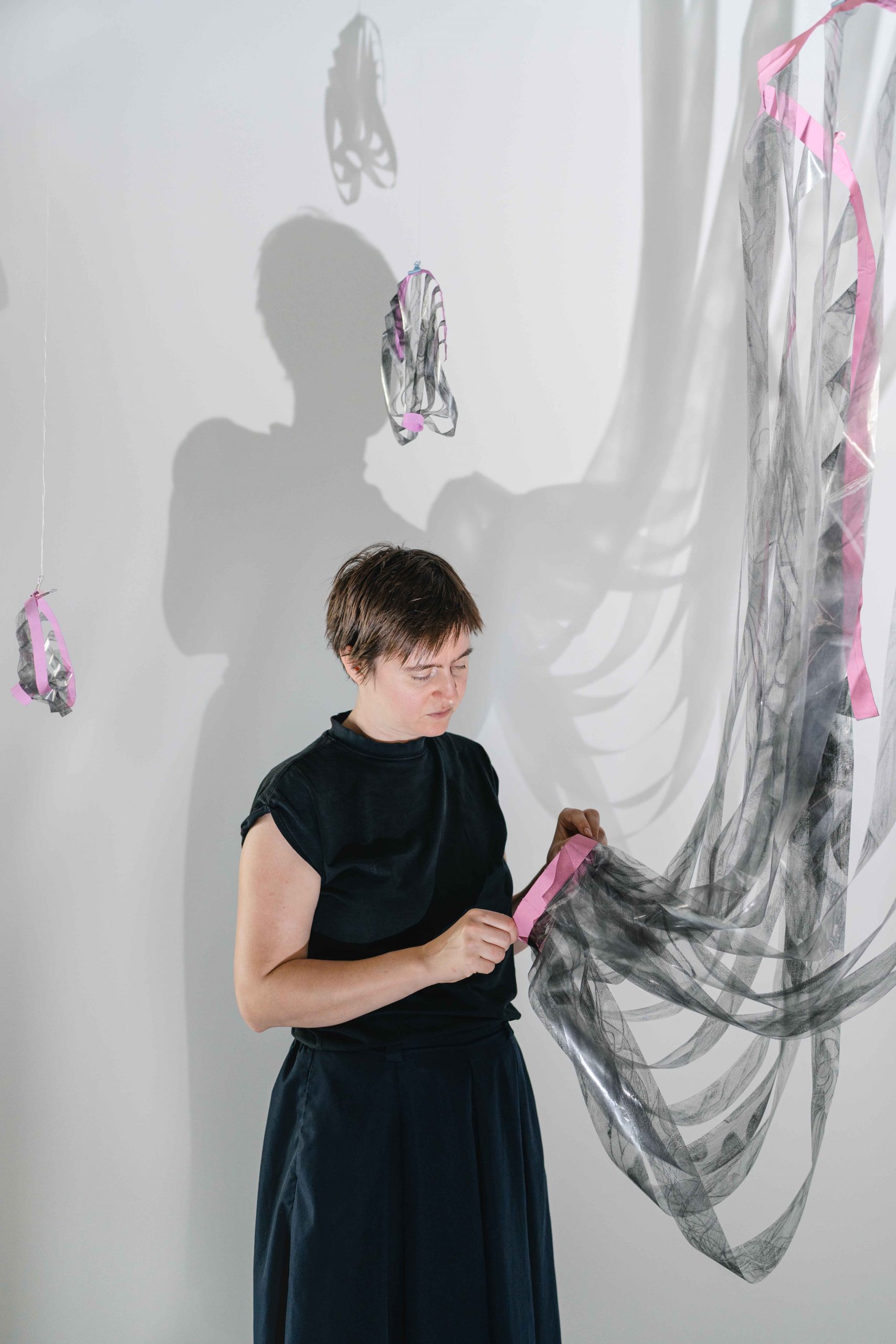
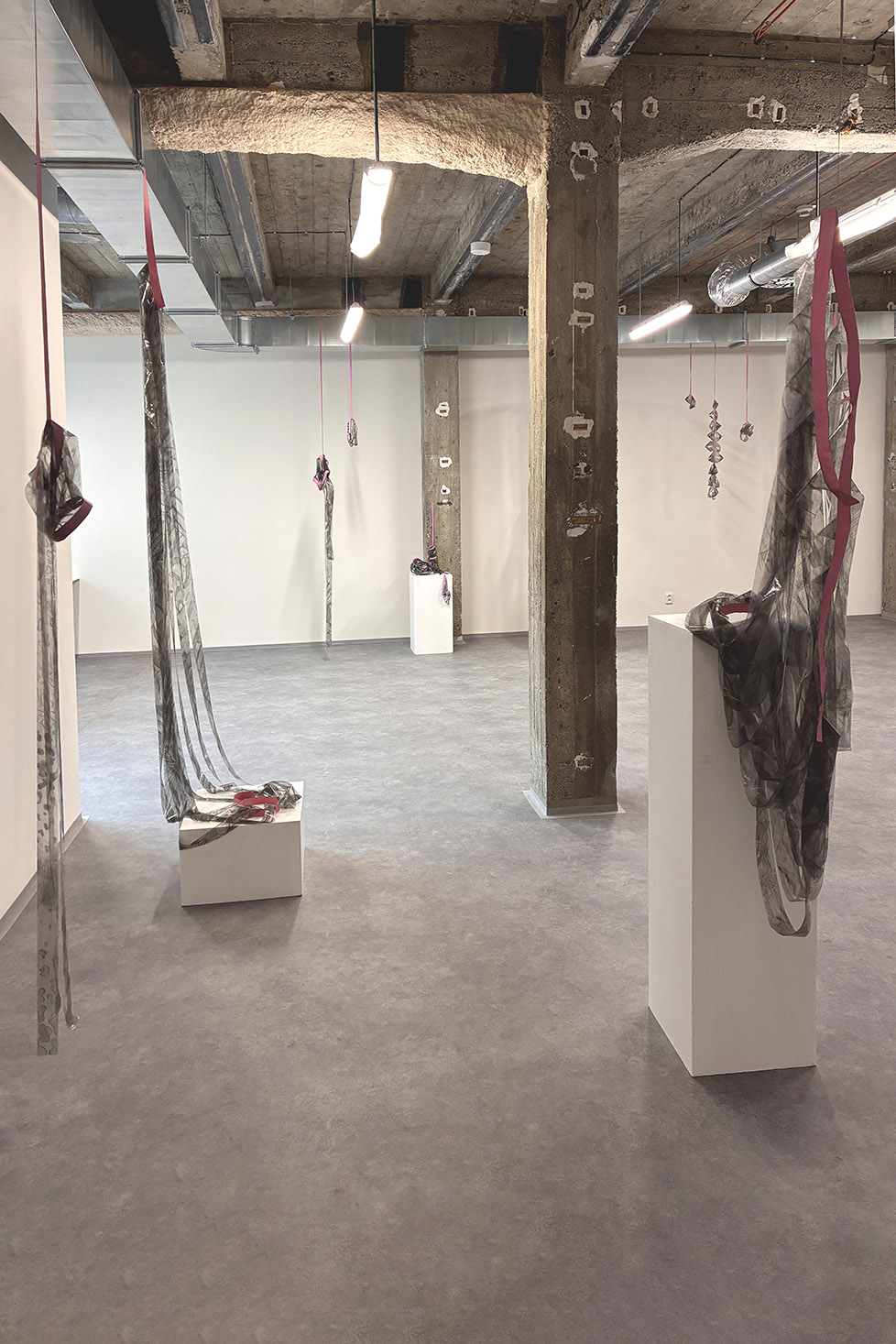
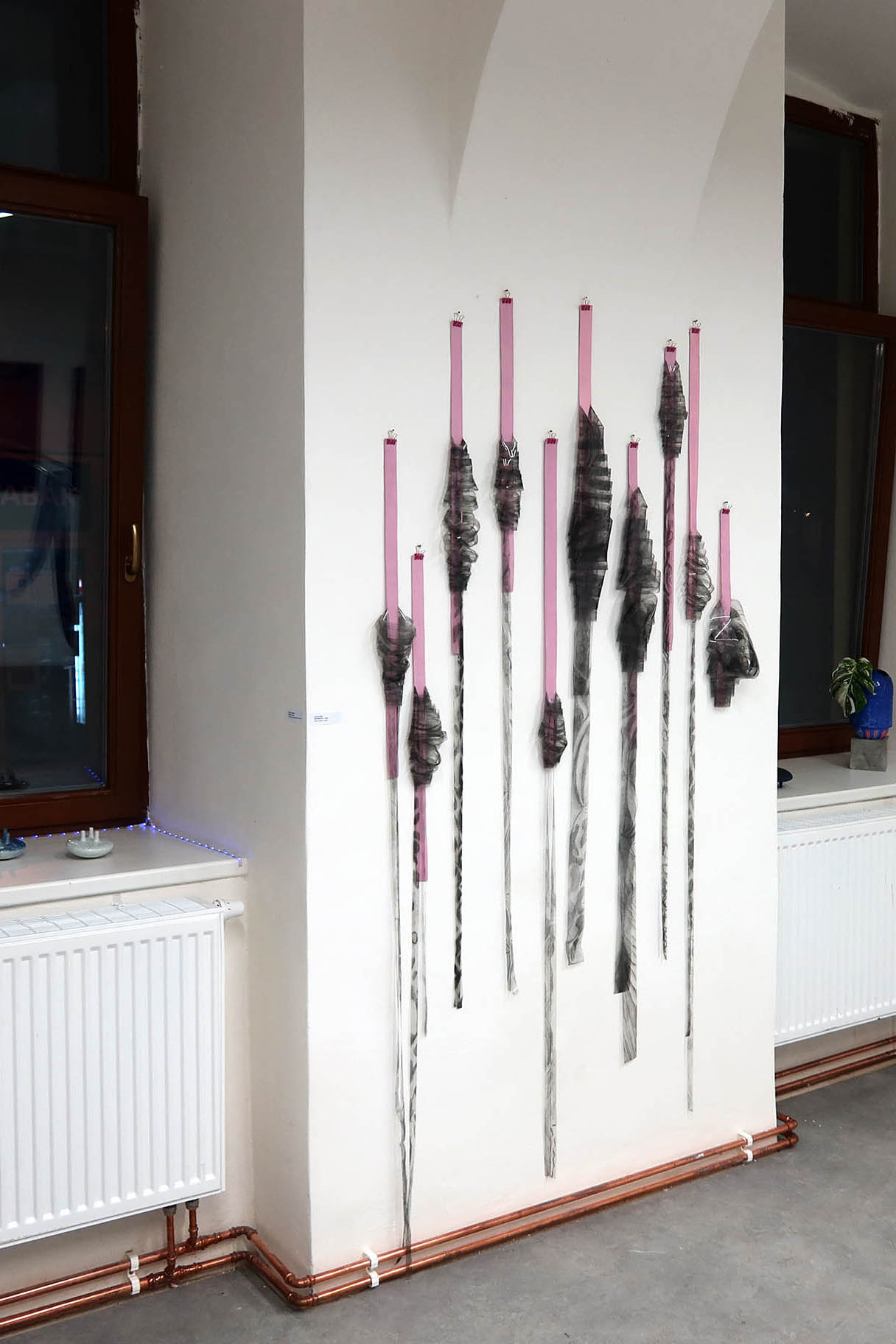
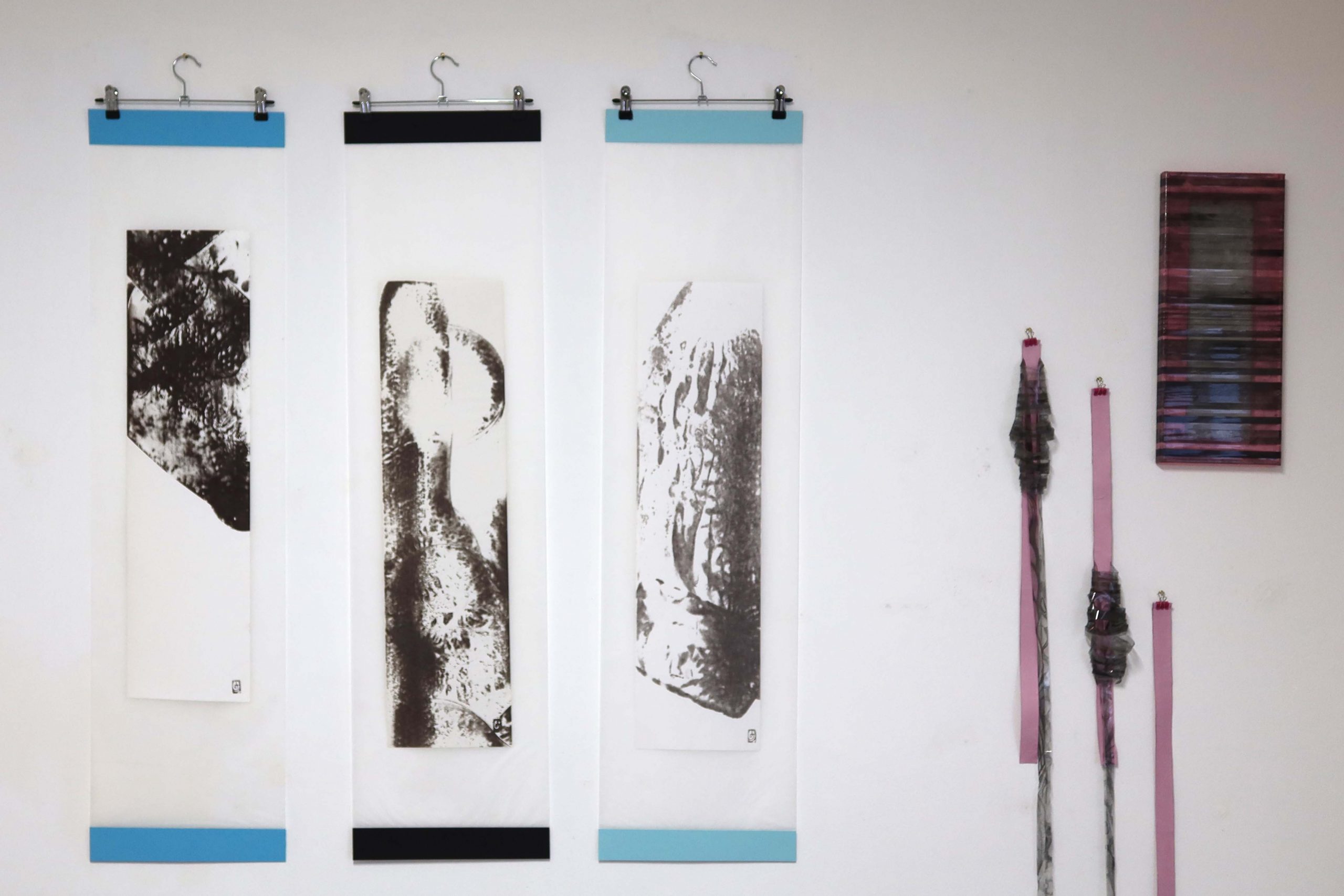
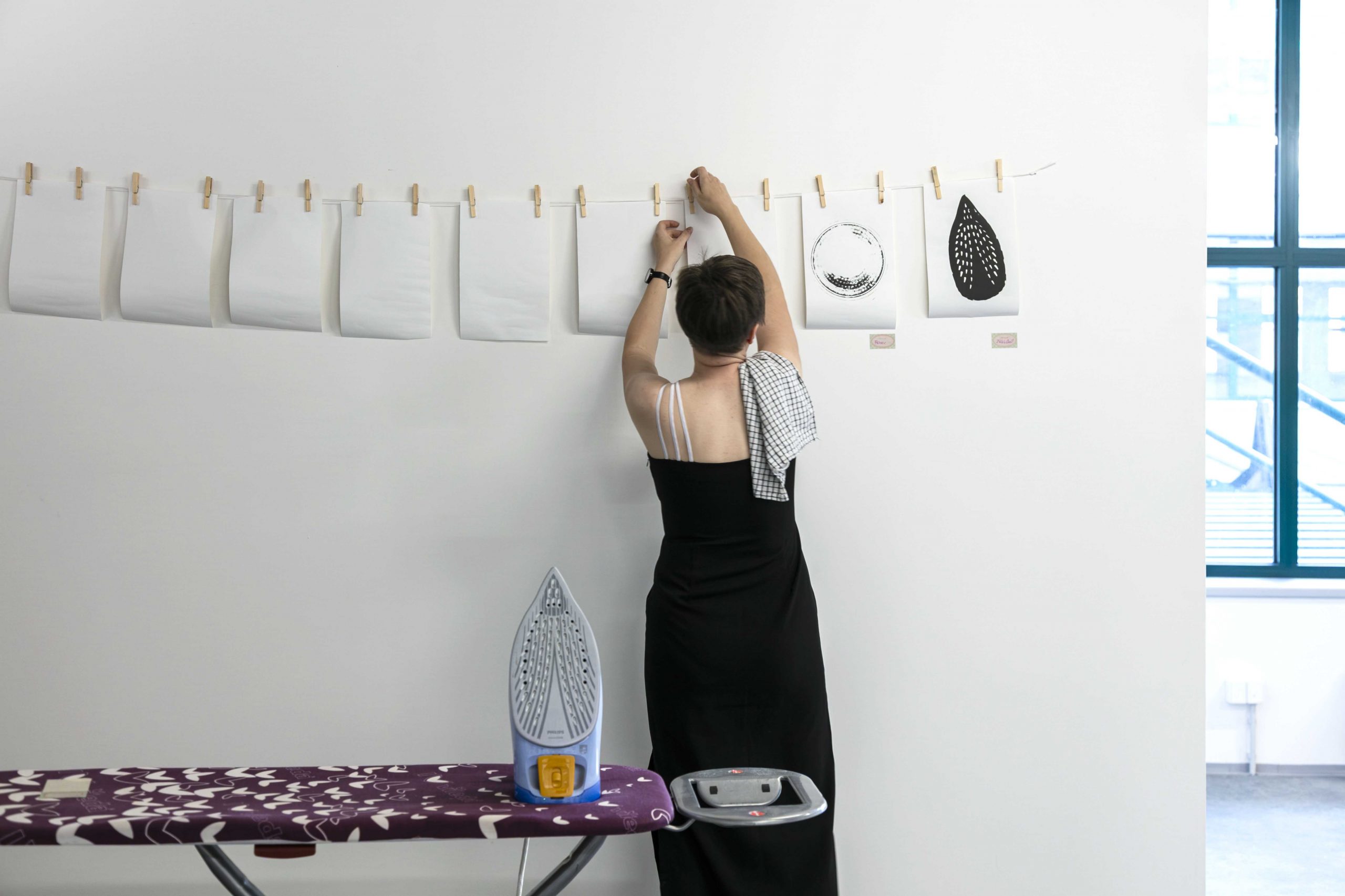
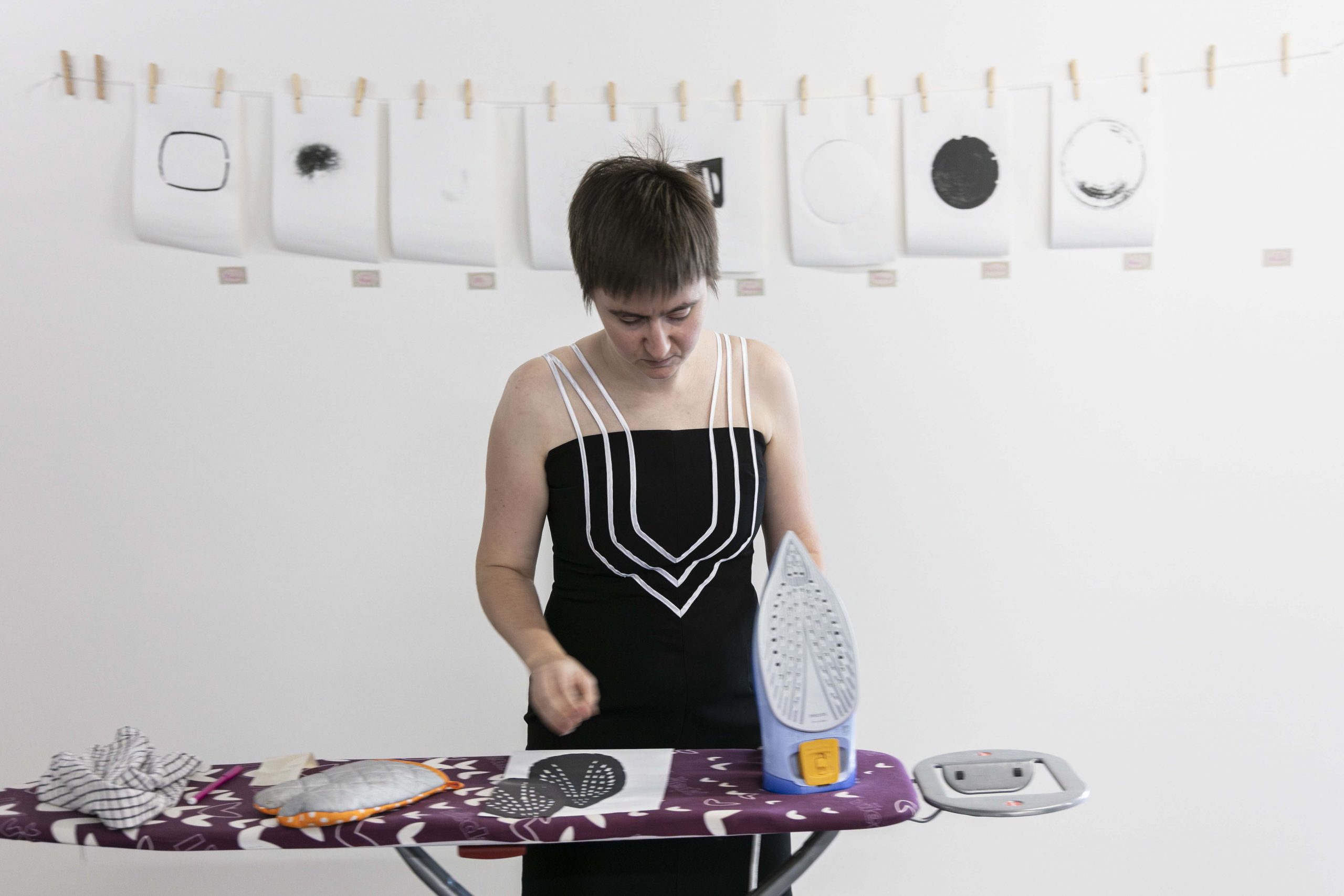
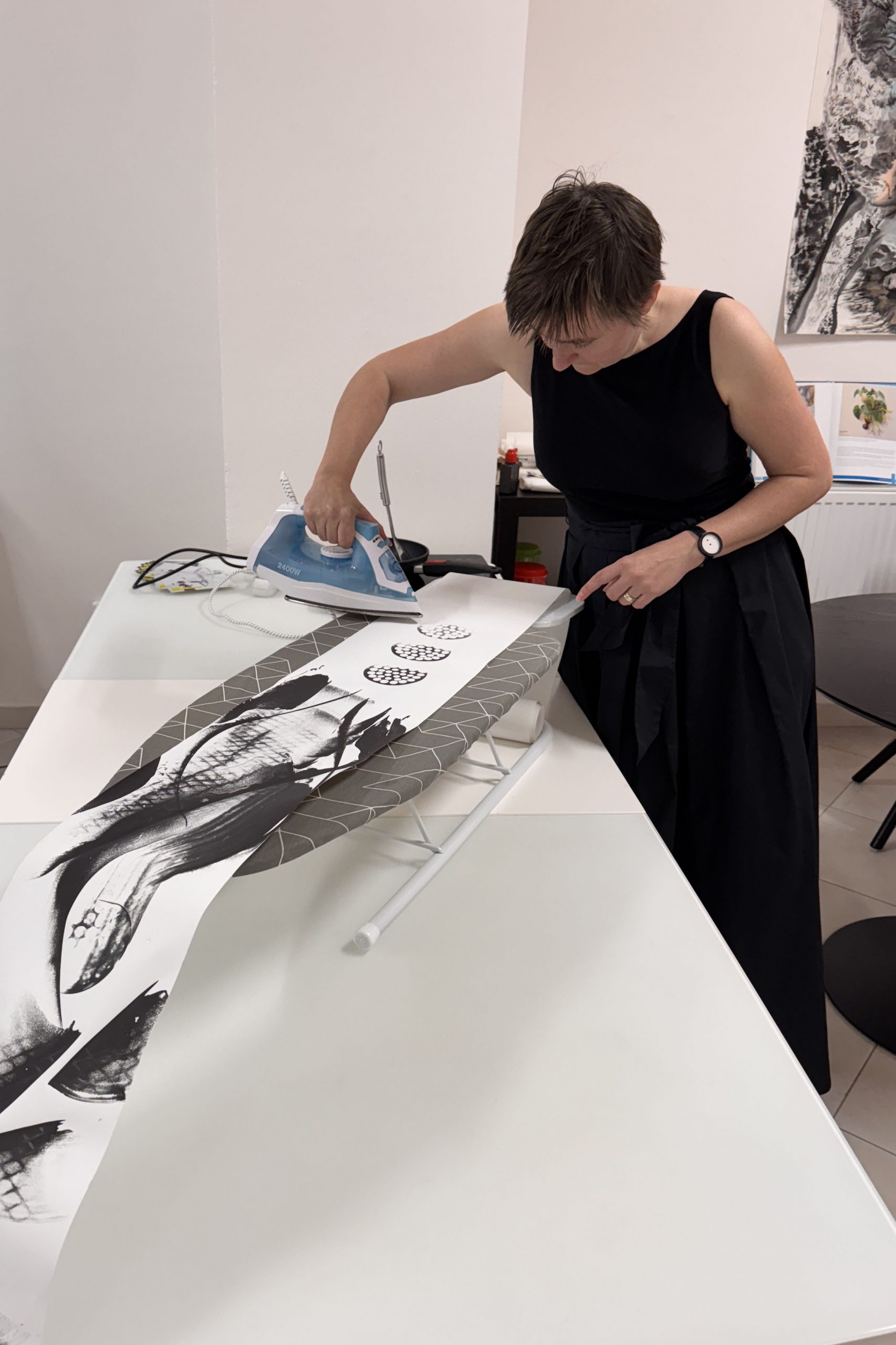
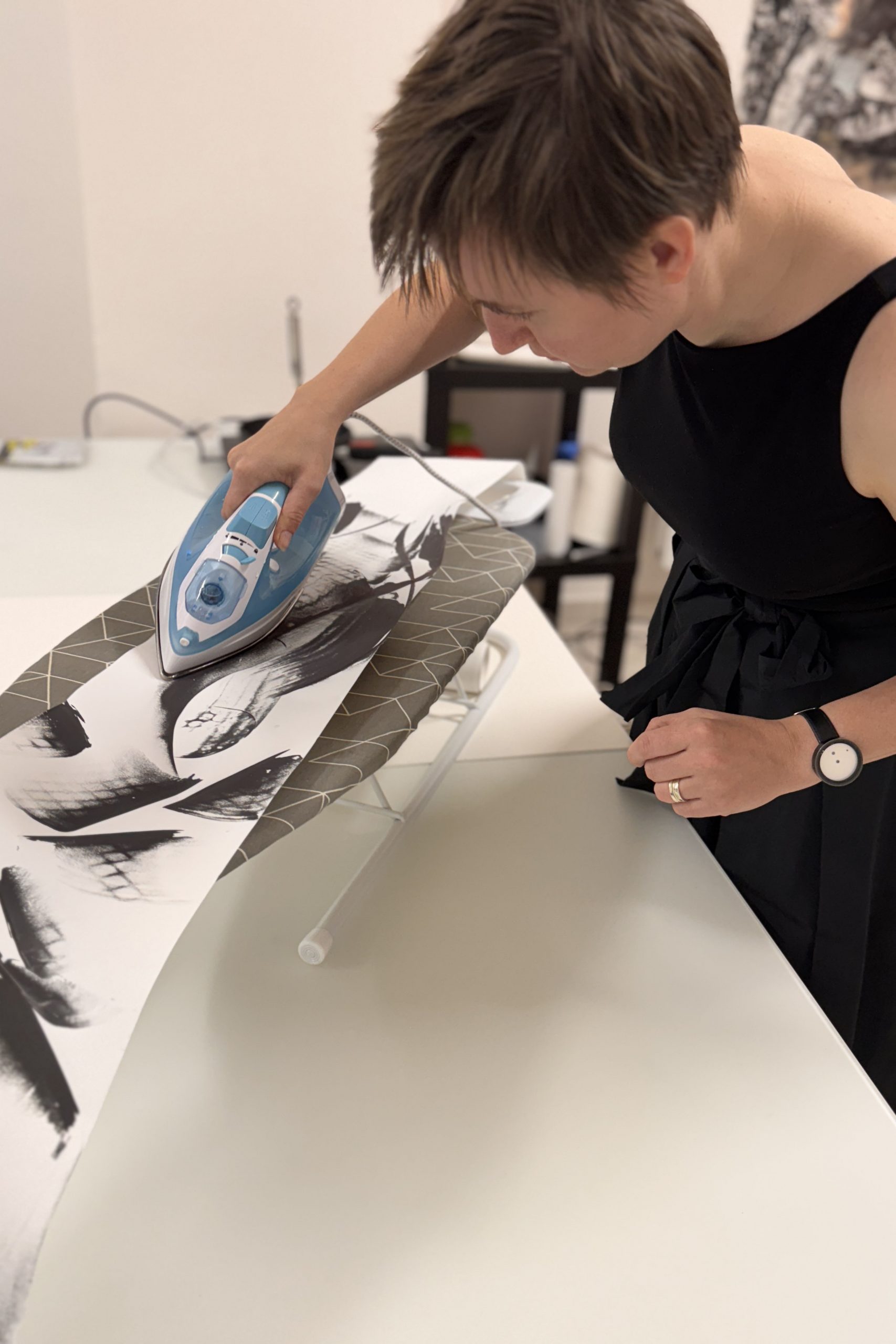
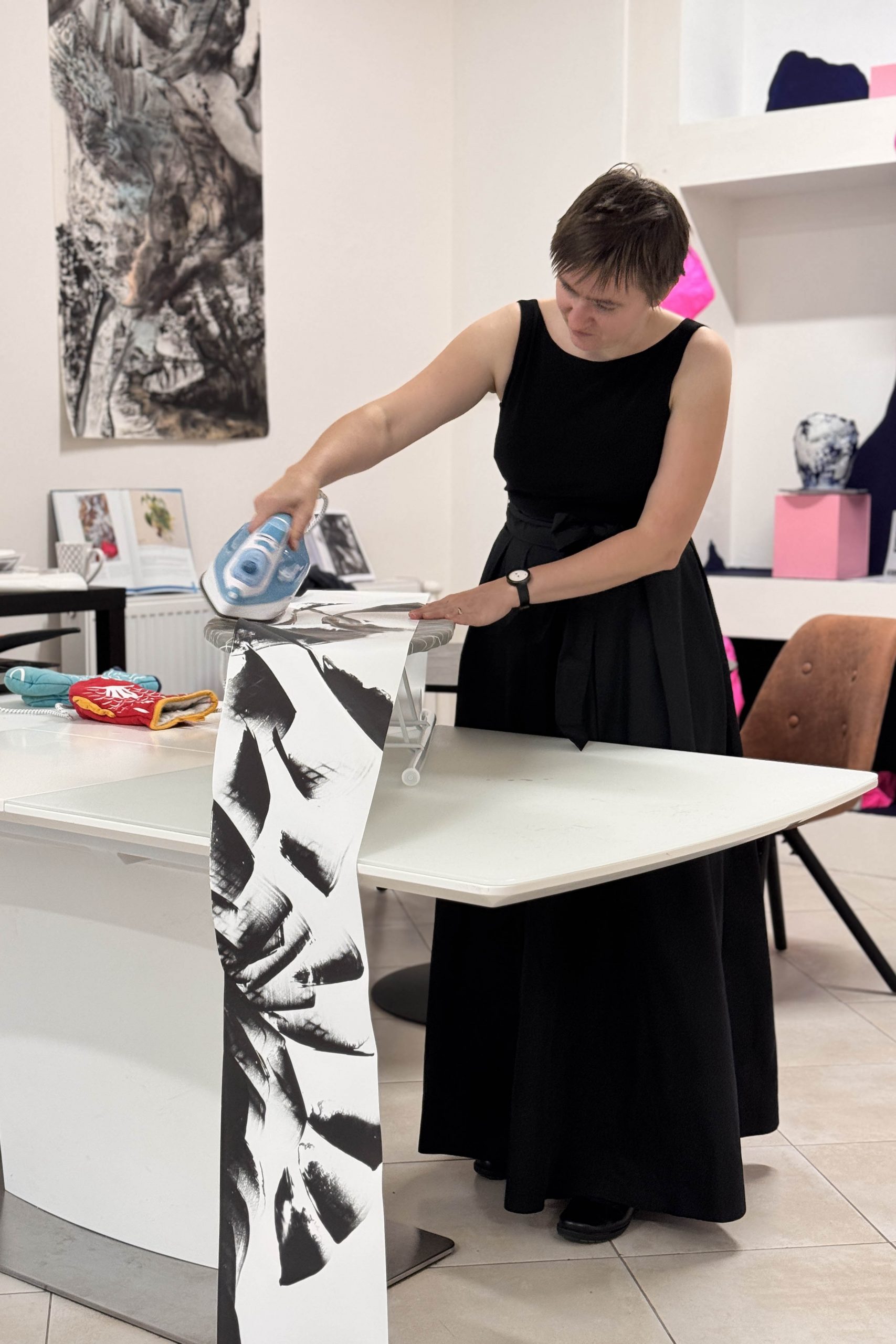
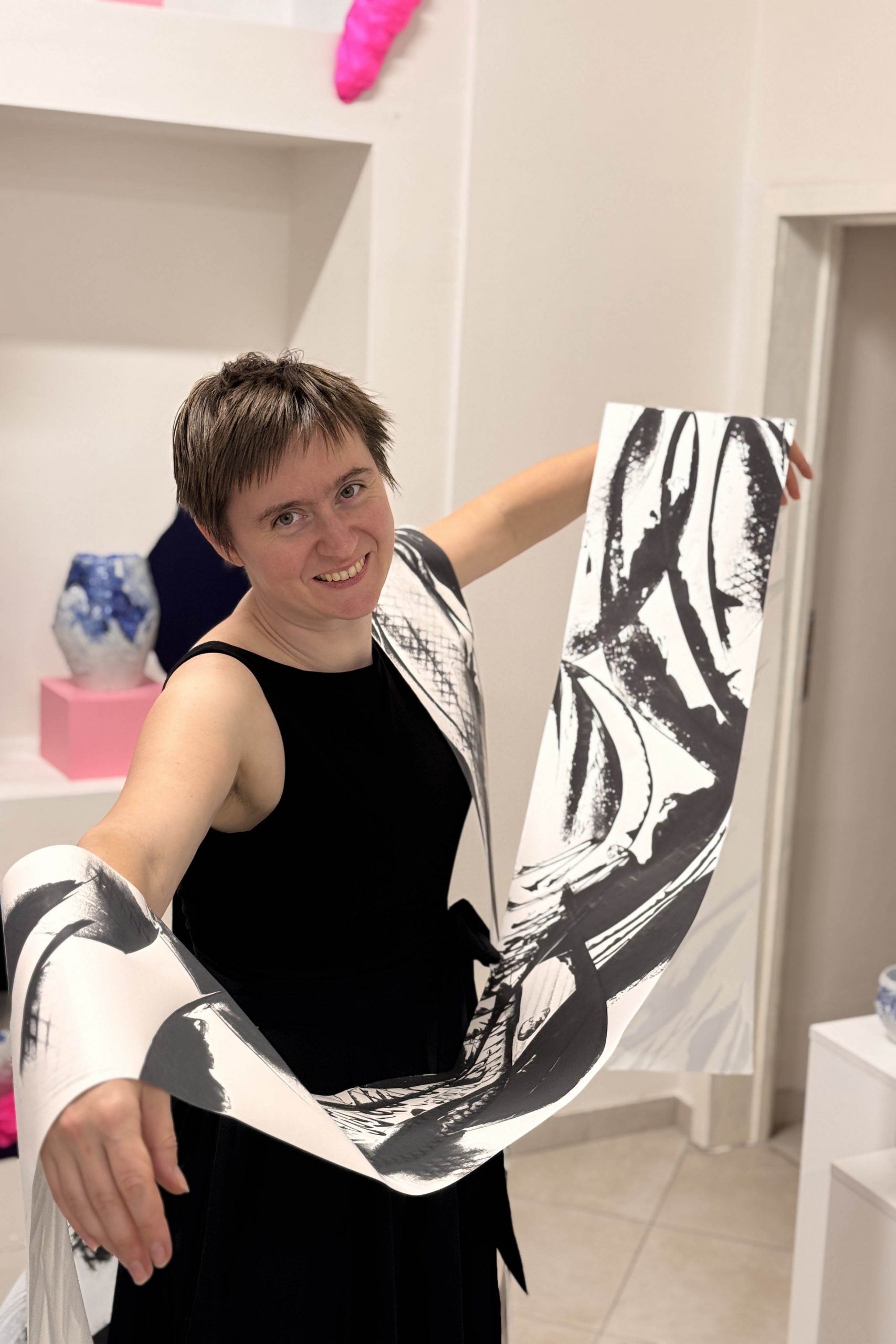
Upon contact with a hot pot, I will probably get burnt and the formed scar will remind me of this unpleasant situation until it disappears forever. Artworks called Hausfraukunst were created by touching and moving hot dishes over thermosensitive paper. The hallmark of thermosensitive paper is that the information recorded is not stabile, therefore the created stroke will fade out over time and in the end will disappear forever.
Drawings on thermosensitive paper are for me a metaphor of a Sisyphean cycle of housework. As soon as you finish, it begins again, said Ori Levin. She sees a parallel between housework and video in a gallery space, which plays over and over again in an endless loop. In case of these artworks, it is necessary to accept that compared to cleaning it is impossible to maintain the drawing in any way nor to preserve its original state.
Hausfraukunst
kresba na termocitlivém papíře 2019/2020
performance 2025
Když se holou rukou dotknu horkého nádobí, tak se nejspíš popálím a vzniklá jizva mi nějakou dobu bude tuto událost nepříjemně připomínat, až nakonec zmizí. Díla s názvem Hausfraukunst vznikla dotekem a tahem horkého nádobí po teplocitlivém papíře. Specifikem termocitlivého papíru je to, že záznam na něm není stálý, takže vniklá stopa bude v průběhu času blednout, až se ztratí úplně.
Kresby na termopapíře jsou pro mě metaforou sisyfovské práce v domácnosti. Jistě to znáte, jakmile skončíte, můžete začít nanovo. Podobě i Ori Levin vidí paralelu ve videích v galerijním prostoru, která se přehrávají pořád dokola v nekonečné smyčce. Domácí práce taktéž představují nikdy nekončící činnost, jejíž konec Vás vrací zpět na začátek (as soon as you finish, it begins again). V případě děl kolekce Hausfraukunst je proto nutné se umět smířit s tím, že na rozdíl od úklidu není možné žádným způsobem kresbu udržovat ani zachovat její původní stav.
Hausfraukunst
Zeichnungen auf dem Thermopapier 2019/2020
Performance 2025
Falls ich mit baren Händen eine heiße Pfanne anfasse, höchstwahrscheinlich verbrenne ich mich und die Wunde wird mich an diesen unangenehmen Unfall sehr lange erinnern, bis sie verschwindet. Die Werke Hausfraukunst werden mit dem heißen Kochgeschirr im Sinne des Pinsels hergestellt. Durch Berühren und Streichen z.B. der heißen Pfanne über thermosensitives Papier habe ich ein unstabiles Bild gemalt. Die Besonderheit des Thermopapiers liegt darin, dass die Aufzeichnung nicht dauerhaft ist, infolgedessen werden die Zeichnungen allmählich verblassen, bis auf dem Papier keine Erinnerung an die Zeichnung mehr bleibt.
Diese Thermozeichnungen spiegeln für mich die Metapher der Sisyphusarbeit im Haushalt wider. Sie kennen bestimmt dieses unendliche Hausarbeitsszenario: sobald Sie fertig sind, können Sie sofort erneut anfangen. „As soon as you finish, it begins again“ beschrieb Ori Levin die Hausarbeit, die sie mit Videoaufnahmen im Ausstellungsraum verglich. Die Verbindung zwischen denen sieht sie in der Endlosschleife.
Bei diesen Kunstwerken muss man akzeptieren, dass es im Vergleich zur Reinigung unmöglich ist, die Zeichnung auf irgendeine Weise zu erhalten oder ihren ursprünglichen Zustand zu bewahren.
Siderity
movable and static objects, different sizes 2022 – 2025
How satisfying it is to crumple up your failed work and throw it into the trash.
How satisfying it is to crumple up your failed work and throw it into the trash. These hordes of crumpled balls of our failed work, filled with aggression and frustration, form the foundations of our future success the fruits of which we like to enjoy. It is therefore easy to ask whether our whole world is not based on destruction, and whether it in fact is part of collective subconsciousness, the kind of root system from which all creative force stems. Isn’t it then a fundamental principle that moves the whole universe?
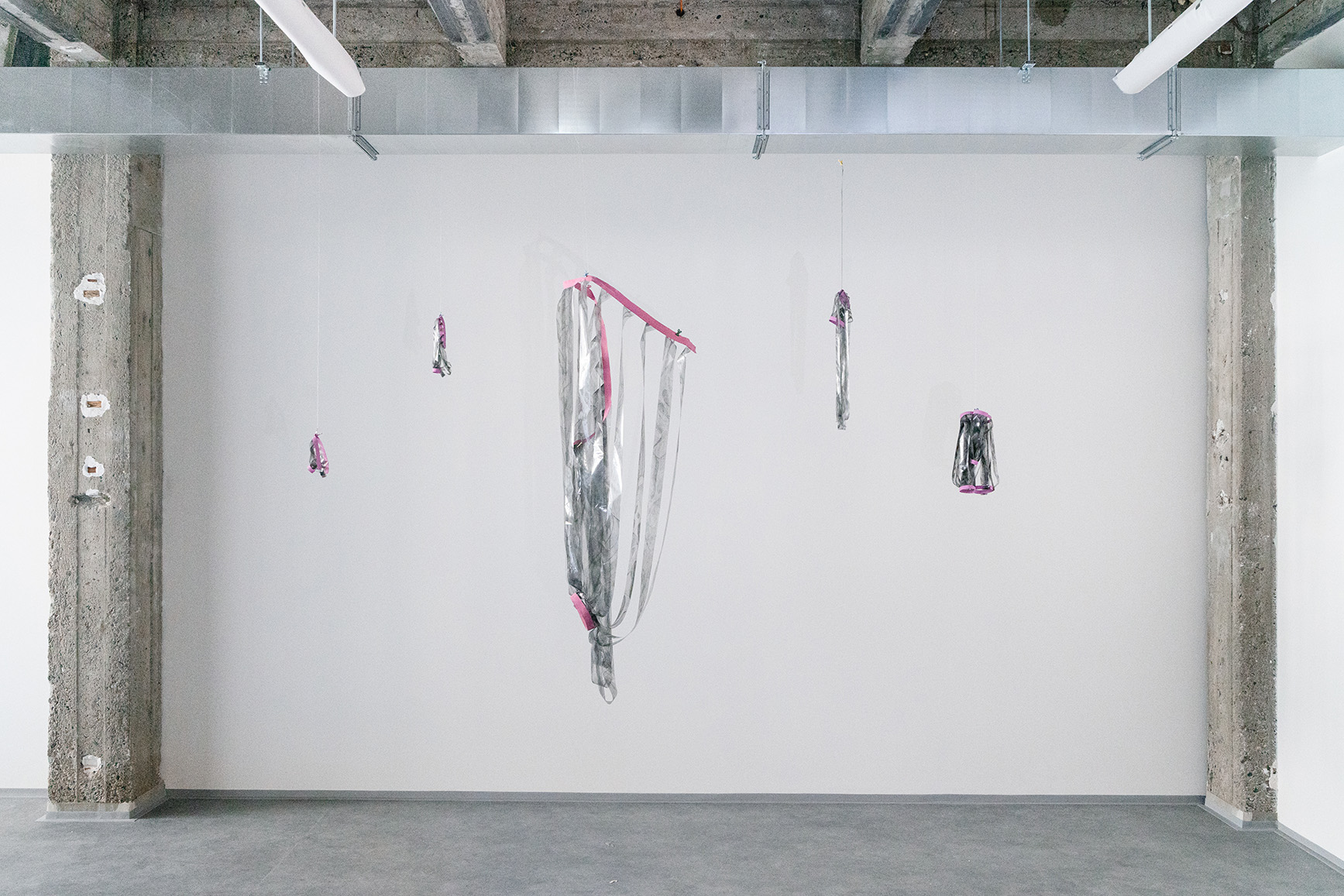
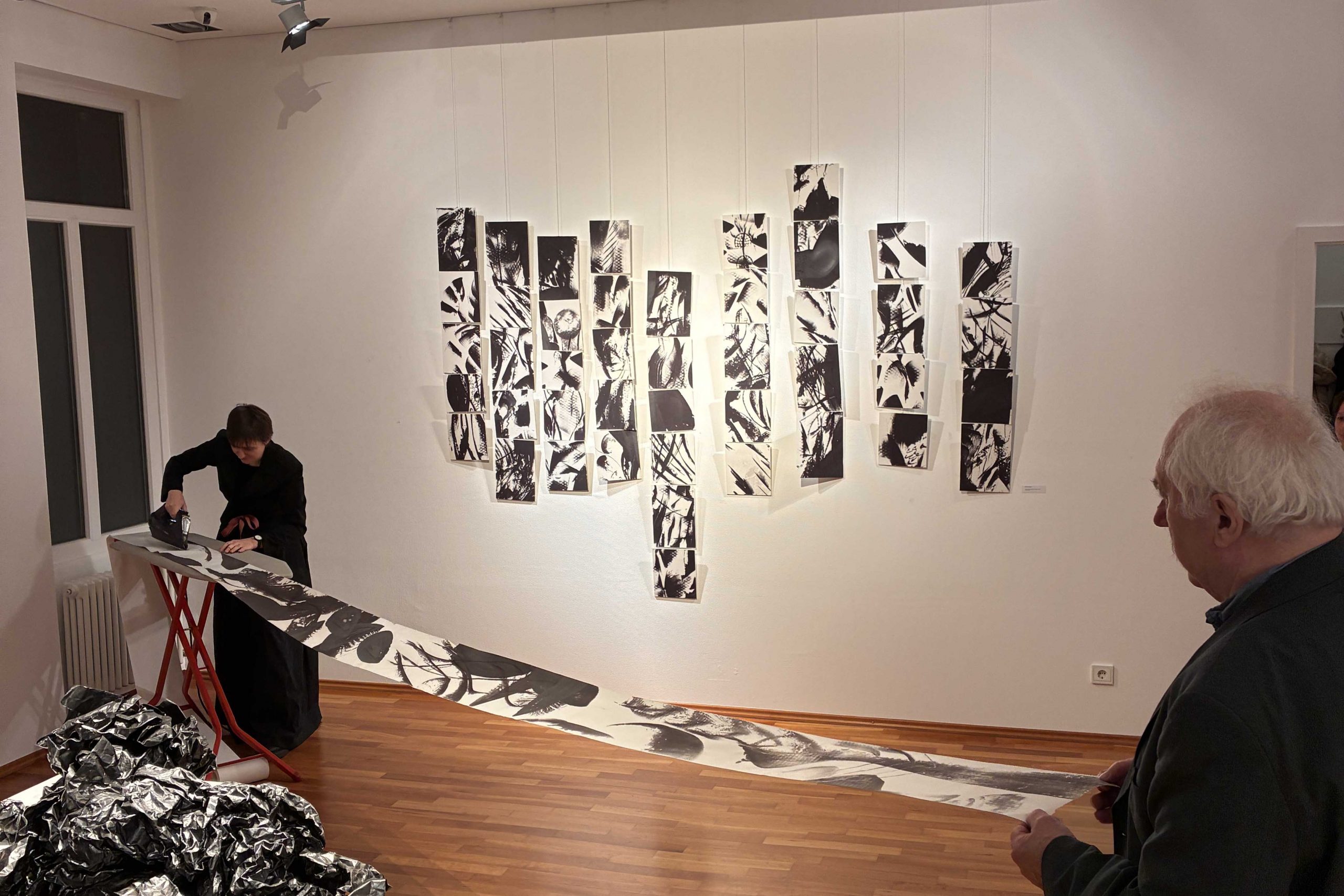
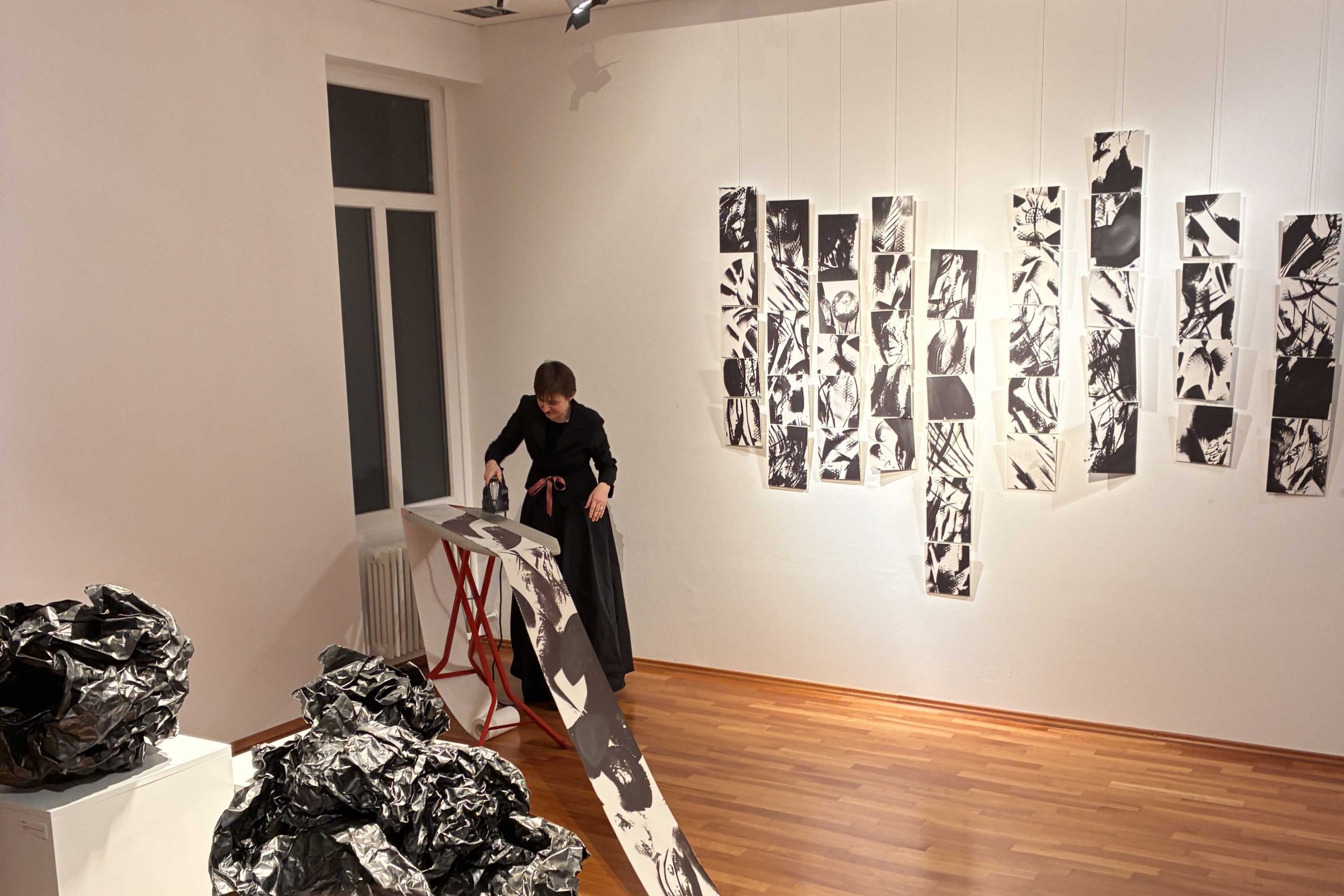
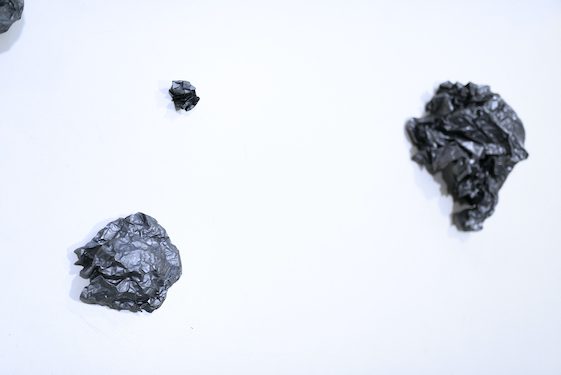
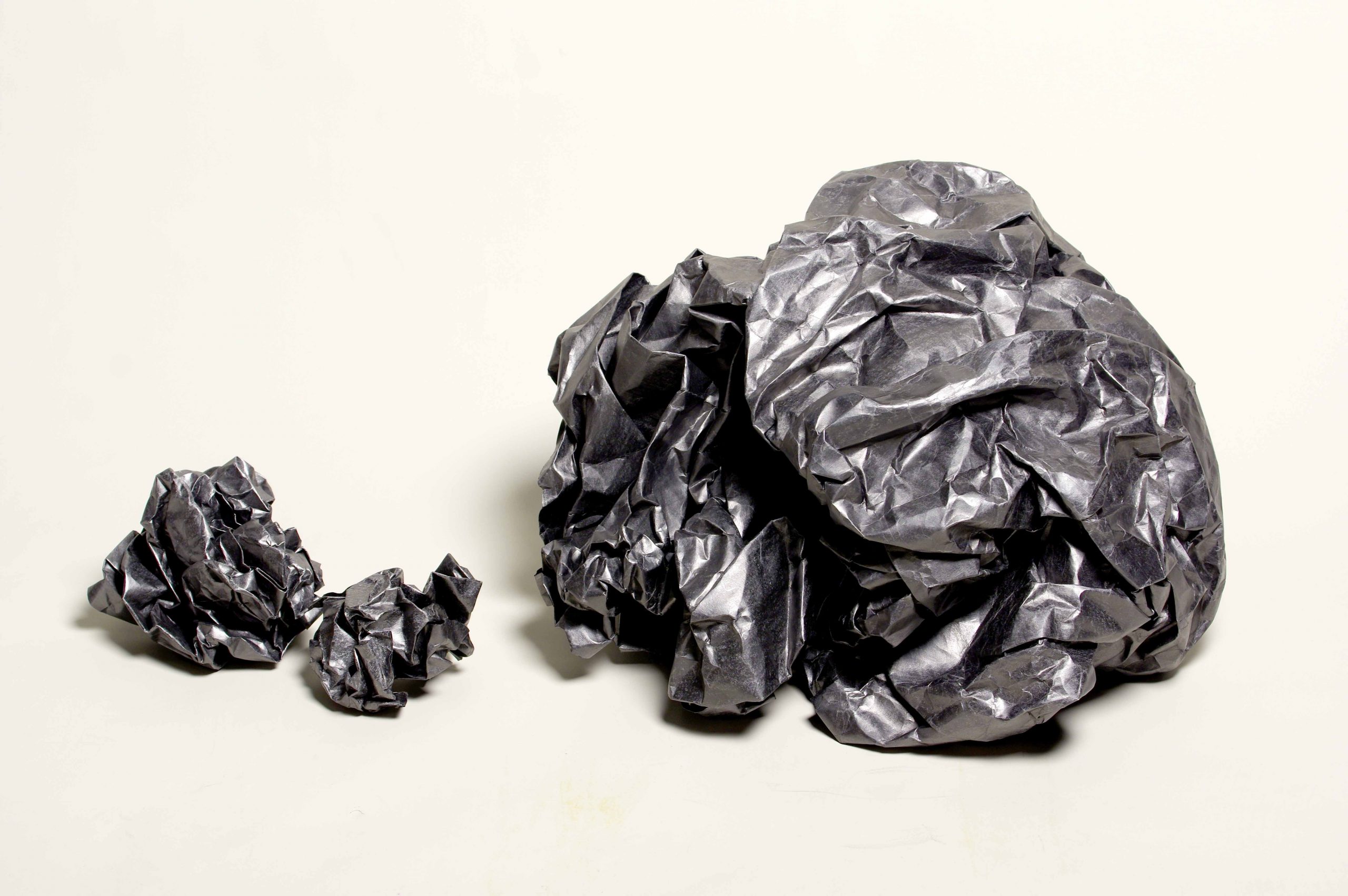
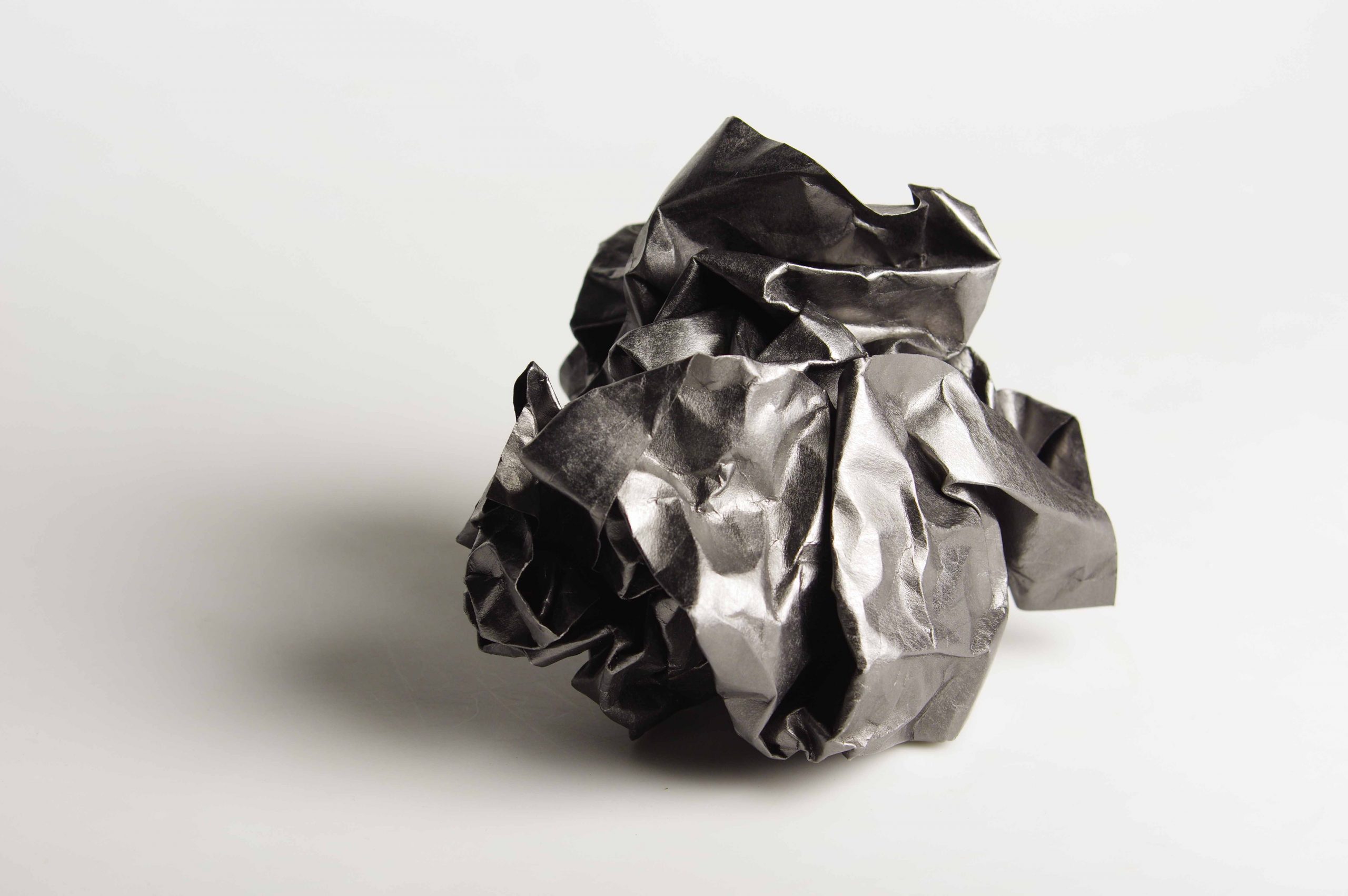
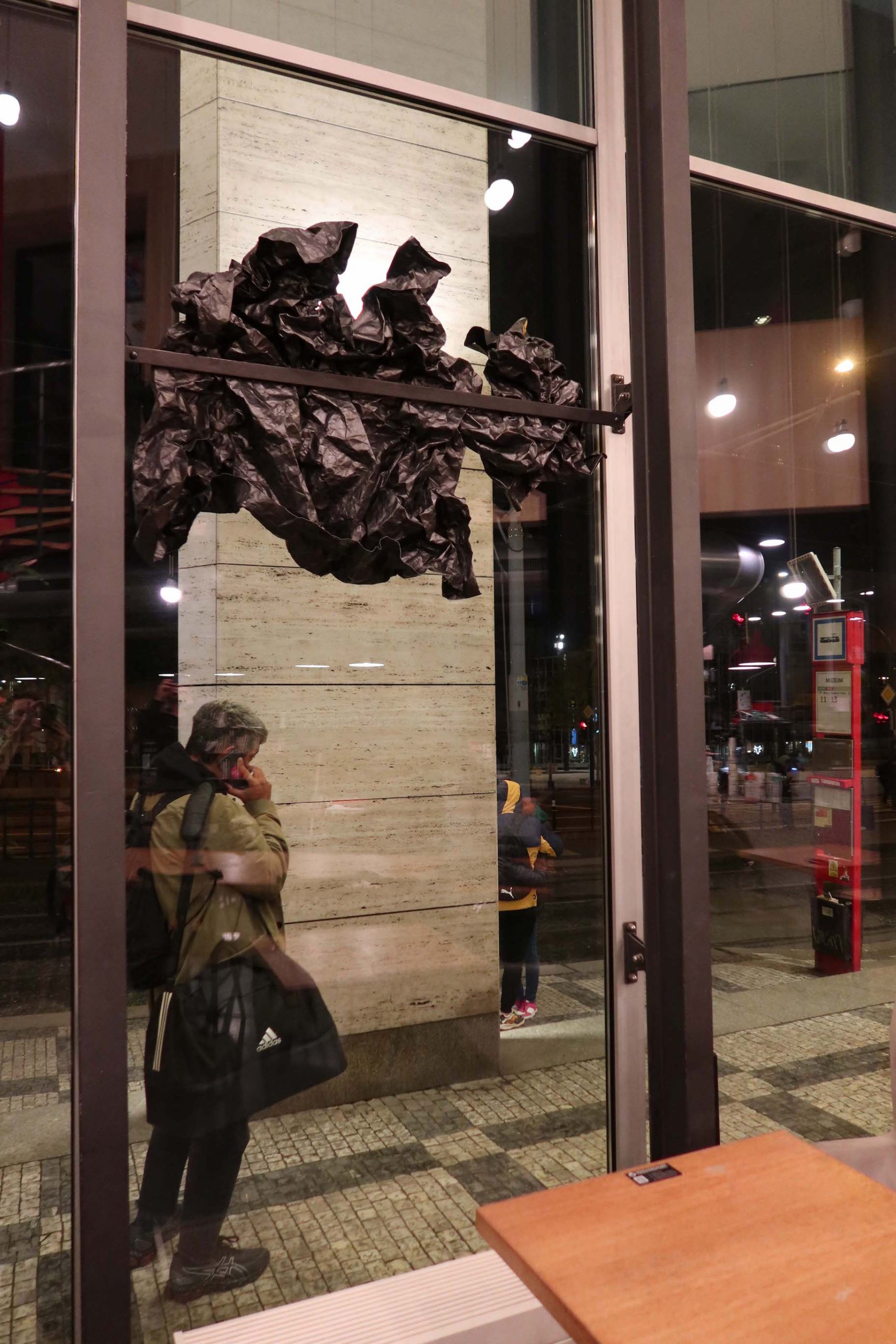
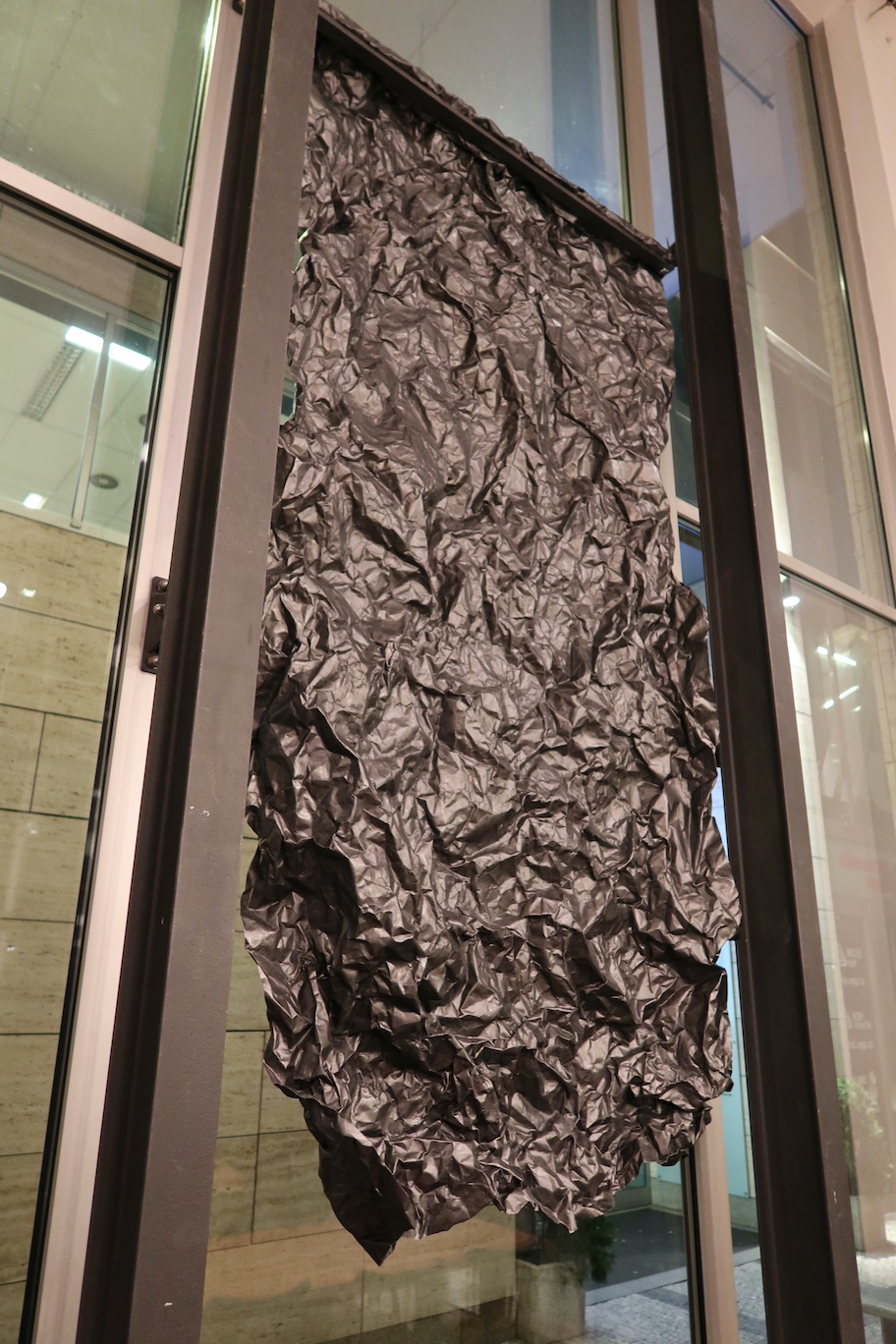
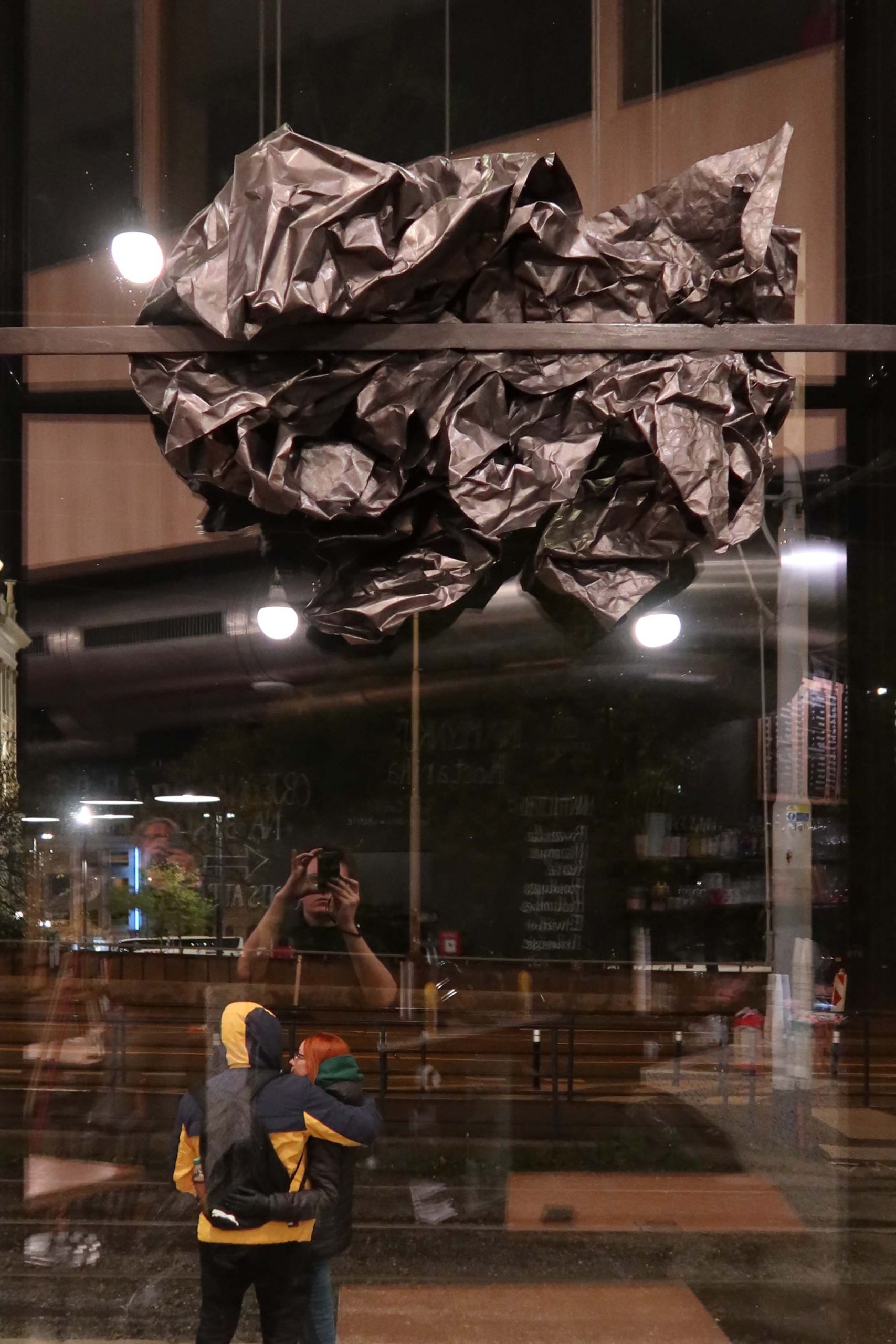
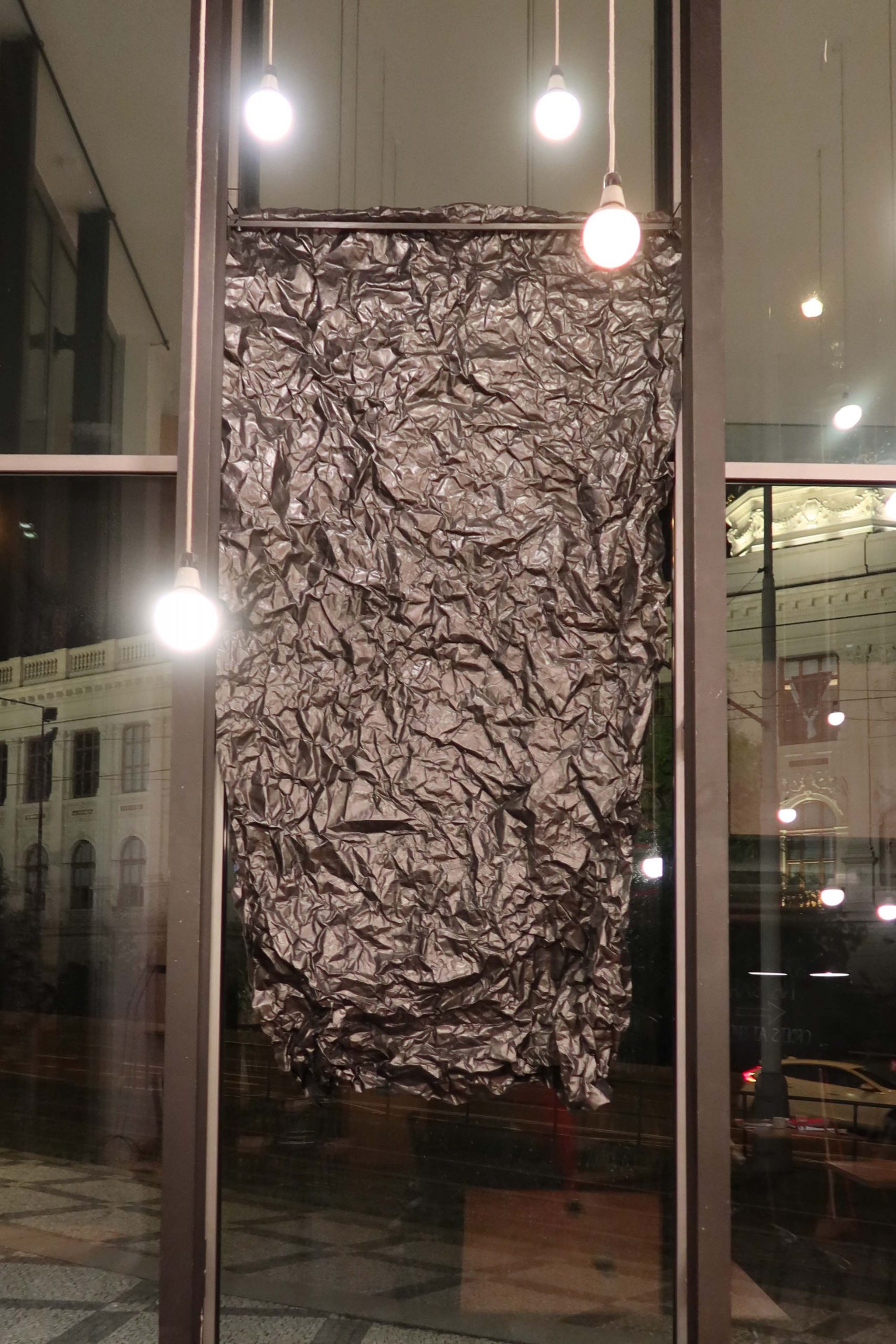
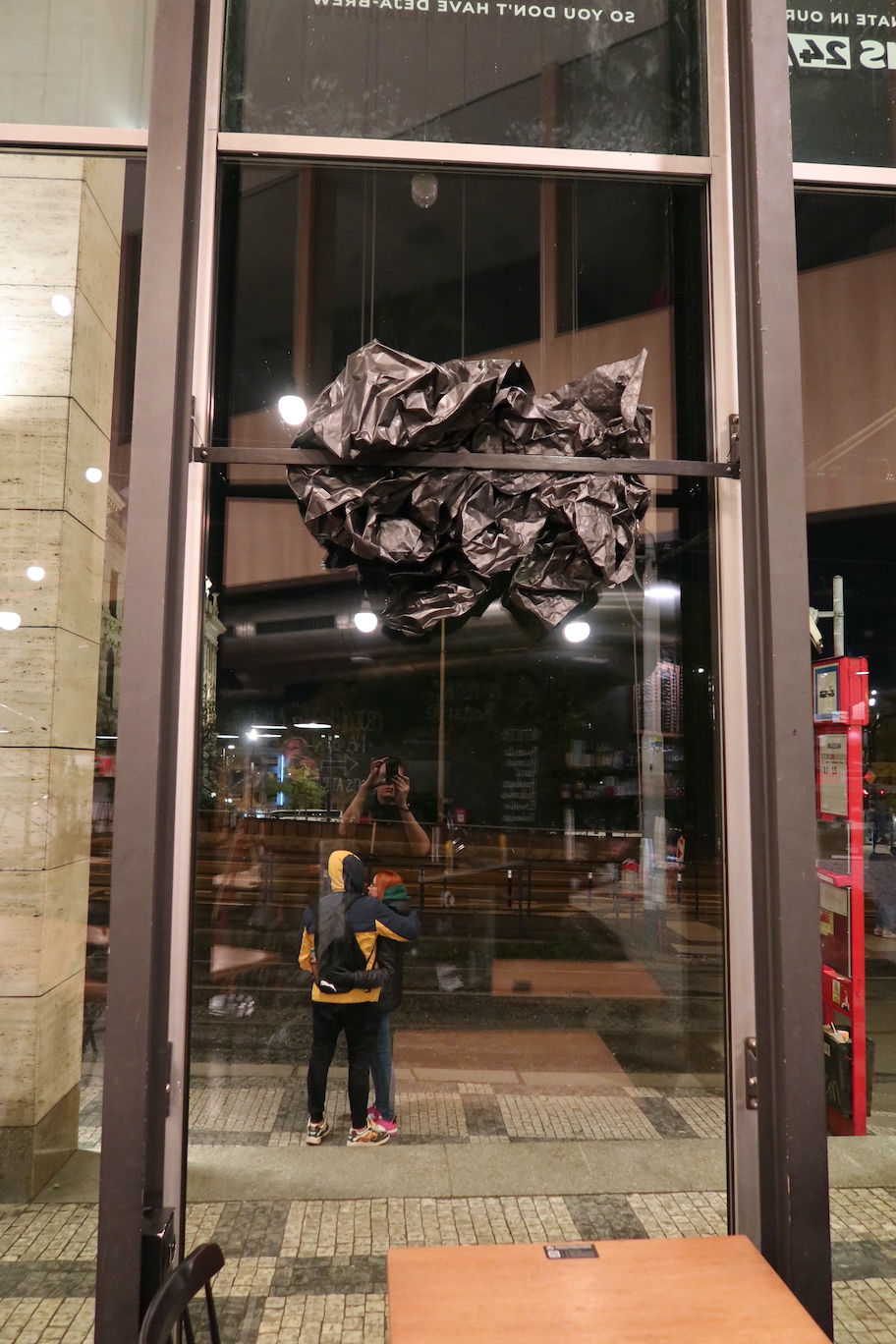
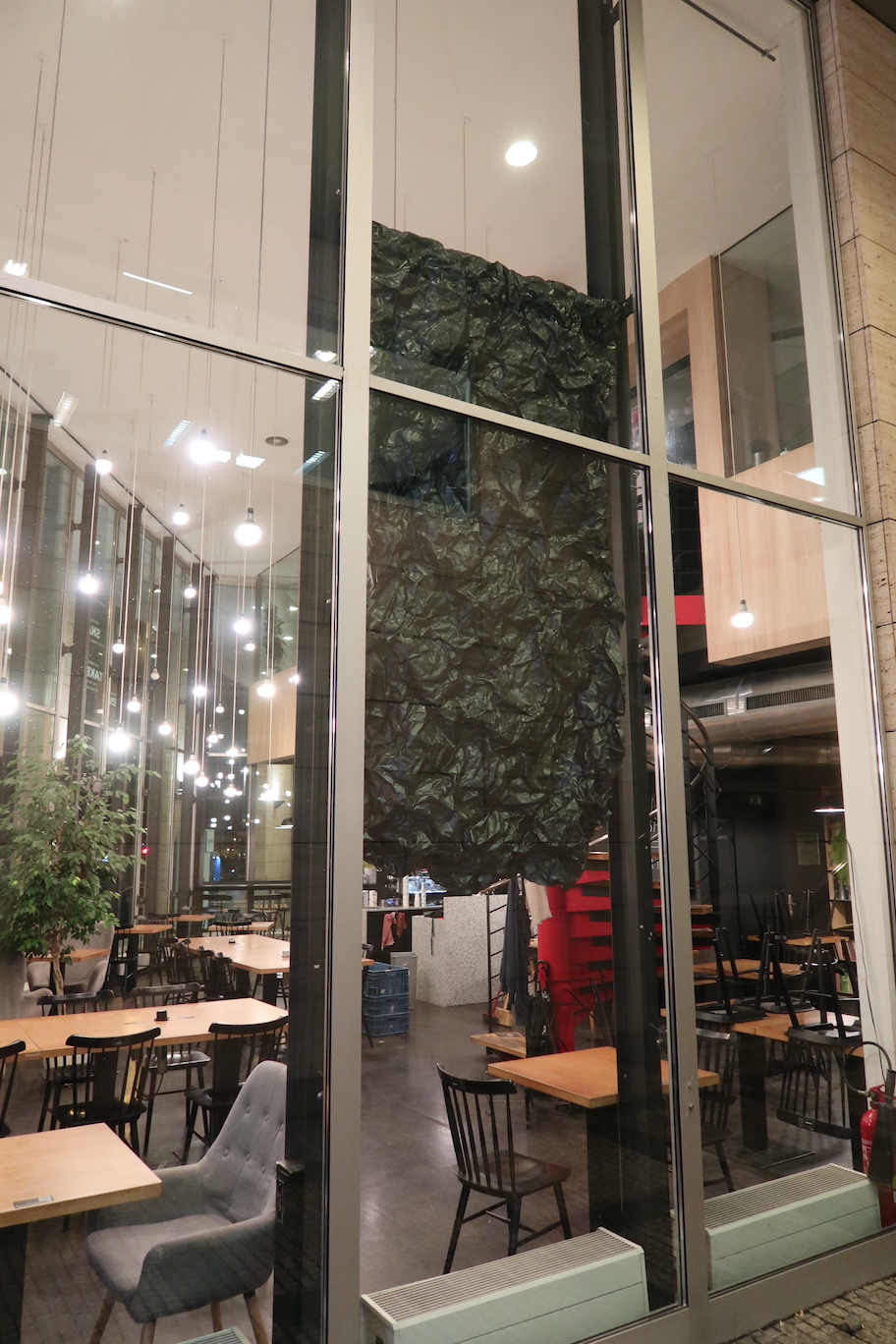
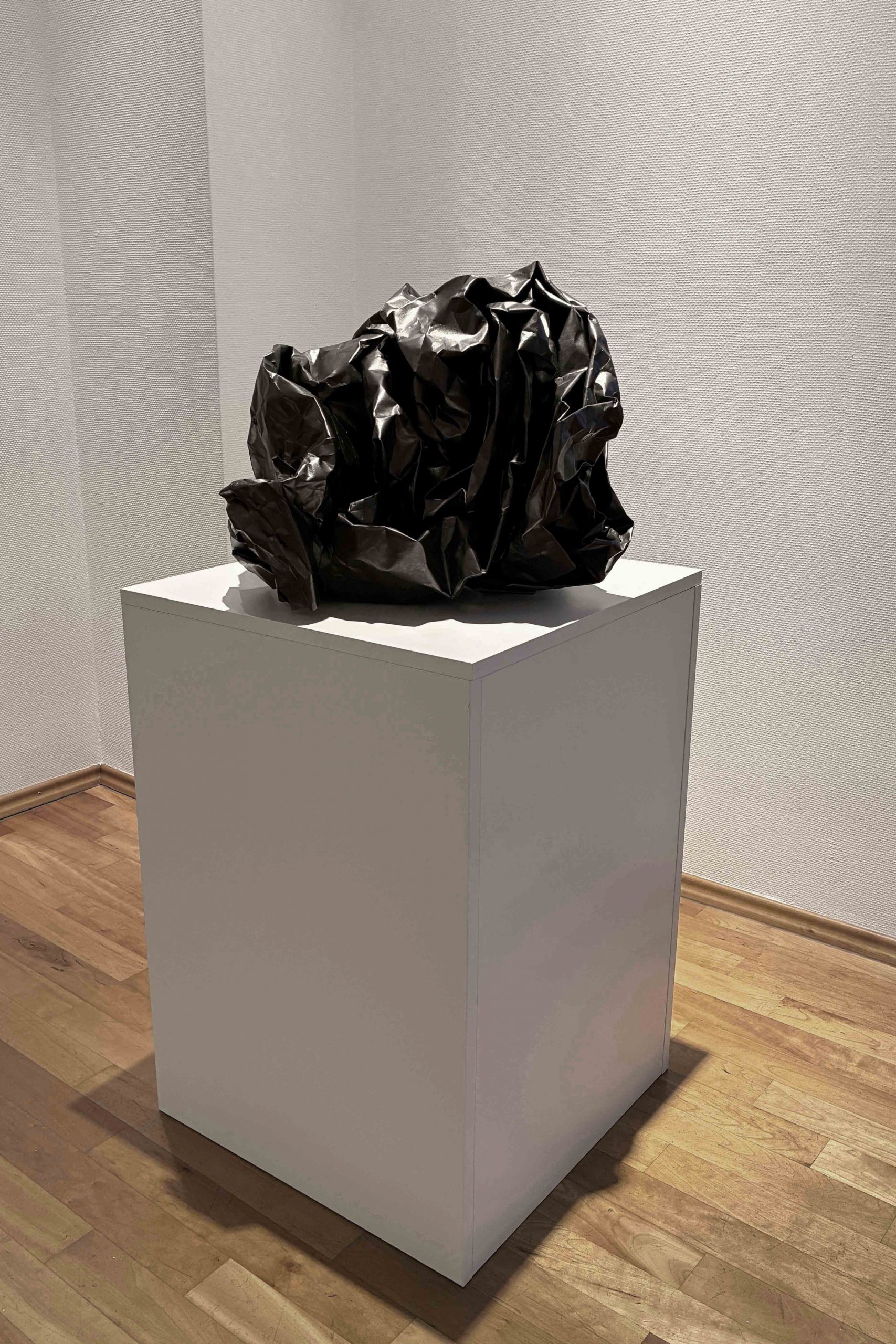
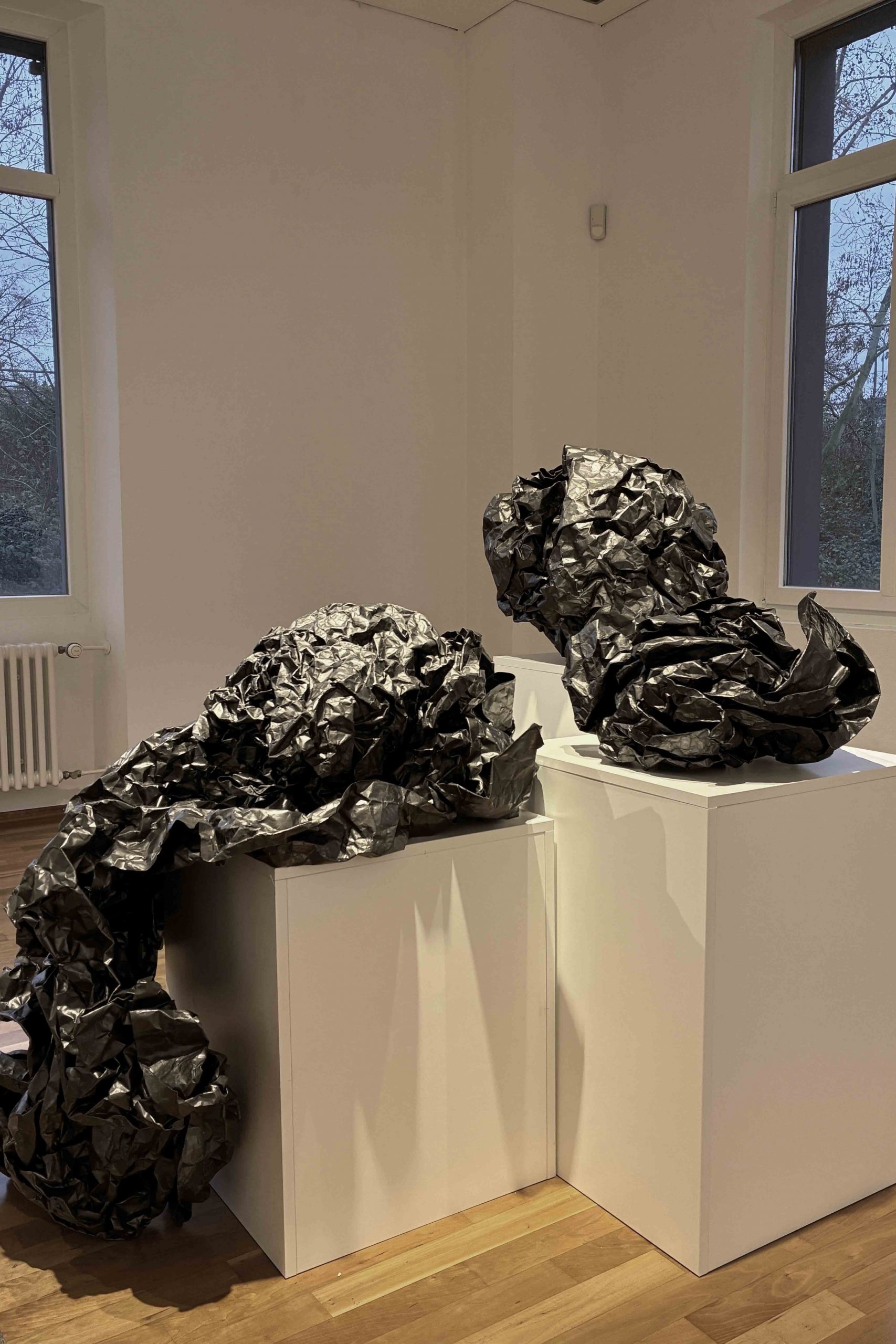
The objects called Siderits were made by covering the white surface of paper with several layers of graphite drawing that would build up to create a metal-like surface. In doing so, the paper underwent a substantial visual change from a soft and malleable paper to hard metal.
Using my hands and my body, I then deformed the paper into a crumpled paper ball.
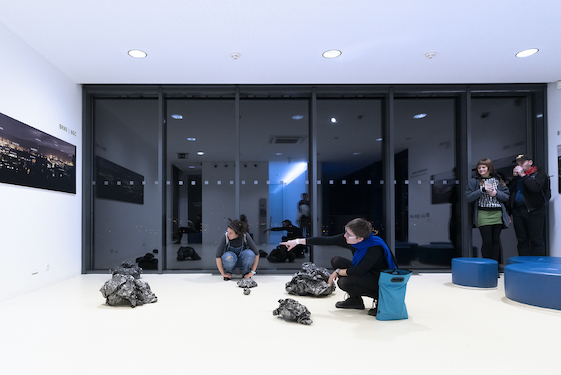
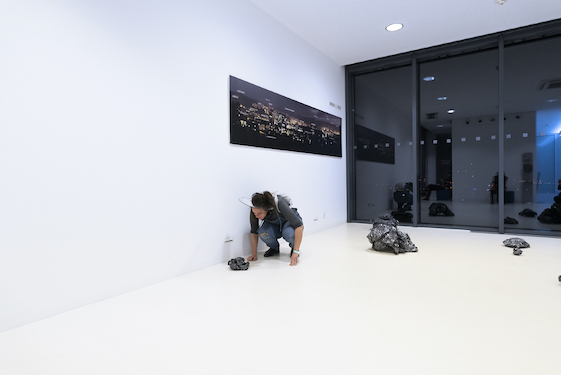
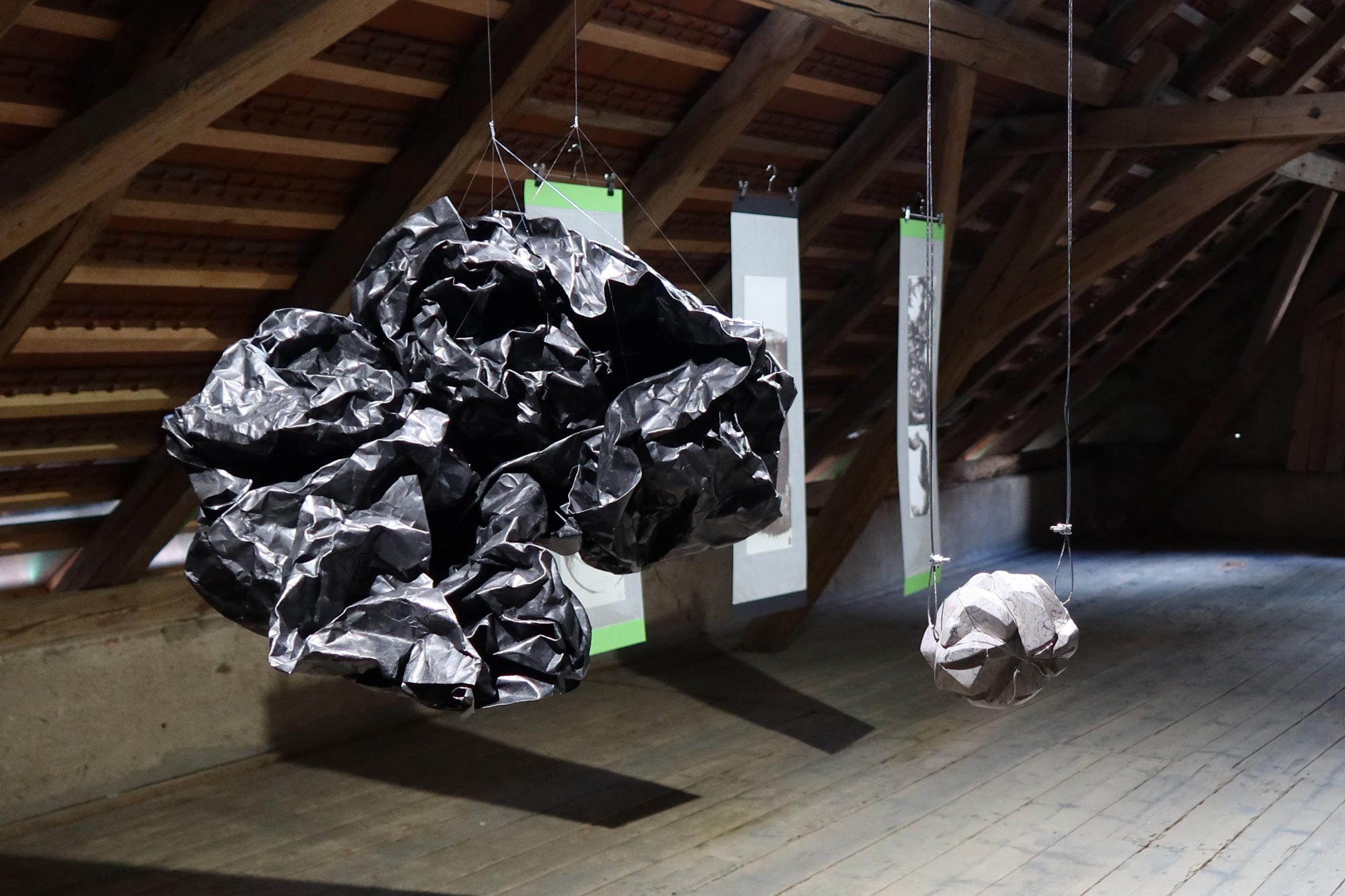
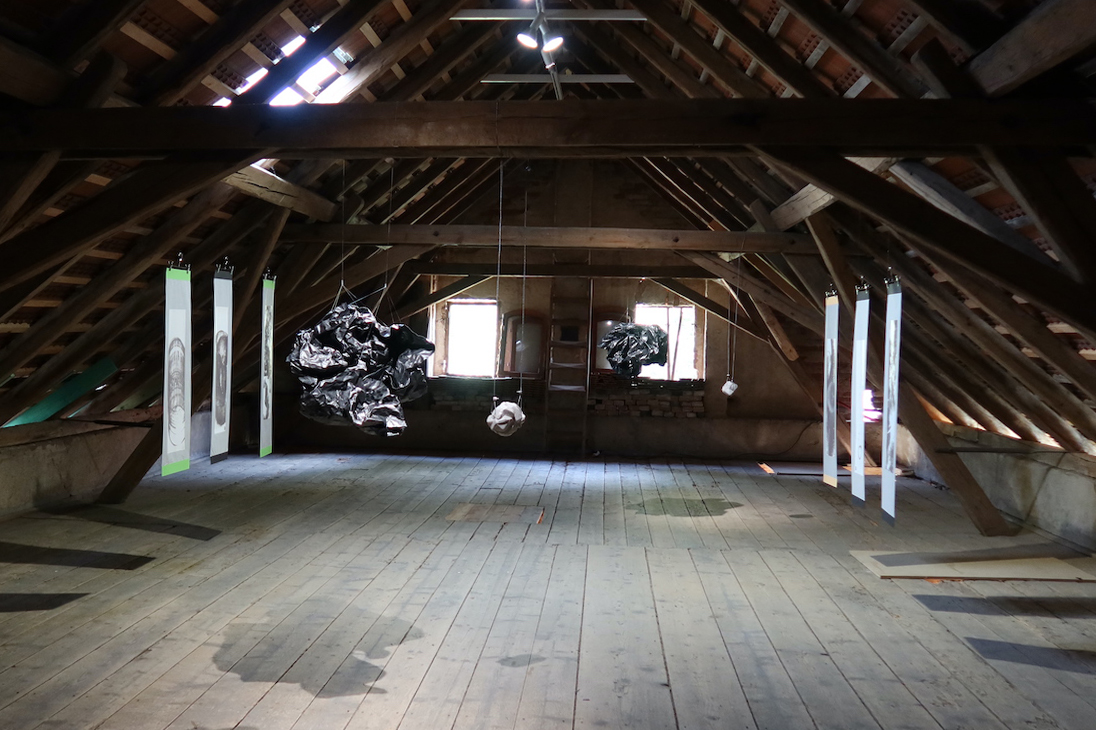
For a festival called „Sonda“ (which is Probe in English) in a planetarium I used the properties of my Siderits to create an alien impact situation on site. My artworks there simulated pieces of ore or rock scattered around the room. In fact, siderite is a type of iron meteorite, an exploded core of a planet. Siderits were forced to leave their planet and also their planetary system to find a new home on Earth. That’s the story behind this installation, for this case I added a motor into the objects so they could lightly vibrate in a randomized interval. The audience wasn’t sure if the objects were organic or not.
Siderity
pohyblivé i statické objekty, různé velikosti 2022/2025
Je tak uspokojivé naštvaně zmuchlat papír a zahodit jej do koše, případně na již překypující hromadu zmuchlaného papíru vznikající v jeho okolí.
Toto společenství může někdy připomínat až hordy zmačkaných koulí a vzniklo díky naší agresivitě a frustraci z nepovedené práce. Ale nejsou tyto hordy pomyslným pilířem, na kterém stojí konečný výsledek, za který sklidíme kýžené plody? Nevyhnutelný odpad, následek vzteku, destrukce a nutné bolesti, z nichž však vychází každá tvůrčí činnost nejenom lidská.
Objekty s názvem Siderity vznikly tak, že bílý povrch papíru byl pokryt několika vrstvami grafitové kresby, než vznikl povrch podobající se kovu. Tím prošel papír určitou vizuální proměnou z měkkého a tvárného materiálu do tvrdého kovu. Použitím mého těla a rukou byl papír násilně zpacifikován do kuličky zmačkaného papíru.
Pro festival s názvem „Sonda“ v brněnském planetáriu jsem použila vlastnosti svých Sideritů, abych na místě vytvořila situaci s dopadem mimozemské entity. Moje díla zde simulovala kusy rudy nebo horniny rozeseté po místnosti. Siderit je ve skutečnosti druh železného meteoritu, vybuchlého jádra planety. Siderity byli nuceni opustit svou planetu a také svůj planetární systém, aby našli nový domov na Zemi. To je příběh této instalace, pro tento případ jsem do objektů přidala motorek, aby mohly lehce vibrovat v náhodném intervalu. Diváci si tím pádem nebyli jistí, zdali se jedná o objekty organické nebo anorganické.
Siderity
bewegliche und statische Objekte, verschiedene Größen 2022 – 2025
Es ist so beruhigend, ärgerlich ein Blatt Papier zu zerknittern und zu verwerfen. In den Papierkorb oder zur existierenden Papiergemeinschaft in seiner Umgebung.
Manchmal wird diese Gemeinschaft wie eine Horde zerquetschter Bälle scheinen, voller Frustration und Aggressivität von gescheiterter Arbeit. Könnte diese Horde eine gedankliche Säule sein, auf welcher das finale Ergebnis steht, das uns die gewünschten Früchte ernten lässt.
Der unvermeidliche Abfall, eine Mischung von Wut, Zerstörung und notwendigem Schmerz, aus dem jedoch alle schöpferische Tätigkeit, nicht nur die menschliche, hervorgeht.
Die Objekte unter dem Titel „Siderity“ wurde von Papier hergestellt, welches mit mehreren Graphitschichten überzogen wurde, bis die weiße Oberfläche des Papiers zu einer metallähnlichen Bedeckung wurde. Dadurch durchlief das Papier eine gewisse visuelle Verwandlung von einem weichen und verformbaren Material zu einem harten Quasimetall. Mit Hilfe meines Körpers und meiner Hände wurde das Papier gewaltsam zu einer Kugel aus zerknülltem Papier zusammengepresst.
Ornamental crime scene
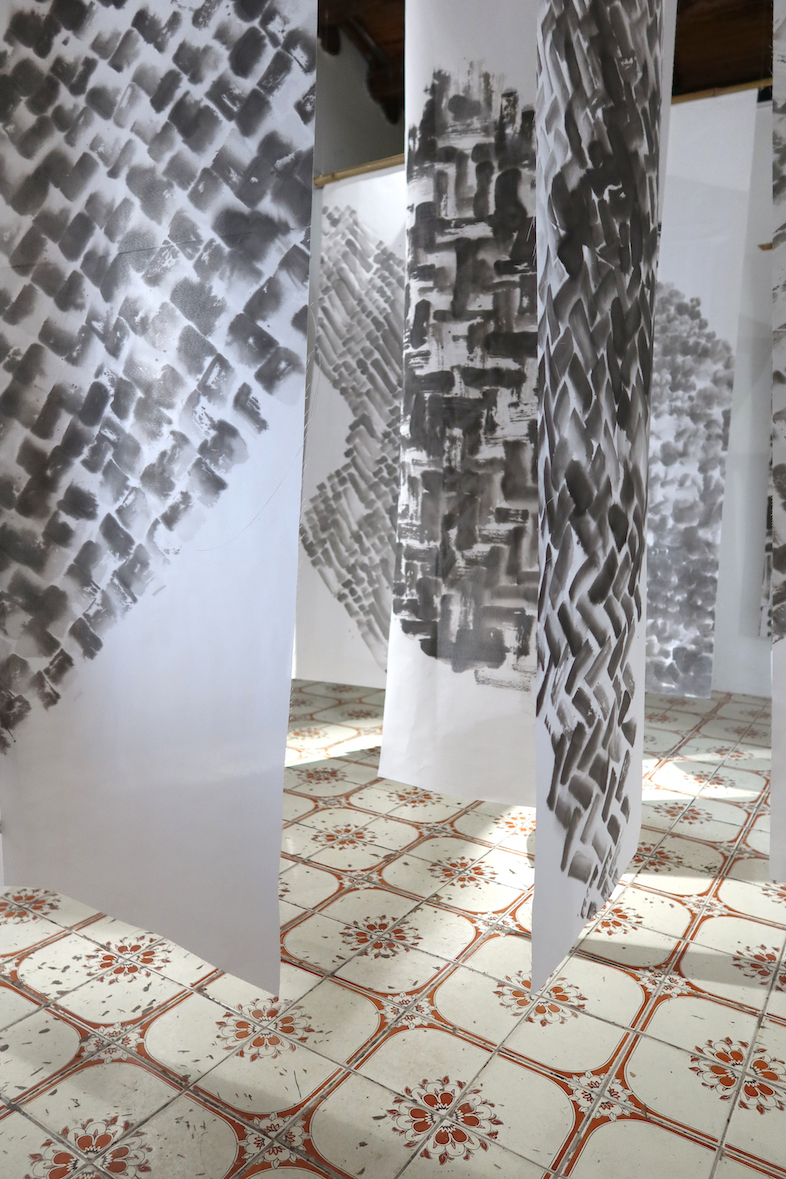
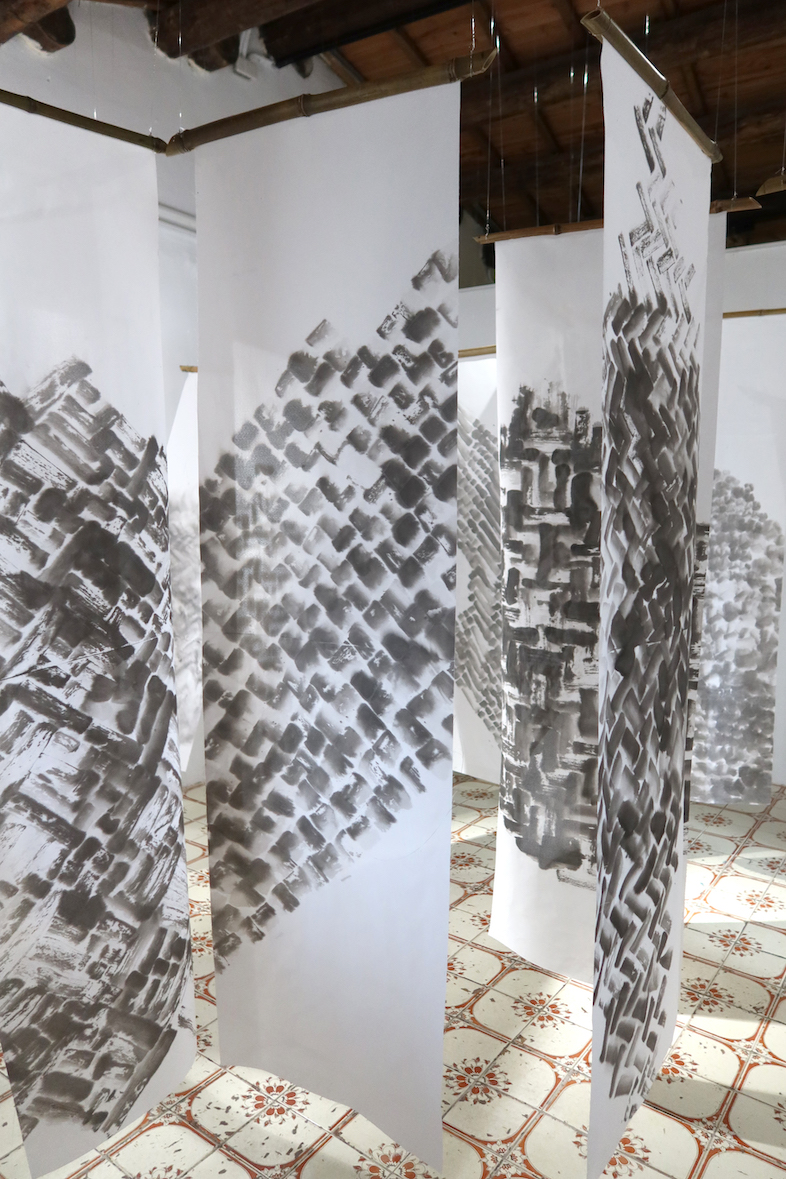
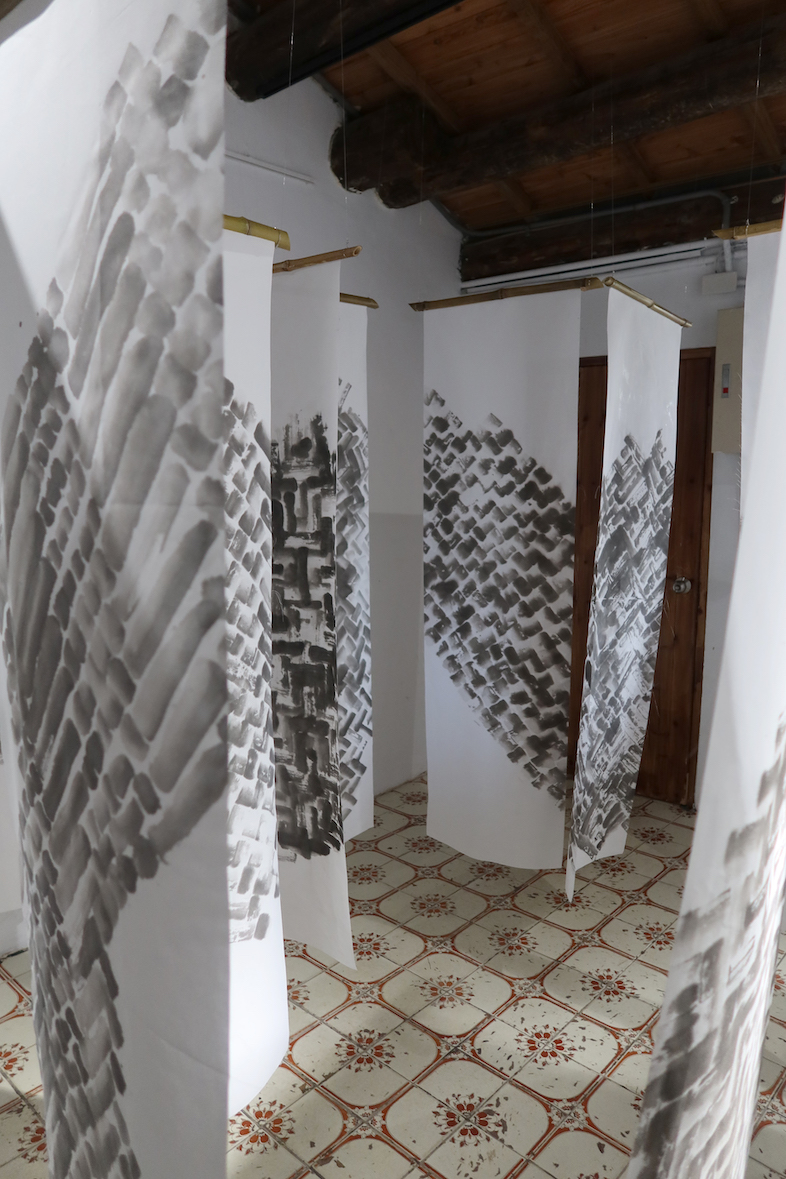
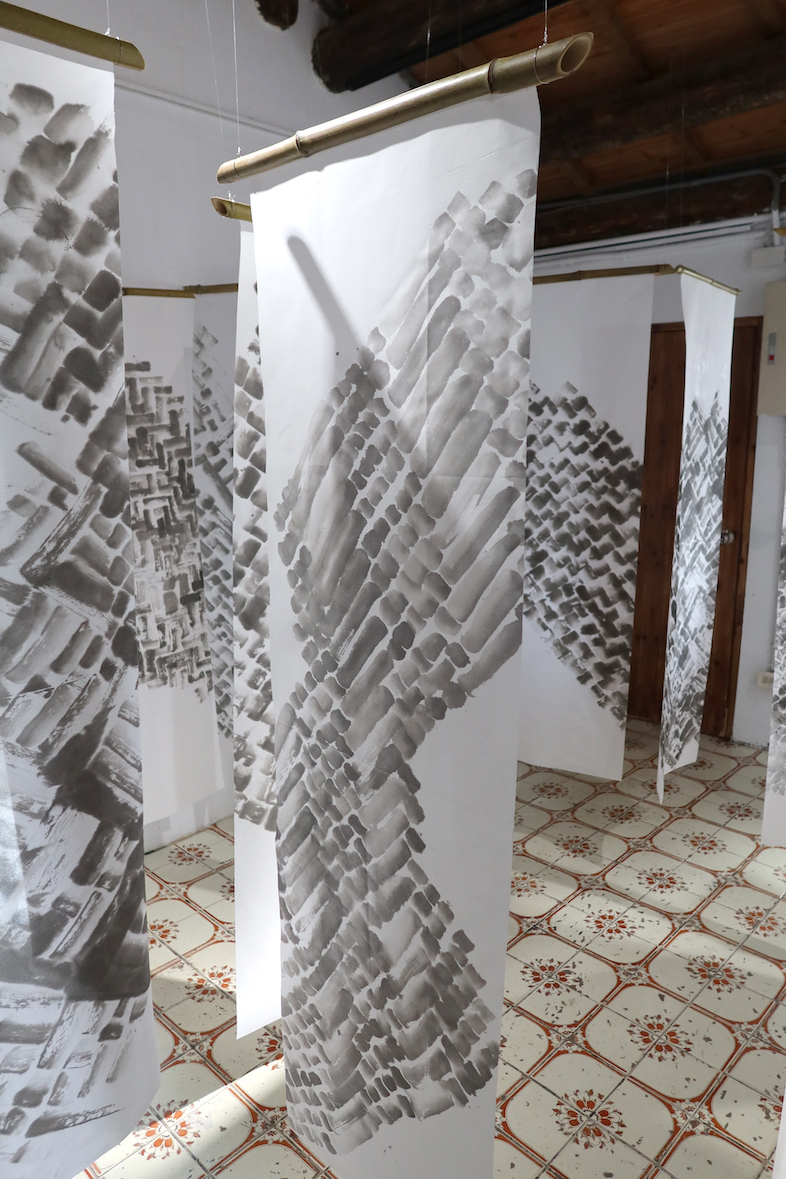
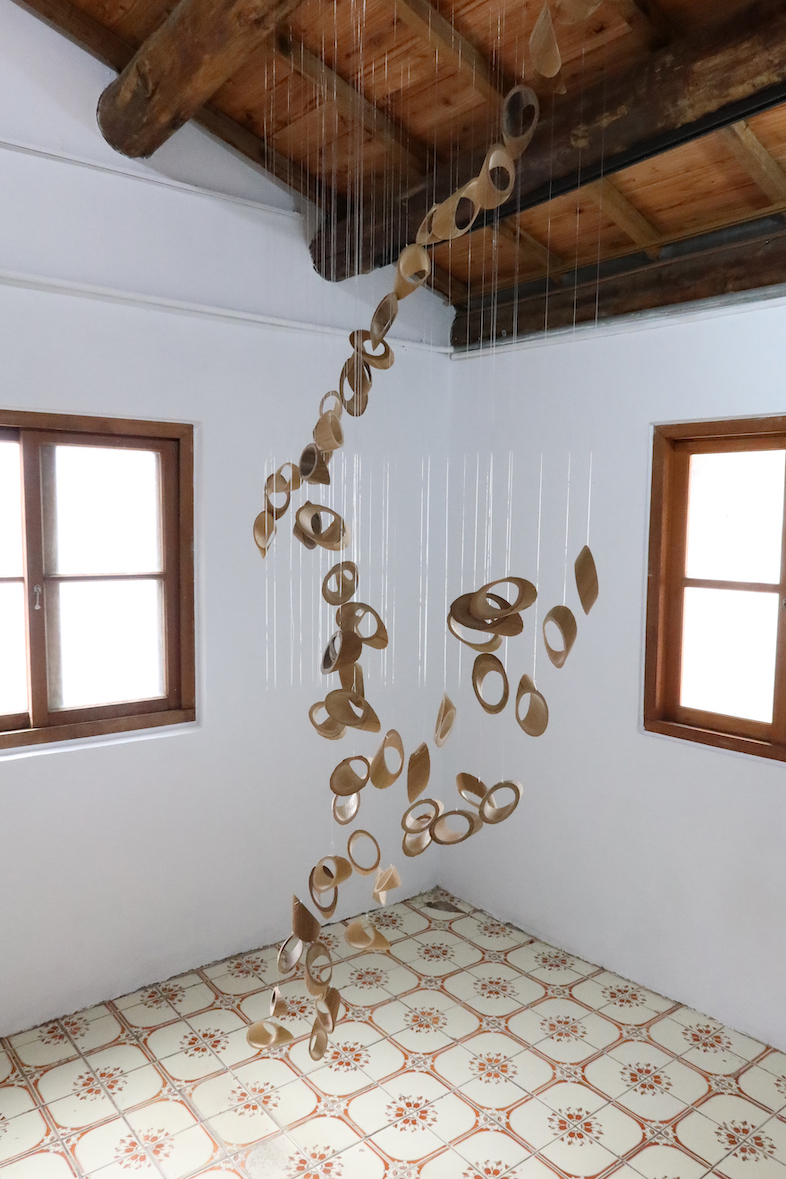
Bamboo is a widely used material in many branches, but what about in art?
How to pay a tribute to the craft and at the same time evaluate the usefulness of bamboo to a number of human cultures? After months of investigation into both the traditional and contemporary approach to bamboo, the site-specific exhibition “Ornamental crime scene” came to birth, aiming to use bamboo in contemporary art while not ignoring its original practical purpose.
Let the pattern talk!
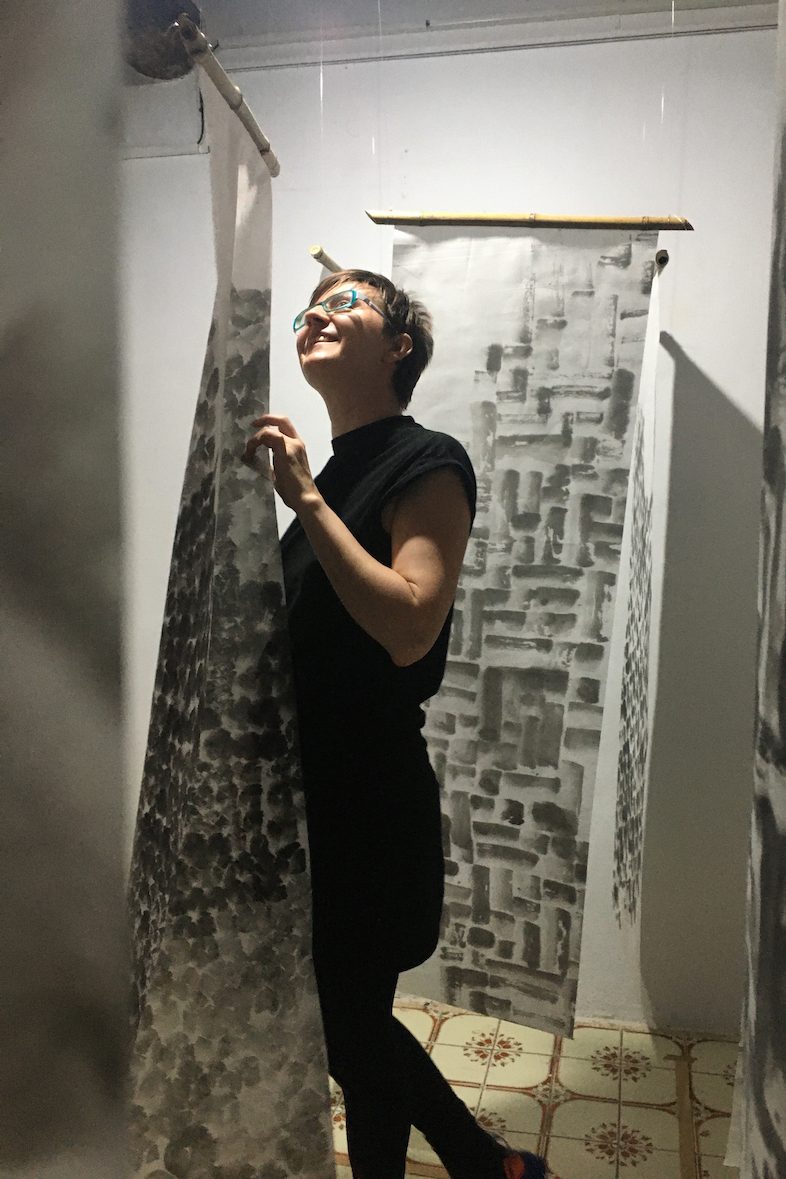
My visit to the Nantou Bamboo Museum and stay at the National Taiwan Craft Research and Development Institute finally gave me the idea of creating this maze of ink paintings. There I was mesmerized by all the possibilities of woven pattern techniques for creating vessels or baskets in various styles. In contrast to other ways of container decoration, both the characteristic shape of the vessel and also the decoration depend on the pattern itself. This allows us to question the boundary between the body of the vessel and a simple aesthetic element of decoration. To create a certain twist, I painted these patterns on textile with Chinese ink, the final representation is magnified and transferred onto the flat surface.
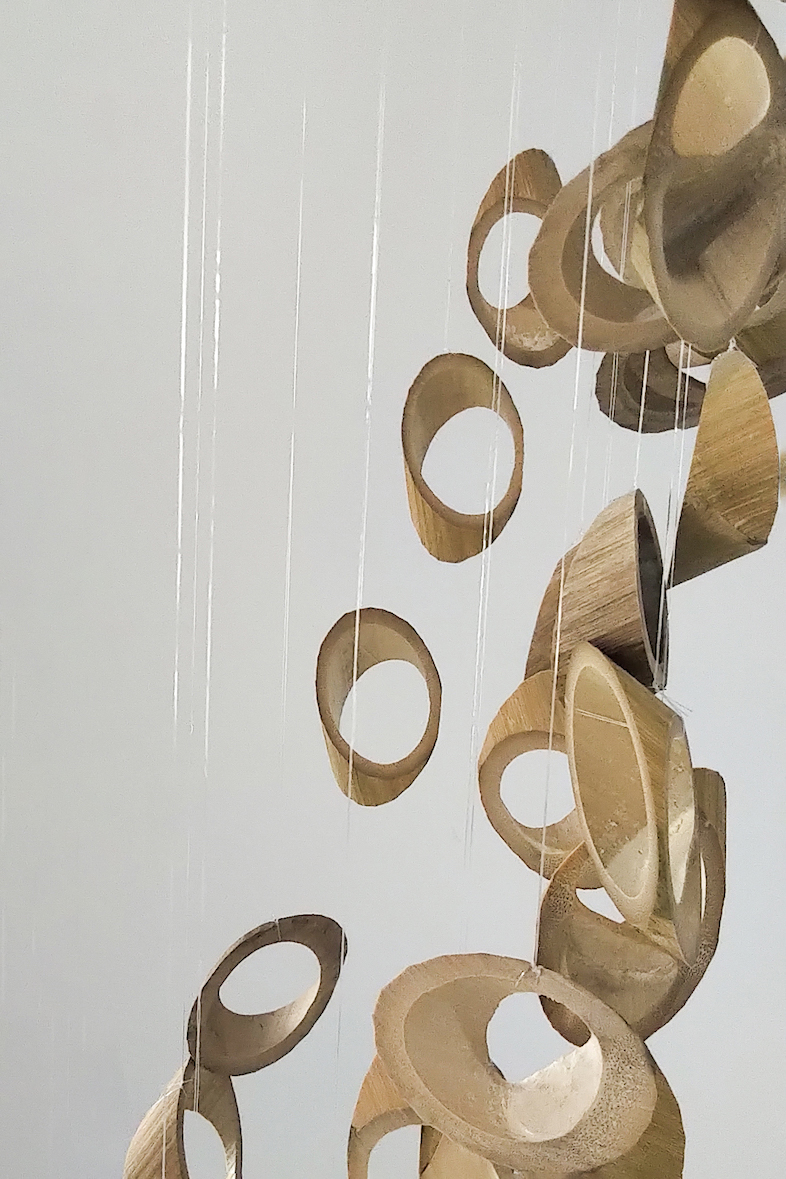
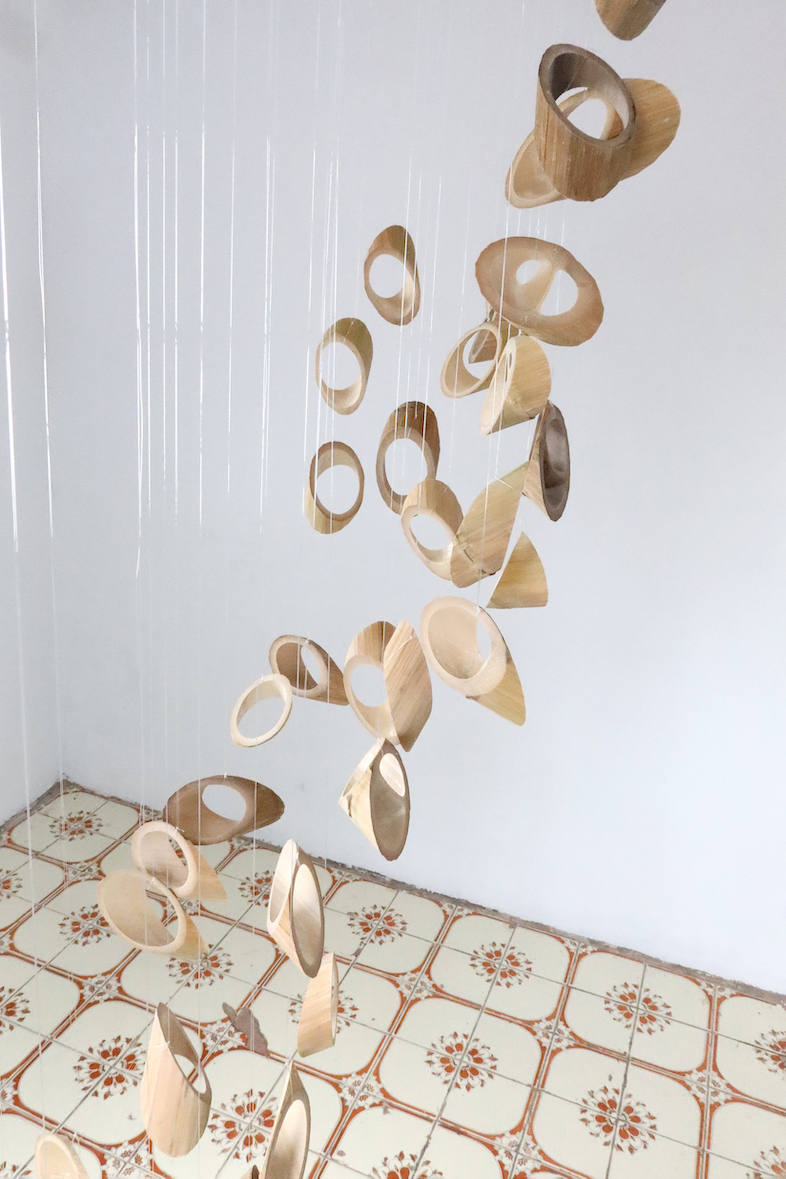
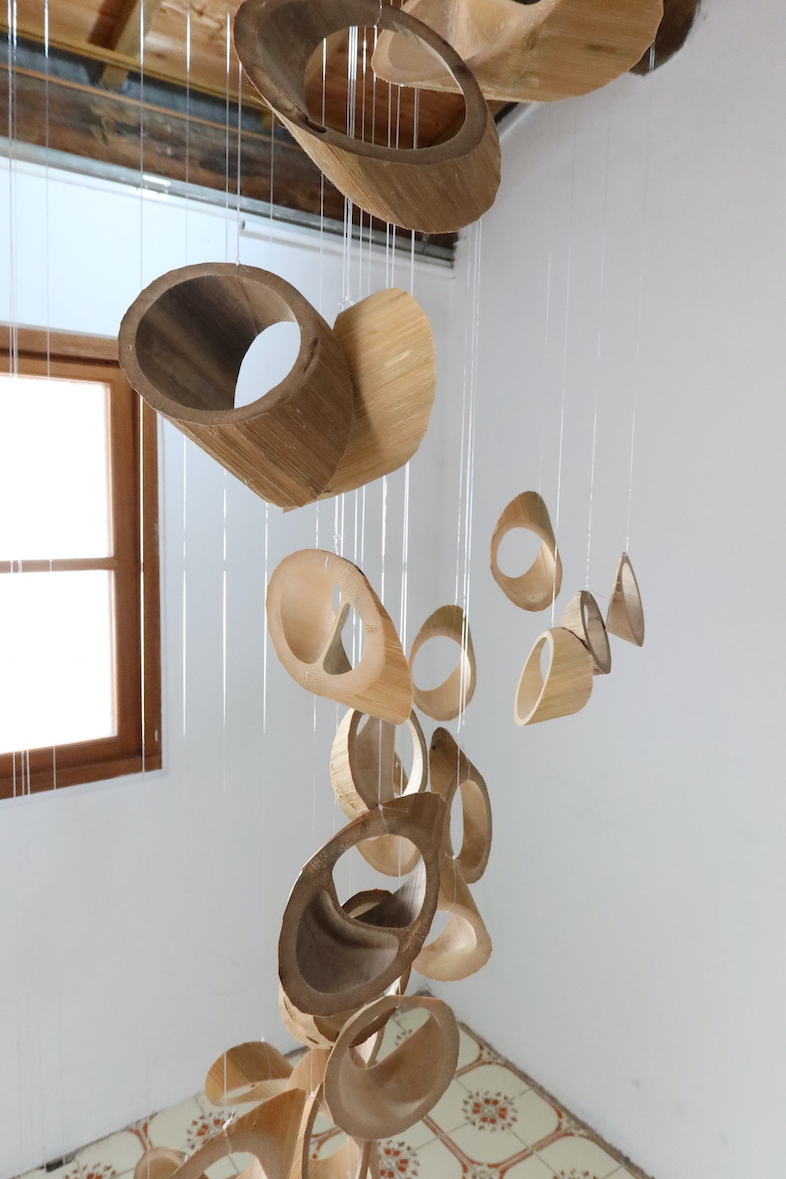
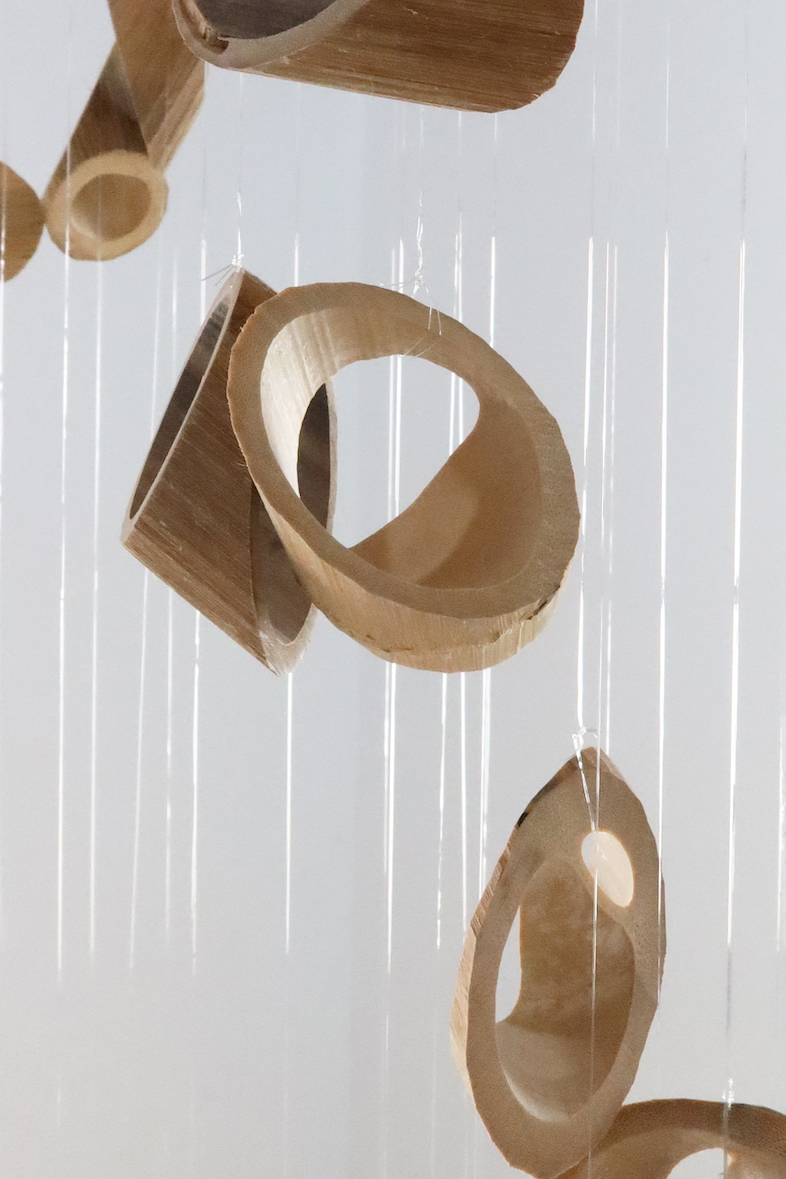
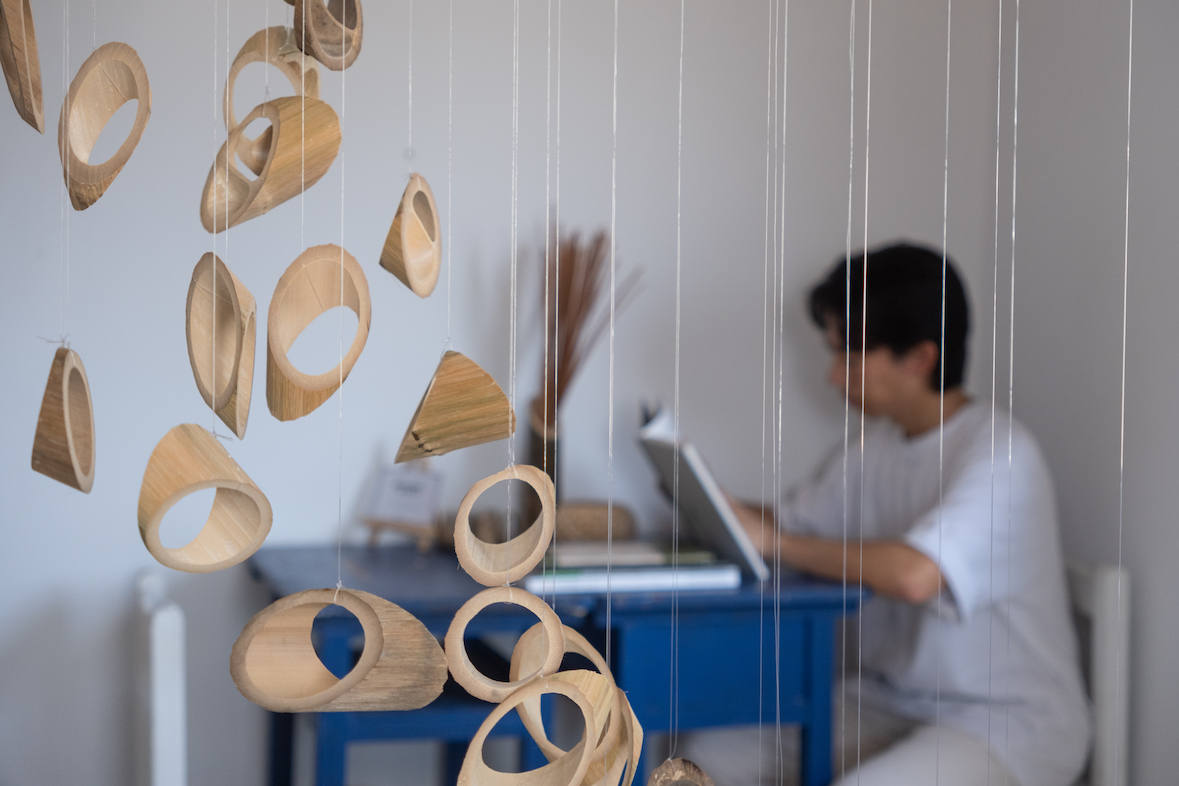
If you want to create something new, you must go to the roots of the material itself and not infinitely refer to the history of processing, this is the main piece of advice I give to my students. In order to find the limits of bamboo processing, various segments of bamboo selected for the installation “levitate bamboo” were sawn up on these two conditions: each segment was to have the thinnest edge possible on the one side and the thickest on the other.
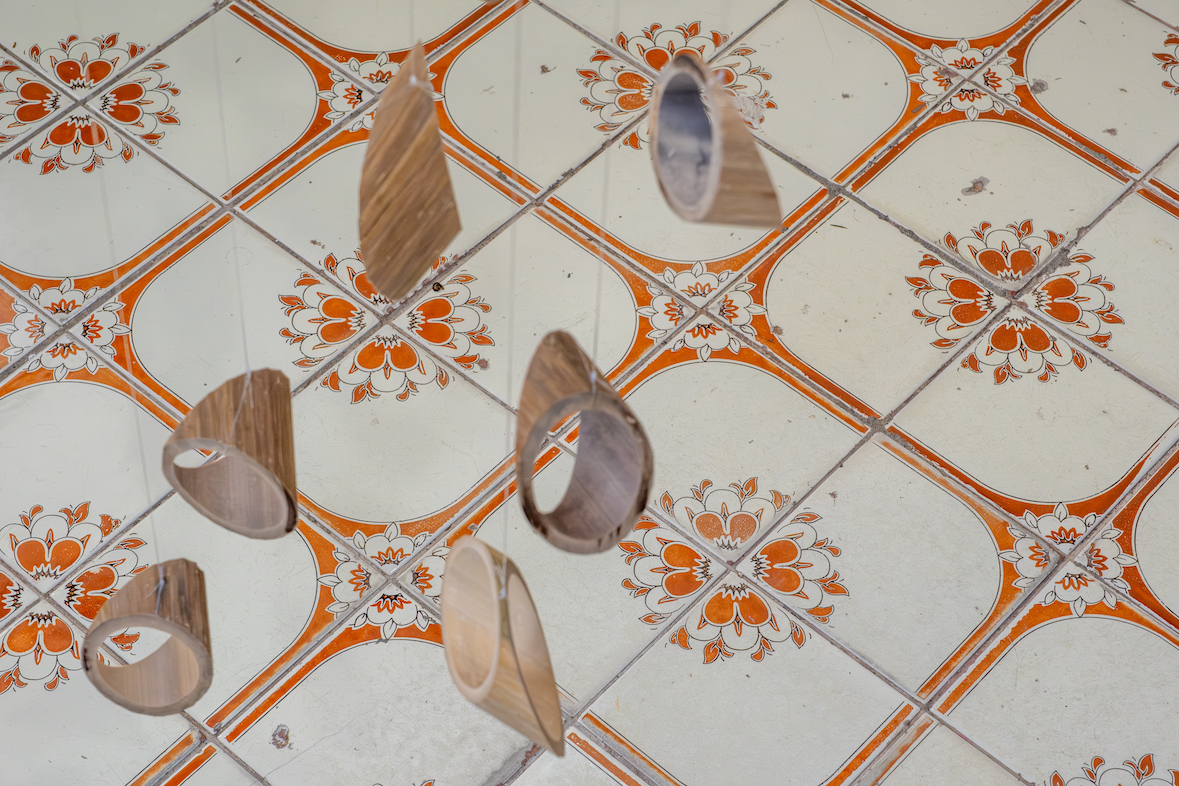
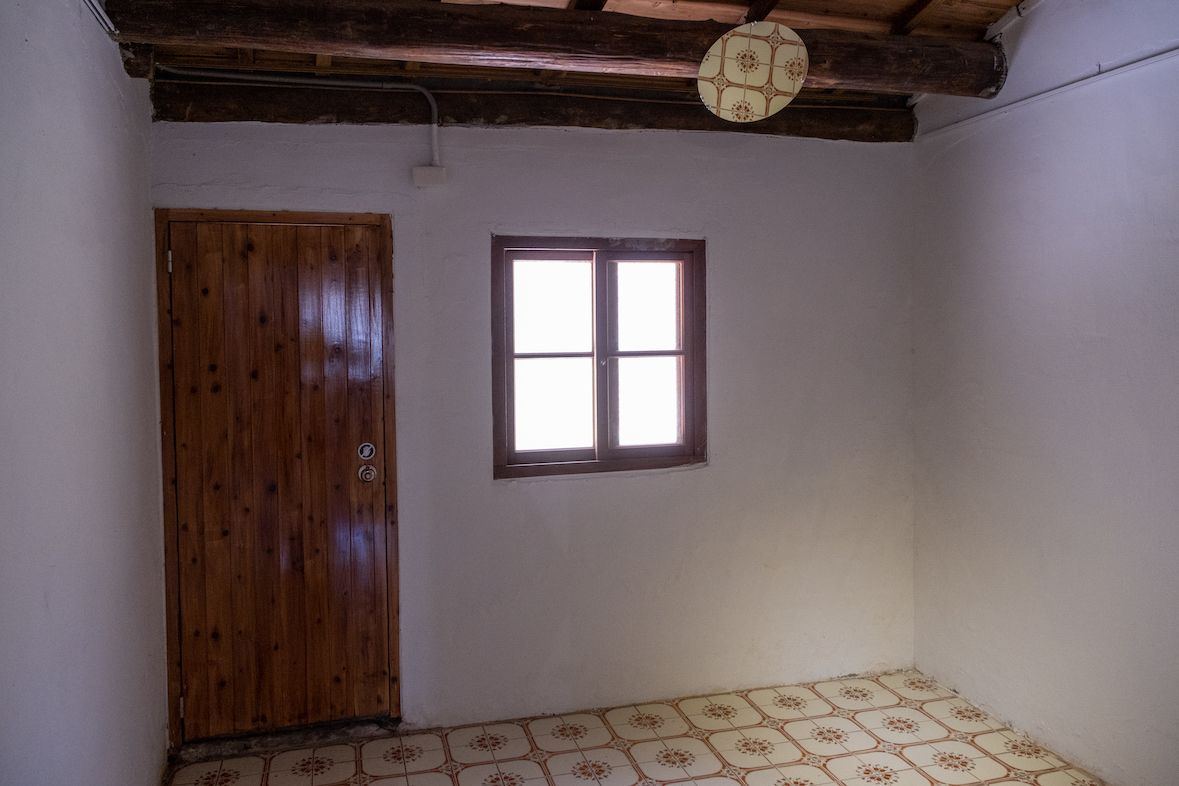
Via this method, I gained full access to the inside of the bamboo, symbolically exposing everything that hides in it. The final hanging installation works in tandem with its surroundings in the form of drawing the spectator’s attention to the tiling too. Therefore, the final presentation needs to be adapted for each space every time it will be reinstalled again.
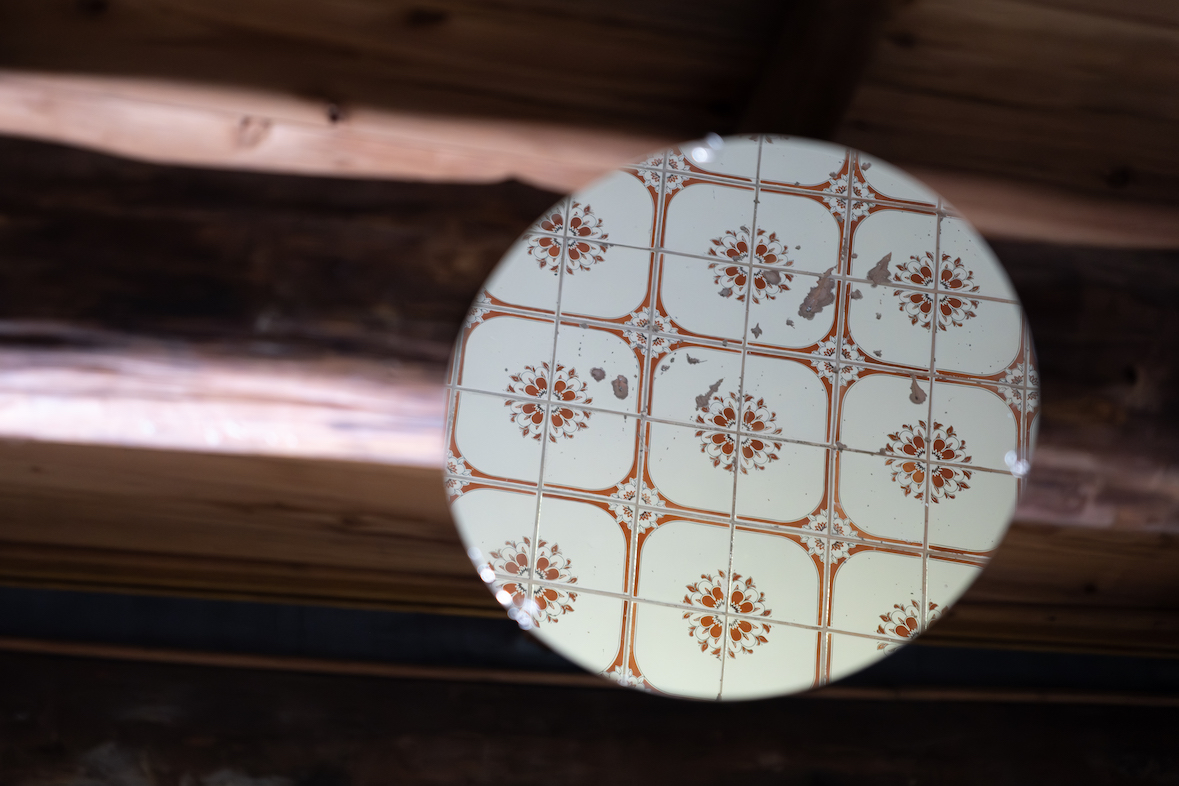
However, it were the floral pattern on the tiles that were in the spotlight in the room with the mirror. How can one switch the focus from everything else to the ornaments direct under one’s feet? This is the question behind the mirror installation “Look down, moon is rising” pointing to the fact that the mere reflection is nothing more than a path to the source.
Ornamental crime scene
S jeho širokými možnosti zpracování nachází bambus své využití v celé řadě odvětví, ale platí to také pro umění?
Abych toto téma prozkoumala, byl můj projekt vybrán jako součást rezidenčního pobytu v Treasure Hill Artist Village Taipei. Předmětem mé mise bylo zkoumání jak řemeslných, ale také i uměleckých možností zpracování bambusu a jejich vzájemné propojení.
Jak můžeme současně vzdát hold řemeslu a ocenit to, jak užitečný je bambus pro celé kultury lidí? Po měsících zkoumání nejenom tradičních, ale i současných přístupů k bambusu spatřila světlo světa site specific výstava „Ornamental crime scene“. Cílem této výstavy bylo použití bambusu v současném umění, aniž by se opomněl jeho původní praktické využití.
Ať vzor mluví!
K vytvoření tušového labyrintu mě inspirovala návštěva muzea „Nantou Bambus Museum“ a následující pobyt v „National Taiwan Craft Research and Development Institute“. Zde jsem byla uchvácena možnostmi pletacích technik používaných k výrobě nádob nebo košíků všech možných stylů. Oproti jiným typům zdobení, vzor zde má tvoří jak dekoraci, ale také i výsledný tvar nádoby či košíku, tím pádem jsou tvar i dekorace se sebou těsně spjaty. Následkem toho můžeme spekulovat o hranici mezi tělem nádoby a pouhým estetickým prvkem. Abych vytvořila určitý twist, přemalovala jsem tyto ornamenty čínskou tuší na textil.
Pokud je Vašim cílem vytvořit jedinečný produkt, je zapotřebí jít přímo k základům materiálu samotného, a ne se do nekonečna odkazovat na historii zpracování, tak zní jedno z mých základních doporučení mým studentům. Abych prozkoumala limity opracování bambusu, byl bambus pro instalaci „levitující bambus“ nařezán na jednotlivé segmenty dle následujících podmínek: každý segment měl mít nejtenčí možnou hranu a zároveň i nejširší možnou.
Takto byl získán plný přístup do dutiny uvnitř bambusu a symbolicky odhalující vše, co bylo skryté uvnitř. Konečná prezentace zavěšením je spjatá s daným prostorem, kde bylo účelem nechat promlouvat i florální vzor na podlaze galerie. Ve výsledku bude každá další prezentace odlišná od té předchozí a upravena přímo pro daný výstavní prostor, který bude potřeba znovu zohlednit.
Květinový vzor na kachlích hraje také ústřední roli v poslední místnosti se zrcadlem. Jak obrátit pozornost k ornamentu přímo pod našima nohama? Nad touto otázkou se zamýšlí zrcadlová instalace „Look down, moon is rising“, poukazující na to, že samotný odraz je pouhou cestou ke zdroji.
Ornamental crime scene
Mit seinen breiten Verarbeitungsmöglichkeiten findet Bambus in vielen Bereichen Anwendung, gilt es aber auch für Kunst?
Um dieses Thema zu erforschen, wurde mein Projekt über Bambus ausgewählt als Teil eines „Artist in Residency-Programm“ in Treasure Hill Taipei Artist Village. Der Gegenstand meiner Mission war die sowohl handwerkliche als auch künstlerische Möglichkeiten und Beziehungen der Bambusverarbeitung zu entdecken.
Wie könnte man gleichzeitig dem Bambushandwerk seinen Tribut zollen und die Nützlichkeit von Bambus für ganze Menschenkulturen schätzen? Nach monatelangen Recherchen der nicht nur traditionellen, sondern auch zeitgenössischen Verarbeitungsmethoden kam die ortspezifische Ausstellung „Ornamental crime scene“ auf die Welt (zur Welt bringen). Genau Bambus in der zeitgenössischen Kunst zu verwenden, ohne seinen ursprünglichen praktischen Zweck außer Betracht zu lassen, war das Ziel dieser Ausstellung.
Lass die Muster reden!
Zum Schaffen des Tuschenlabyrinths ließ ich mich vom Besuch des „Nantou Bamboo Museums“ und dem Aufenthalt im „National Taiwan Craft Research and Development Institute“ inspirieren. Hier habe ich mich für die Möglichkeiten der Bambusflechttechniken begeistert, die für die Herstellung von Behälter oder Körbe aller Art benutzt wurden.
Im Vergleich zu anderen Dekorierungsarten hängen in diesem Fall das Ornament als auch die Behälterwand voneinander ab. Infolgedessen geht es hier nicht nur um die Dekoration, sondern auch um die Form des Musters, was uns ermöglicht zu spekulieren, inwieweit der Körper des Behälters und seine nur ästhetische Anfertigung abgegrenzt sind. Um dieses Ziel zu erreichen und so einen Twist zu machen, habe ich diese Ornamente auf Textil mit chinesischer Tusche gemalt.
Wenn man etwas Neues kreieren will, müsste man zu den Wurzeln des Materials zurückkehren und nicht endlos auf die Geschichte der Verarbeitung hinweisen, so lautet die allererste Empfehlung, die meinen Schülern meinerseits bekommen. Um die Limits der Bambusverarbeitung zu entdecken, wurden die Bambussegmenten für die Installation „levitierte Bambus“ nach dem folgenden Kriterium gesägt: der Rand jeden Segments sollte auf einer Seite am dünnsten und auf der anderen am dicksten sein.
So erhielt man den vollen Zugang zum Bambusinneren und deckte symbolisch alles auf, was sich darin versteckt. Die zum Schluss hängende Installation musste mit ihrer Umgebung in festem Zusammenhang stehen, um das florale Muster der Bedeckung auf dem Boden reden lassen zu können. Infolgedessen ist jede Präsentation von ihrer Umgebung abhängig, die man jedes andere Mal in Erwägung wird ziehen müssen.
Das florale Muster auf den Kacheln spielt auch die wichtigste Rolle im hinteren Zimmer mit dem Spiegel. Wie kann man die Aufmerksamkeit der Besucher auf das Muster direkt unter unseren Füßen lenken? Diese Frage stellt sich die Spiegelinstallation „Look down, moon is rising!“, die daneben noch darauf hinweist, dass die Spiegelung selbst nur der Weg zur Quelle ist.
Official video about "Tickle Sense" - artists and projects

The project was funded by the European Union
Exhibition "Tickle Sense" 27.5 - 18.06.2023
Residence in Taipei Artist Village 03.04.-24.06.2023
artists profile on Taipei Artist Village official website

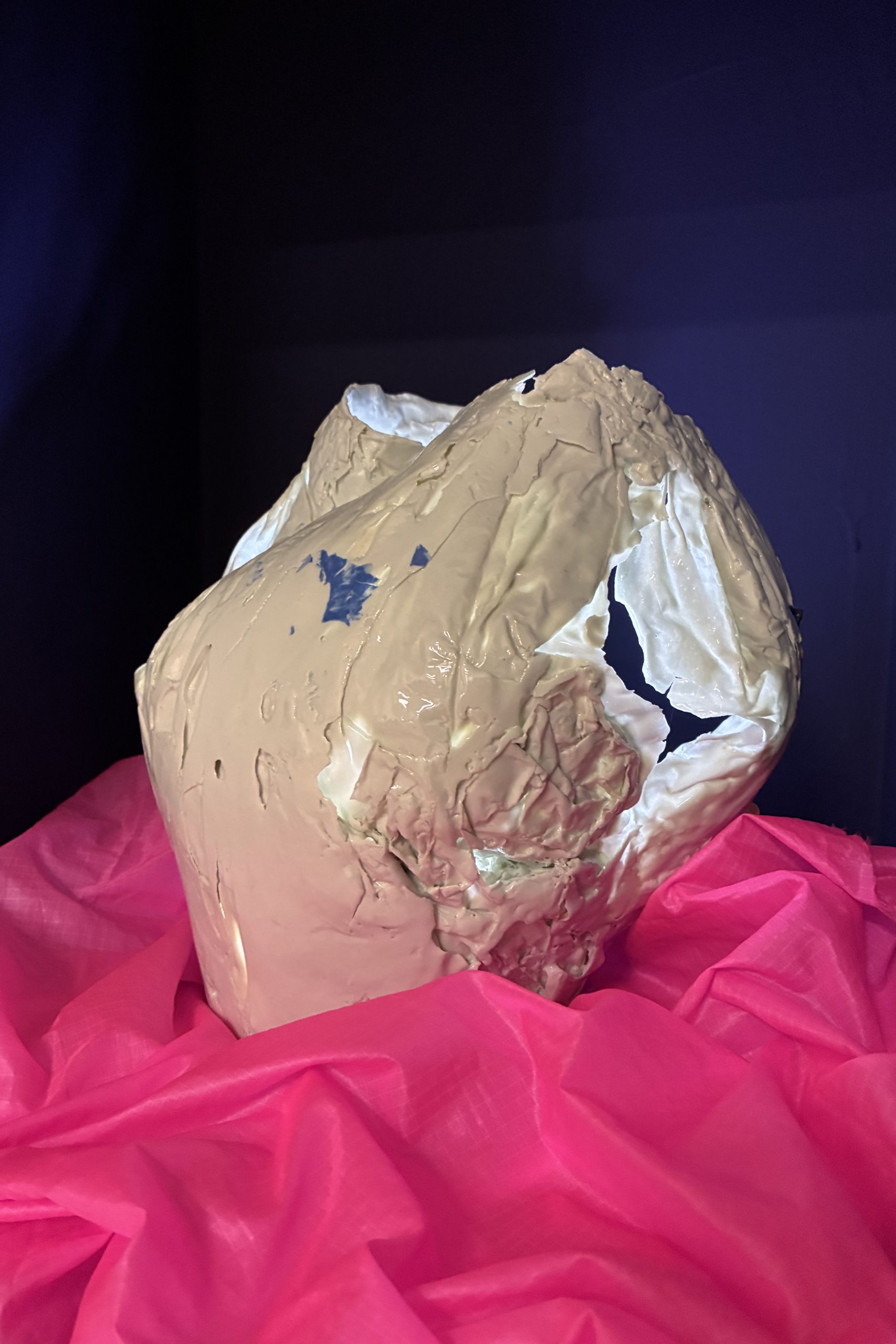
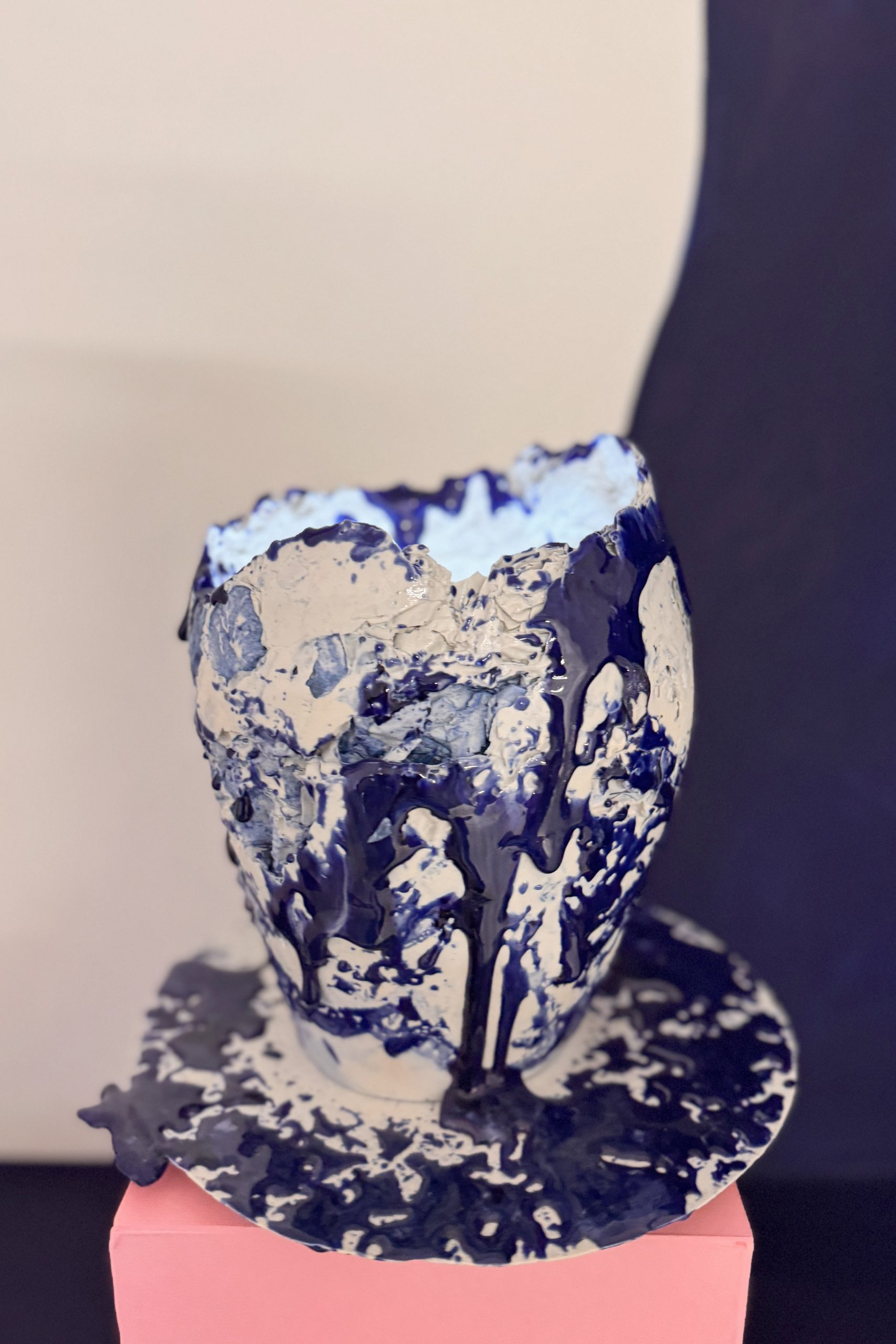
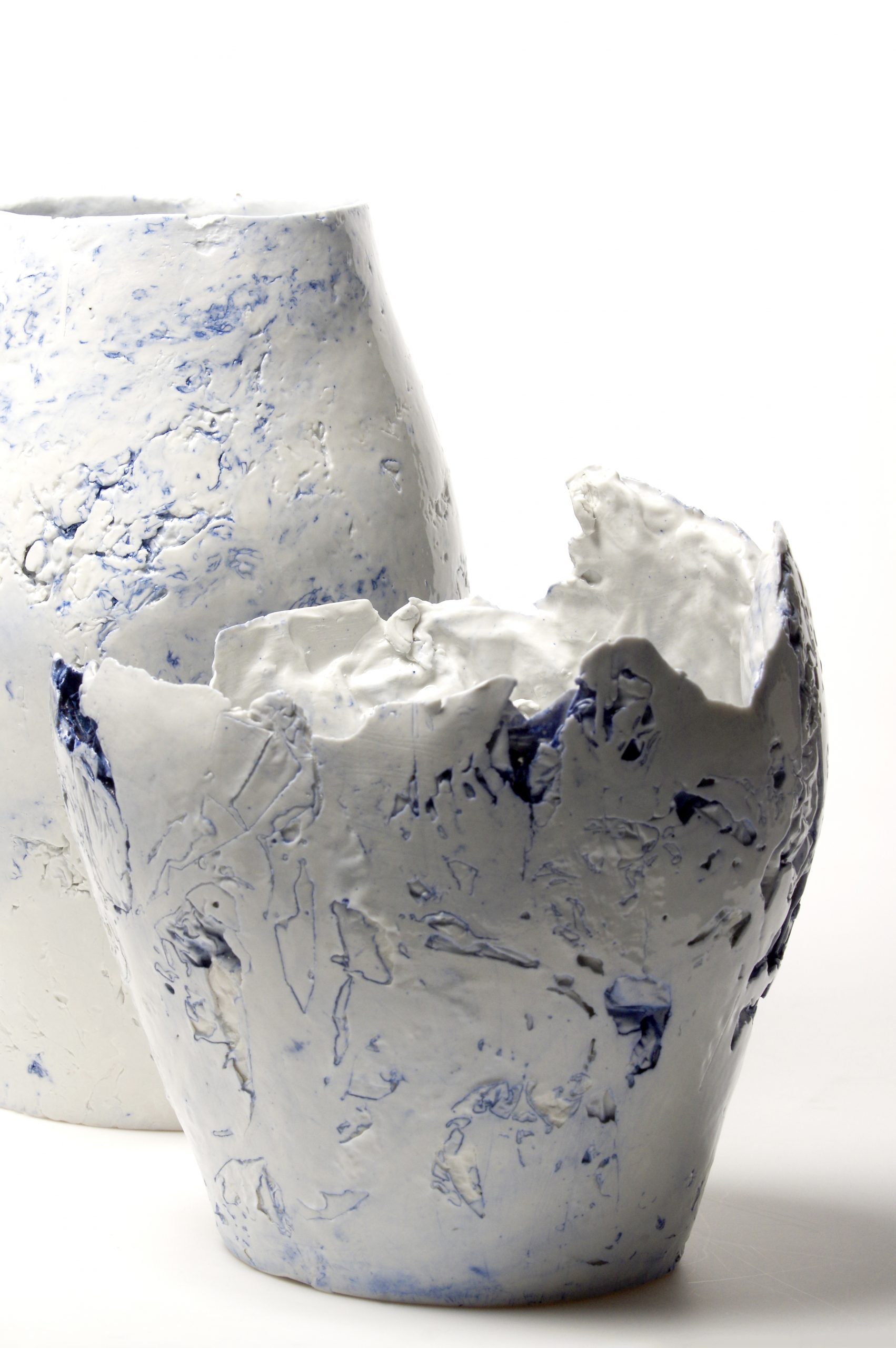
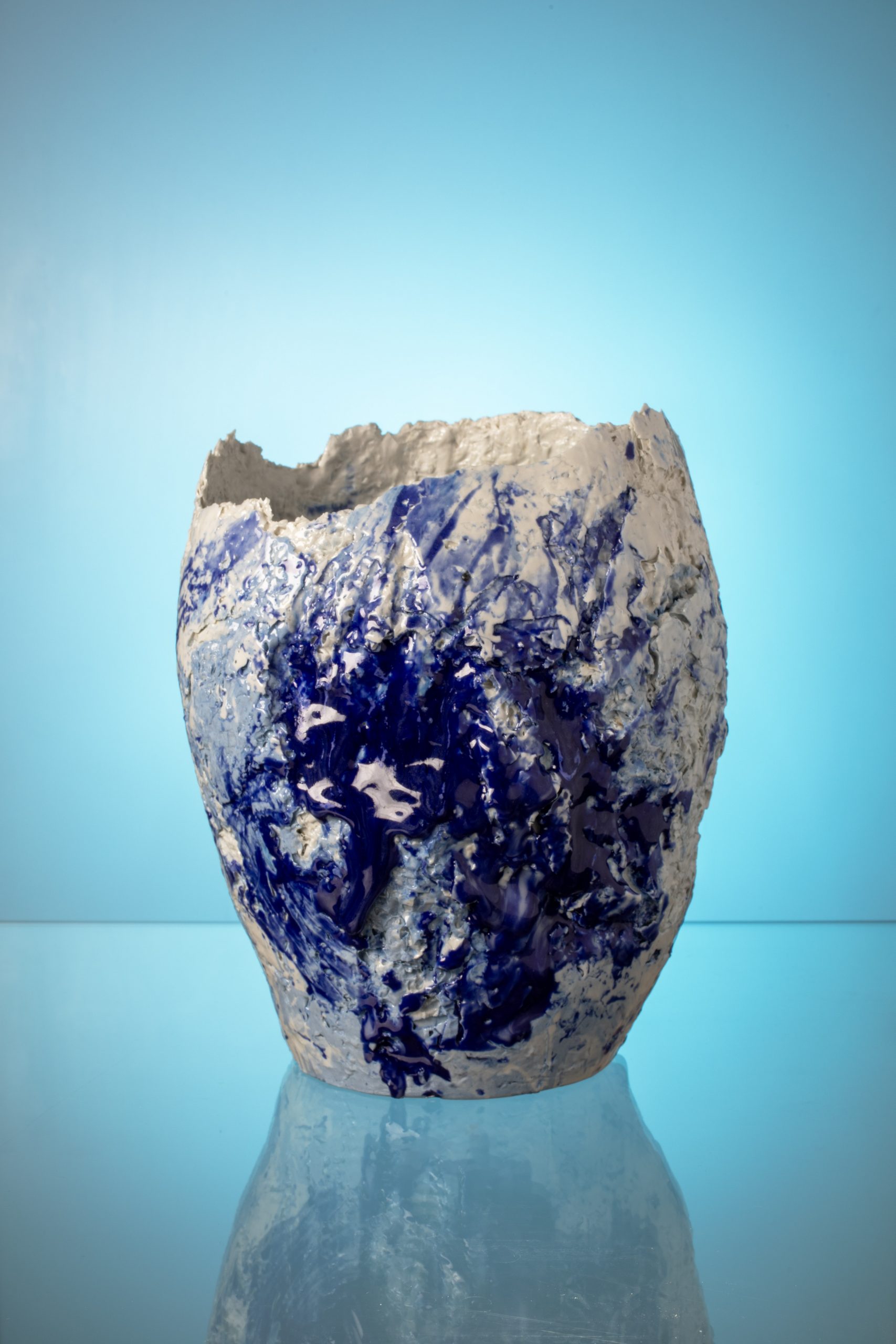
Let it Burn
pocelain vases, different sizes 2022/2023
My vases have layers, onions have layers. My vases are like onions.
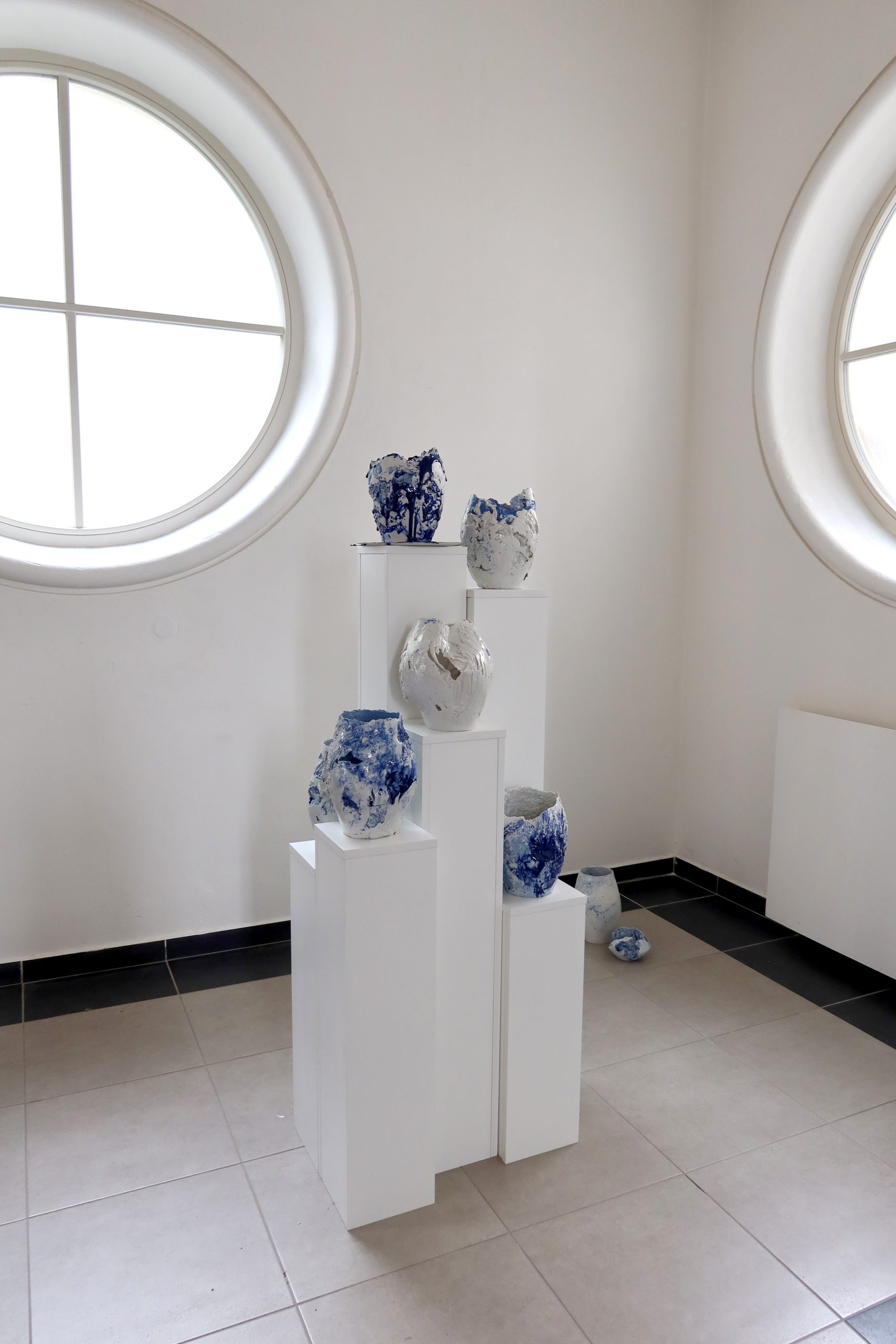
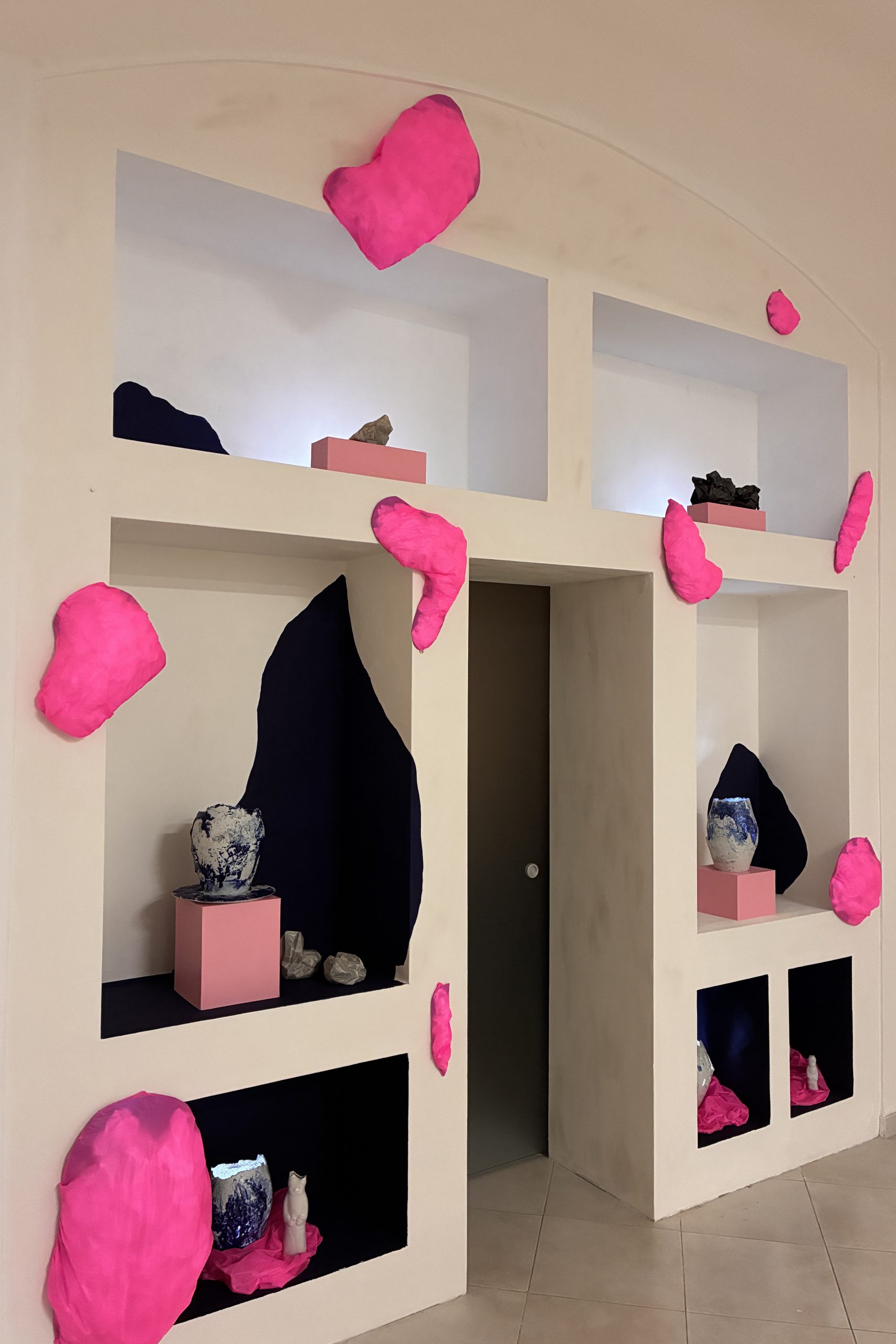
As a child, I spent hours sitting in front of the display cabinet in the living room, to figure out the question where are the onions on the “Blue Onion Pattern” porcelain set. The display cabinet and its contents have some specific vibes. For my family, it is some kind of sacred space to adore with objects inside not to be touched or even be used under any circumstances. Despite the fact that the untouchable objects there were carefully designed to be used and touched, and not just be observed from a distance. While “Let it Burn” vases are inconvenient objects for everyday use, they were designed for speculation or meditation.
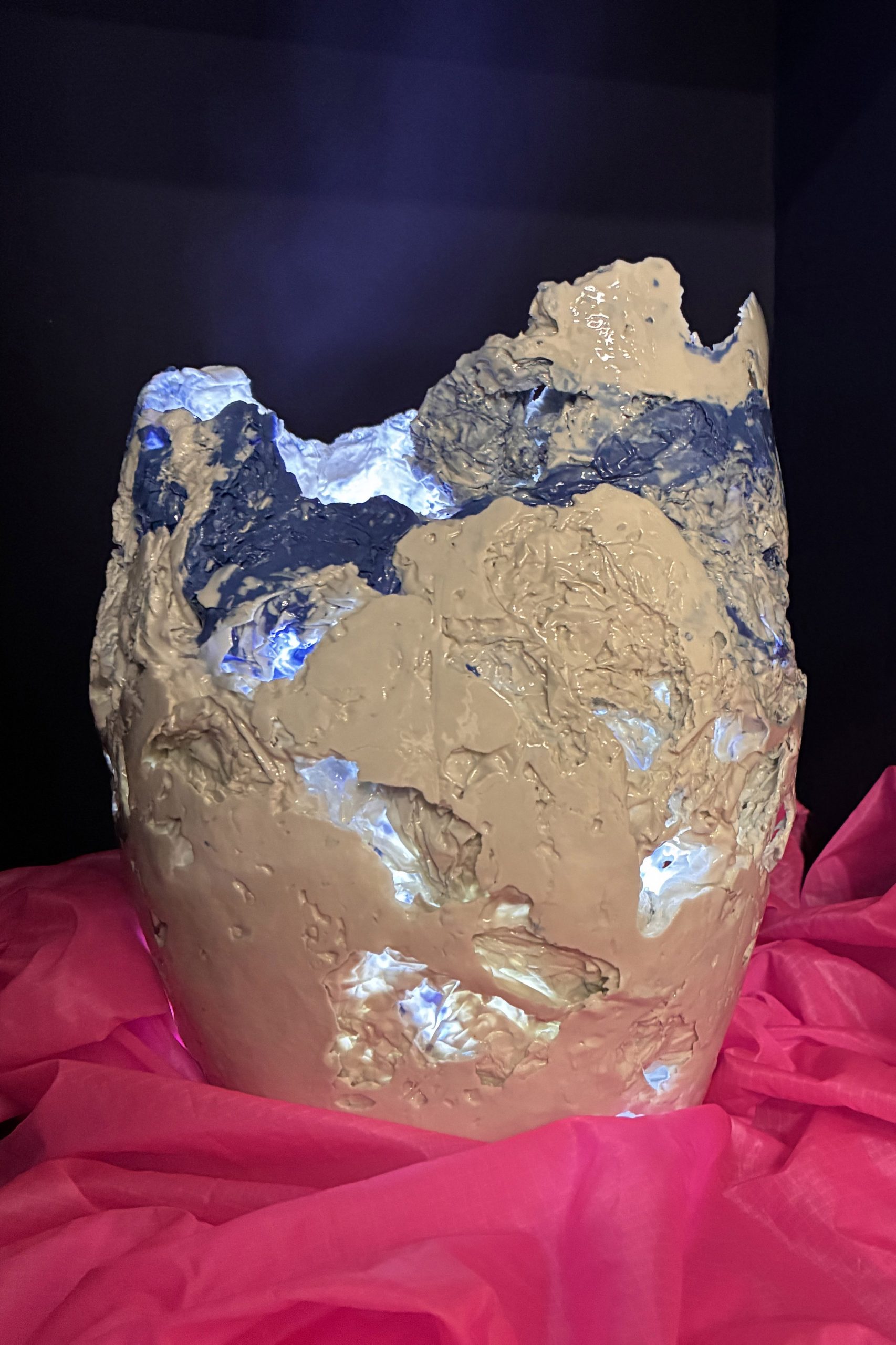
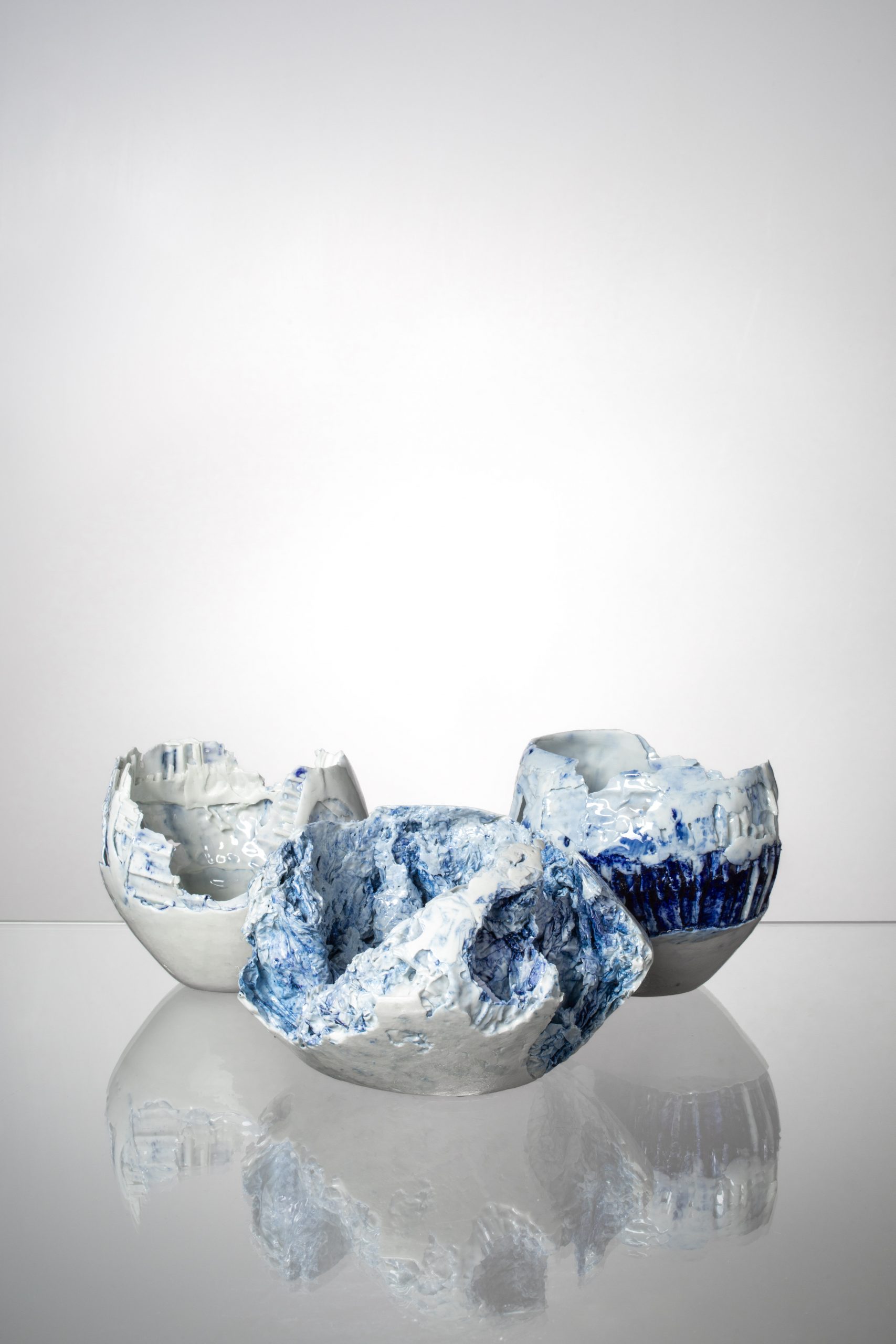
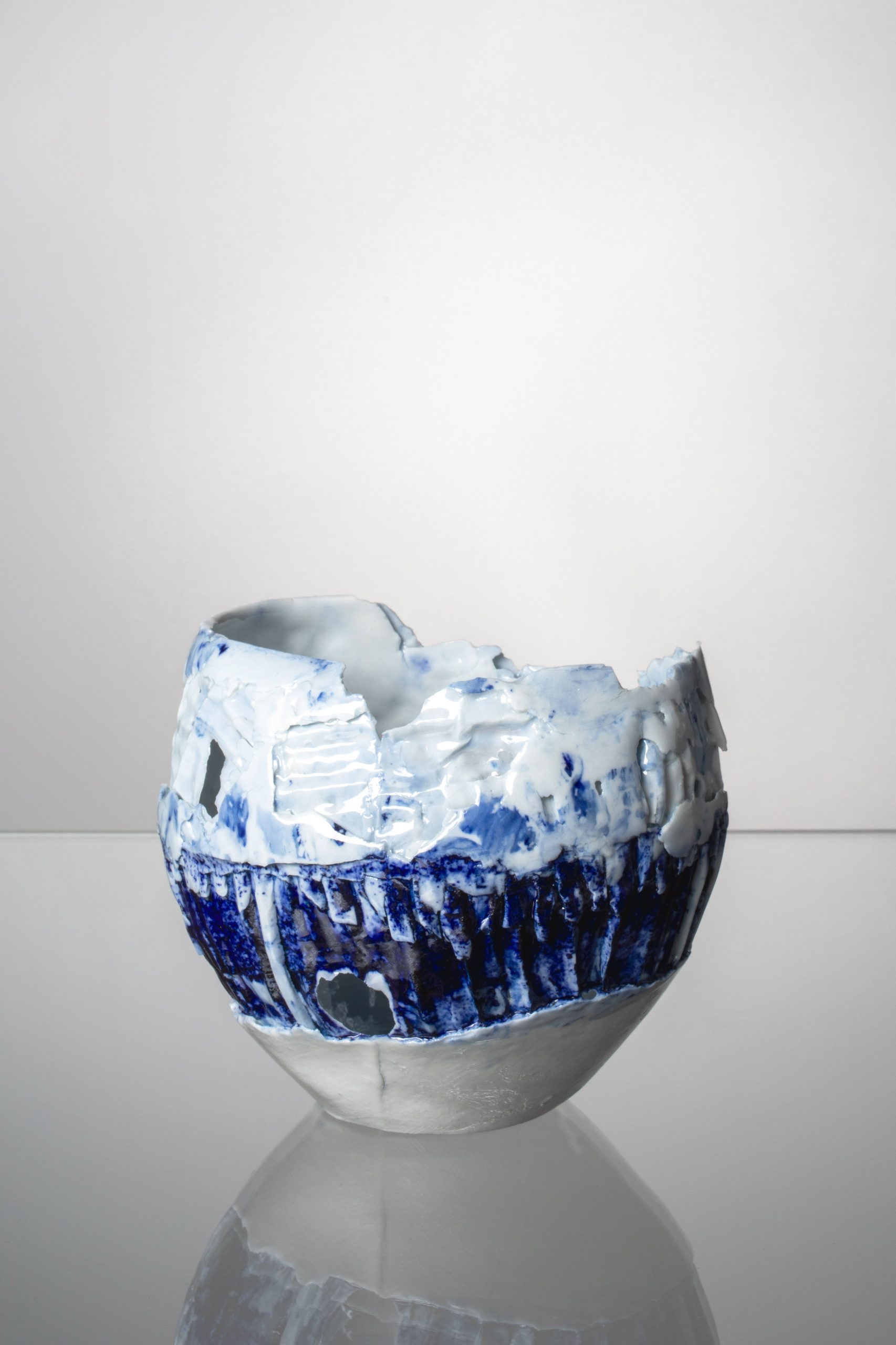
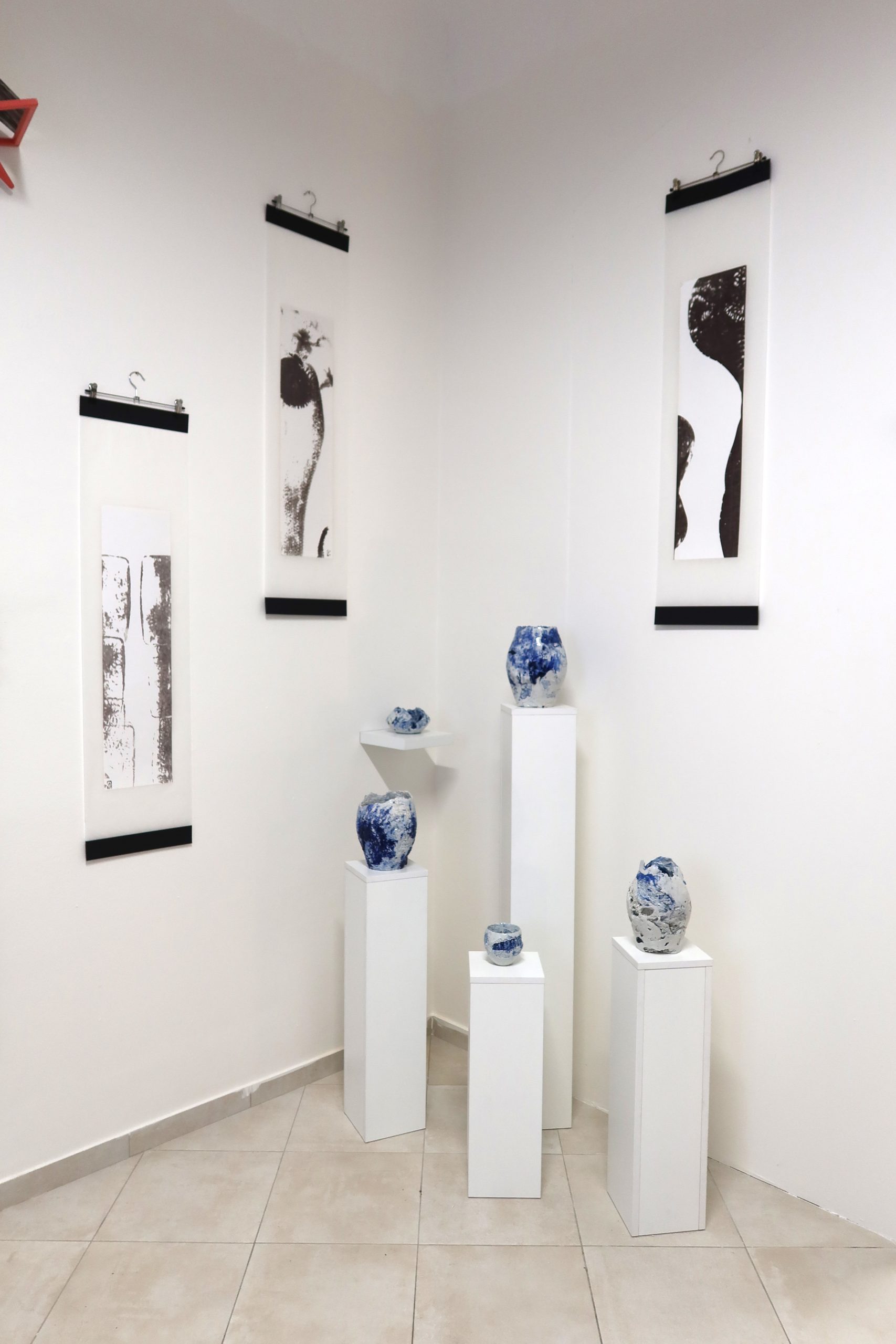
In order to achieve this, cobalt, which gives blue onion pattern its characteristic colour, was applied on sheets of paper that were then soaked into porcelain. Later, paper burned down in the process of firing, leaving behind many fragile layers of porcelain created by a variety of soaking and crumpling techniques. Thus, these onion-inspired sculptures emerged.
A series of porcelain vases called Let it Burn points out how paradoxical our approach to objects intended for everyday use often is. „That‘s nice, I‘ll put it on my shelf.“ Everyone has heard that phrase at some point. Fragile porcelain typically succumbs to our excessive anxiety. The more beautiful the object made of it, the more likely it is to end up in a display case, on a shelf, or eventually in a box in the attic somewhere. Just to keep them from breaking, we prefer to deprive these objects of their function until they become hollowed-out vessels with a layer of accumulated dust. They are presented with extreme care, as if they were relics surrounded by the atmosphere of a shrine. Many will never fulfill the purpose for which they were created. And like artifacts in museums, through these objects we unwittingly musealize parts of our lives and personal histories.
The memory of socalled onion skin services, carefully arranged in curated home showcases at the homes of relatives and friends, inspired artist Lucie Vobr Jestřabíková to create objects that continue the tradition of this porcelain design. The decor itself was originally derived from Chinese porcelain, which was inspired by the Meissen Manufactory in the 18th century. From the end of the 19th century it was also produced in Bohemia, specifically in the porcelain factory in Dubí. Fruit and plant motifs symbolized, for example, fertility – pomegranate, wealth – peony or immortality – peach.
As a direct reference to traditional production, the author used cobalt with its typical blue colour. During the process she applied cobalt powder on paper, dipped it in porcelain and formed the walls of individual vessels in a crumpled form. The paper, which burned during the firing, left thin layers of porcelain giving the impression of layering and resembling the texture of an onion. Thus, the resulting objects actually refer to onions, as opposed to the traditional so-called onion-design porcelain series (erroneously named af- ter onions). Although they are not intended for practical use and do not fulfill a specific function, they are carriers of aesthetic value and also raise questions about form vs. function.
Let it Burn
porcelánové vázy, různé velikosti 2022/2023
Cibule má vrstvy, moje vázy mají vrstvy. Moje vázy jsou jako cibule.
Jaký z motivů na „cibuláku“ znázorňuje vlastně tu cibuli, ke které se daný dekor odkazuje? Tak touto záhadou jsem se vždy jako dítě zbožně zírající do vitríny v obývacím pokoji zabývala.
Skoro u všech rodinných příslušníků či známých byl obsah vitríny naaranžován s velkou pečlivostí a obsahoval alespoň jeden „cibulák“. Tento prostor a jeho obsah měl určitou auru svatostánku a byl opečováván jako relikvie, které se nedotýká a „chraň tě ruka páně někdy něco z toho kdy používat“. Nehledě na skutečnost, že tyto nedotknutelné památky byly navrženy a vyrobeny s cílem je každodenně používat a dotýkat se jich, a ne se na ně muset jen s náležitým odstupem dívat.
Jelikož vázy „Let it Burn“, v češtině „Nech to shořet“, nebyly na rozdíl od cibuláku ve vitrínkách vytvořeny proto, aby byly dennodenně používány, je jejich cílem vzbudit v divákovi otázky jako volná plastika, která je vhodná pro uložení do kvazi vitríny či galerie.
Aby bylo dosaženo kýženého efektu odkazujícího k cibuli a tzv. „cibuláku“, byl použit kobalt, který propůjčuje „cibuláku“ jeho charakteristickou modrou barvu. Kobalt byl zprvu nanesen na papír a poté byl papír různými technikami zmuchlán a ponořen do porcelánu. Během výpalu papír vyhořel a vytvořil tak jemné a křehoučké vrstvičky porcelánu, které vytváří tyto cibulí inspirované objekty.
Série porcelánových váz s názvem Let it Burn (Nech to shořet) pou- kazuje na to, jak paradoxní často je náš přístup k předmětům, urče- ným k dennímu užívání. „To je hezké, vystavím si to na poličce.” Tuhle větu někdy slyšel každý z nás. Křehký porcelán typicky podléhá naší přehnané úzkosti. Čím krásnější je předmět z něj vyrobený, tím větší pravděpodobnost, že skončí ve vitríně, na polici nebo nakonec někde v krabici na půdě. Jen aby se nerozbily, raději tyto předměty zbavuje- me jejich funkce, až se z nich stanou vyprázdněné nádoby s vrstvou nahromaděného prachu. Prezentovány jsou s mimořádnou péčí, jako by se jednalo o relikvie, obklopené atmosférou svatostánku. Mno- hé nikdy nenaplní účel, pro který vznikly. A jako artefakty v muzeích, skrze tyto předměty nevědomky muzealizujeme části našich životů a osobní historie.
Vzpomínka na cibulákové servisy, pečlivě aranžované v kurátorova- ných domácích vitrínách u příbuzných a známých, inspirovaly uměl- kyni Lucii Vobr Jestřabíkovou k vytvoření objektů, které na tradici tzv. cibuláků navazují. Dekor samotný byl původně derivován z Čínského porcelánu, jímž se v 18. století nechala inspirovat Míšeňská manufak- tura. Od konce 19. století byl produkován také v Čechách, konkrétně v porcelánce v Dubí. Motivy ovoce a rostlin symbolizovaly například plodnost – granátové jablko, bohatství – pivoňka nebo nesmrtelnost – broskev.
Jako přímý odkaz na tradiční výrobu použila autorka kobalt s typic- kou modrou barvou. Kobaltový prášek nanesla na papír, namočila do porcelánu a v zmačkané formě z něj tvořila stěny jednotlivých nádob. Papír, který během výpalu shořel, zanechal tenké vrstvičky porcelánu navozující dojem vrstvení a připomínající strukturu cibule. Výsledné objekty tak na rozdíl od tzv. cibuláků (po cibuli mylně pojmenovaných) skutečně odkazují. Ačkoliv nejsou určeny pro praktické využití a ne- plní konkrétní funkci, jsou nositeli estetické hodnoty a také vyvolávají otázky na téma formy vs. funkce.
Let it Burn
porzelan Vasen, unterschiedliche Größen 2022/2023
Meine Vasen haben Schichten, Zwiebeln haben Schichten. Meine Vasen sind als Zwiebel.
Immer wenn ich vor der Vitrine im Wohnzimmer saß, versuchte ich herauszufinden, wo die Zwiebeln auf dem Zwiebelmusterdekor sind. Sorgfältig arrangierter Inhalt der Vitrine, die oft mindestens eine Zwiebelmustertasse enthielt, konnte in meiner Familie zu einer Quasi-Ädikula verglichen werden. Auf keinen Fall anfassen oder noch schlimmer benutzen! Ohne Rücksicht darauf, dass diese Produkte so hergestellt wurden, um täglich berührt und angenehm verwendet zu werden, hat man sie sowieso als unberührbar und nur mit Abstand anschaubar betrachtet.
Infolgedessen, dass die „Let it Burn“-Vasen nicht für angenehme tägliche Benutzung geeignet sind, dienen sie jetzt als freie Skulpturen zum Spekulieren und Meditieren.
Um diese Ziele zu erreichen, wurde Kobalt, das das charakteristische Blau des Zwiebelmusters macht, auf die Papierblätter aufgetragen, die dann mit verschiedenen Techniken zerknittert und dann ins Porzellan eingetaucht wurden. Während des Brennvorgangs ist das Papier niedergebrannt, um viele zarte Schichten zu hinterlassen. So sind diese von Zwiebeln inspirierte Vasen entstanden.
The Group of Thoughtless
porcelain objects, author's serigraphy 2021/2022
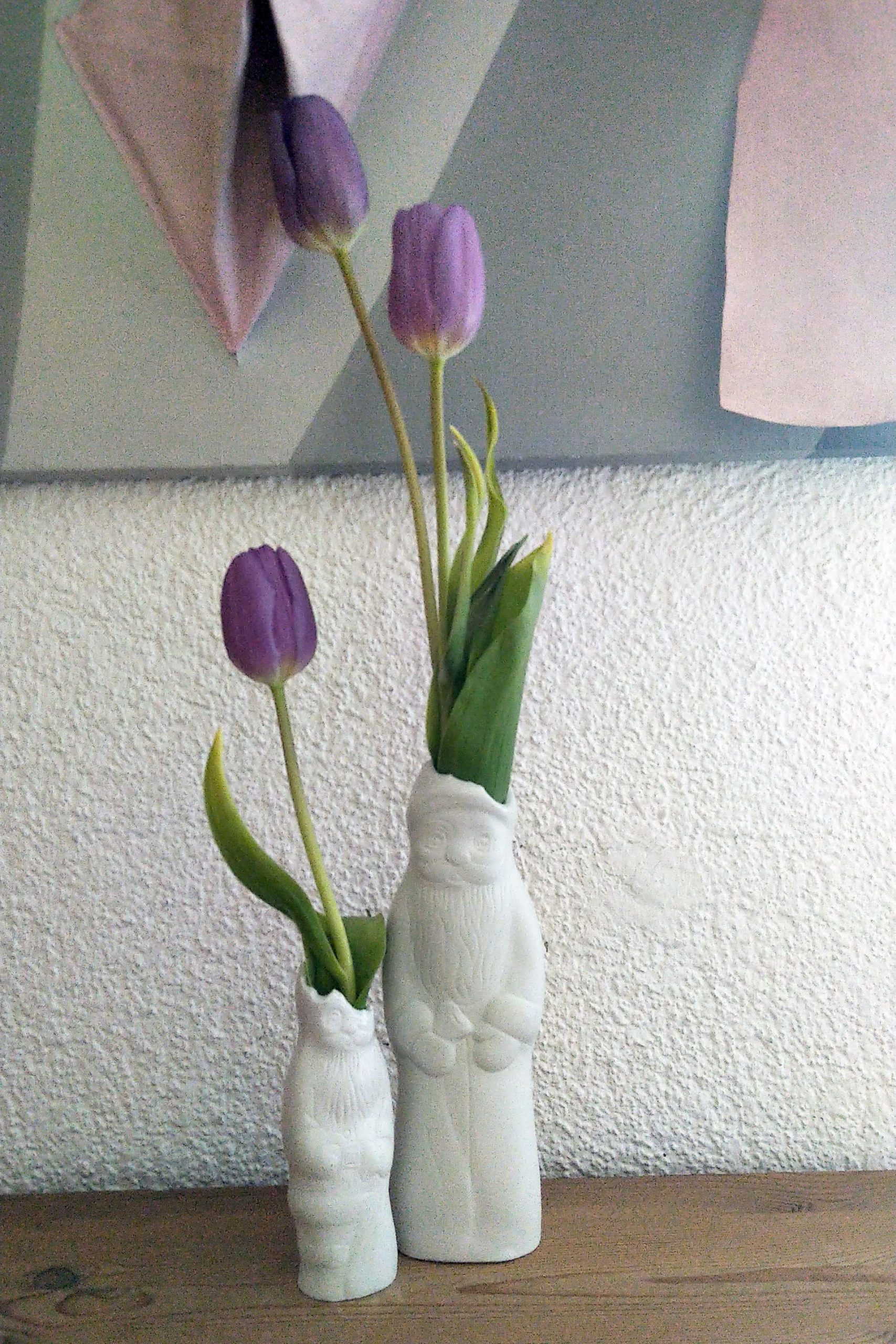
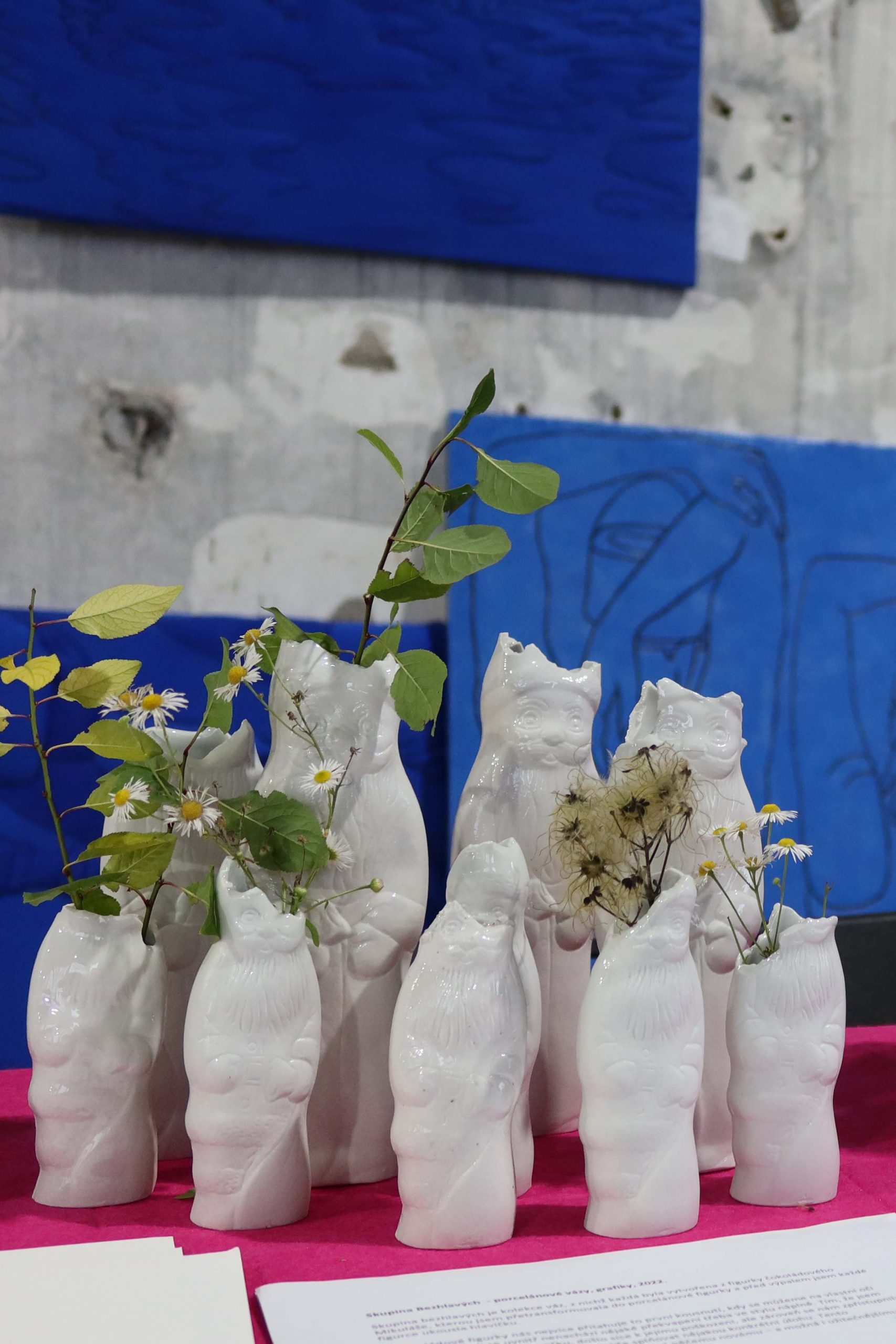
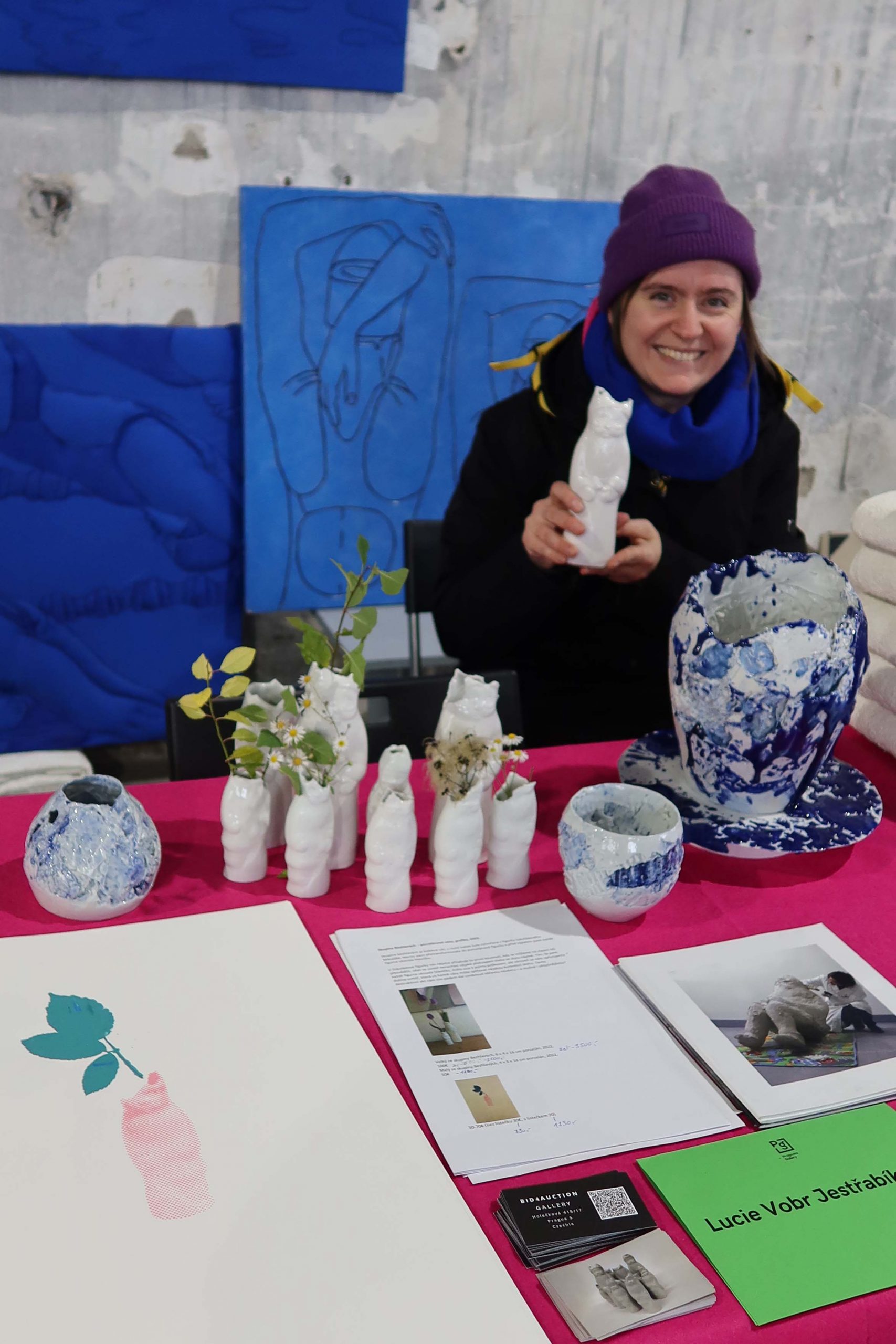
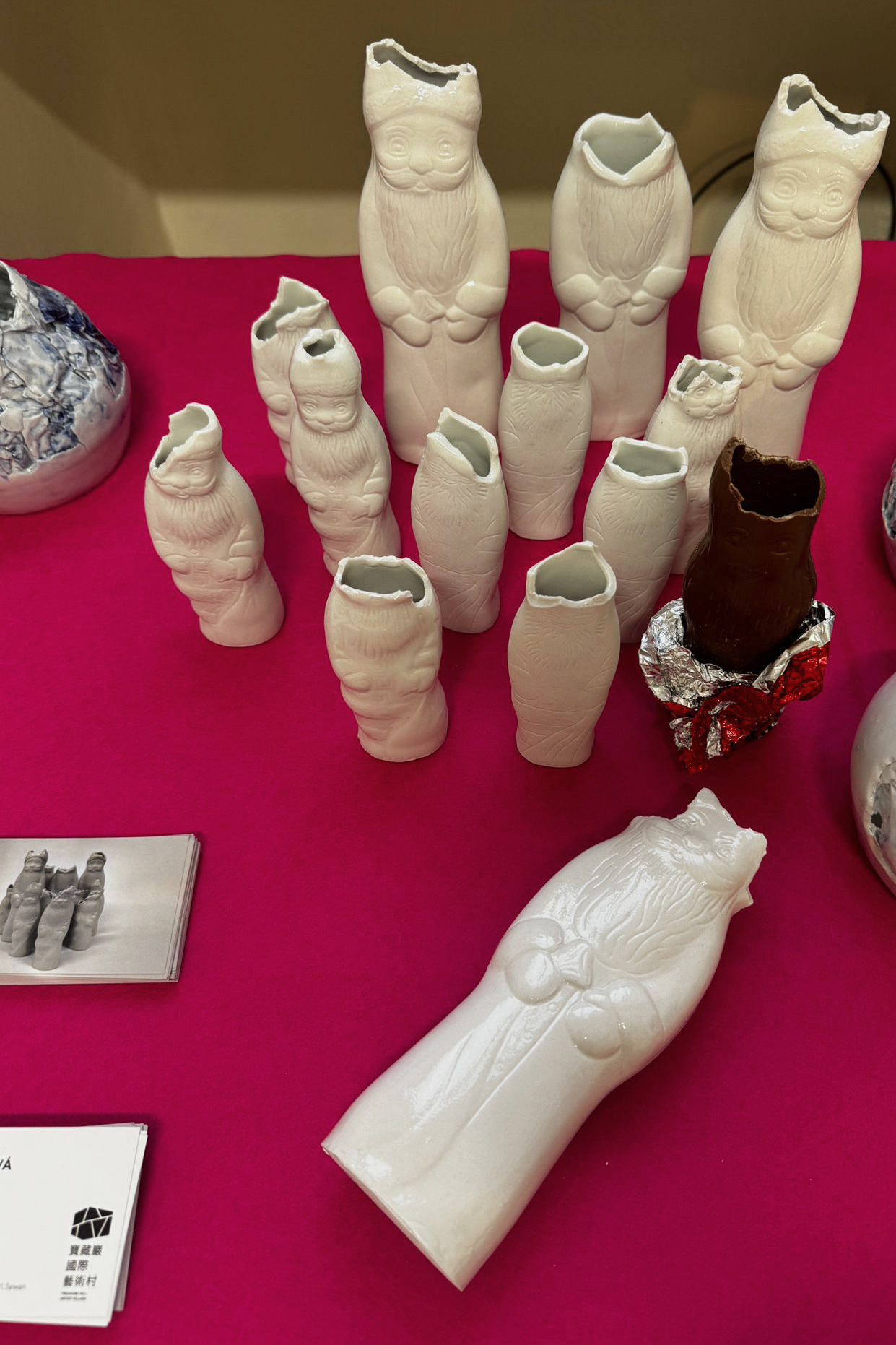
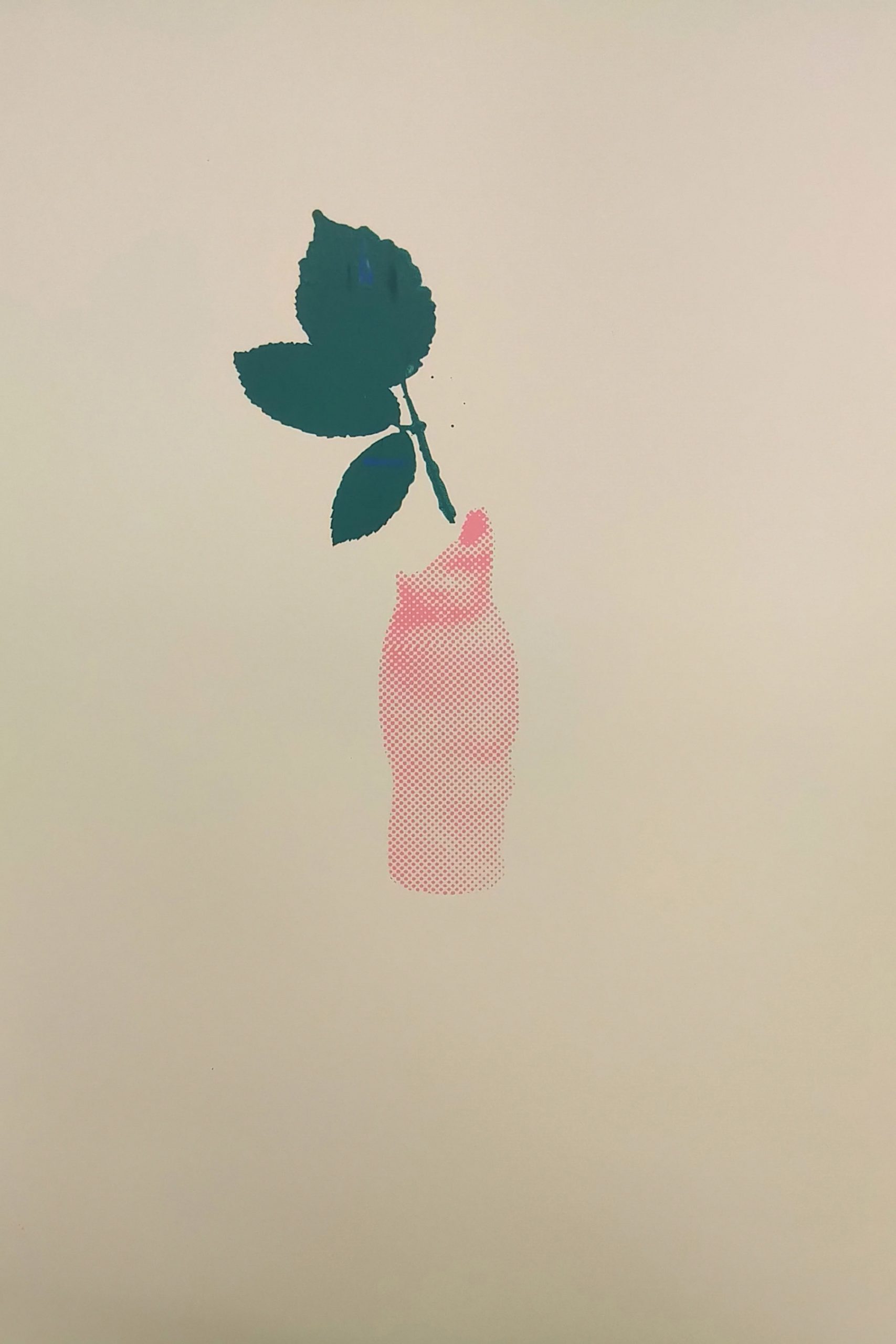
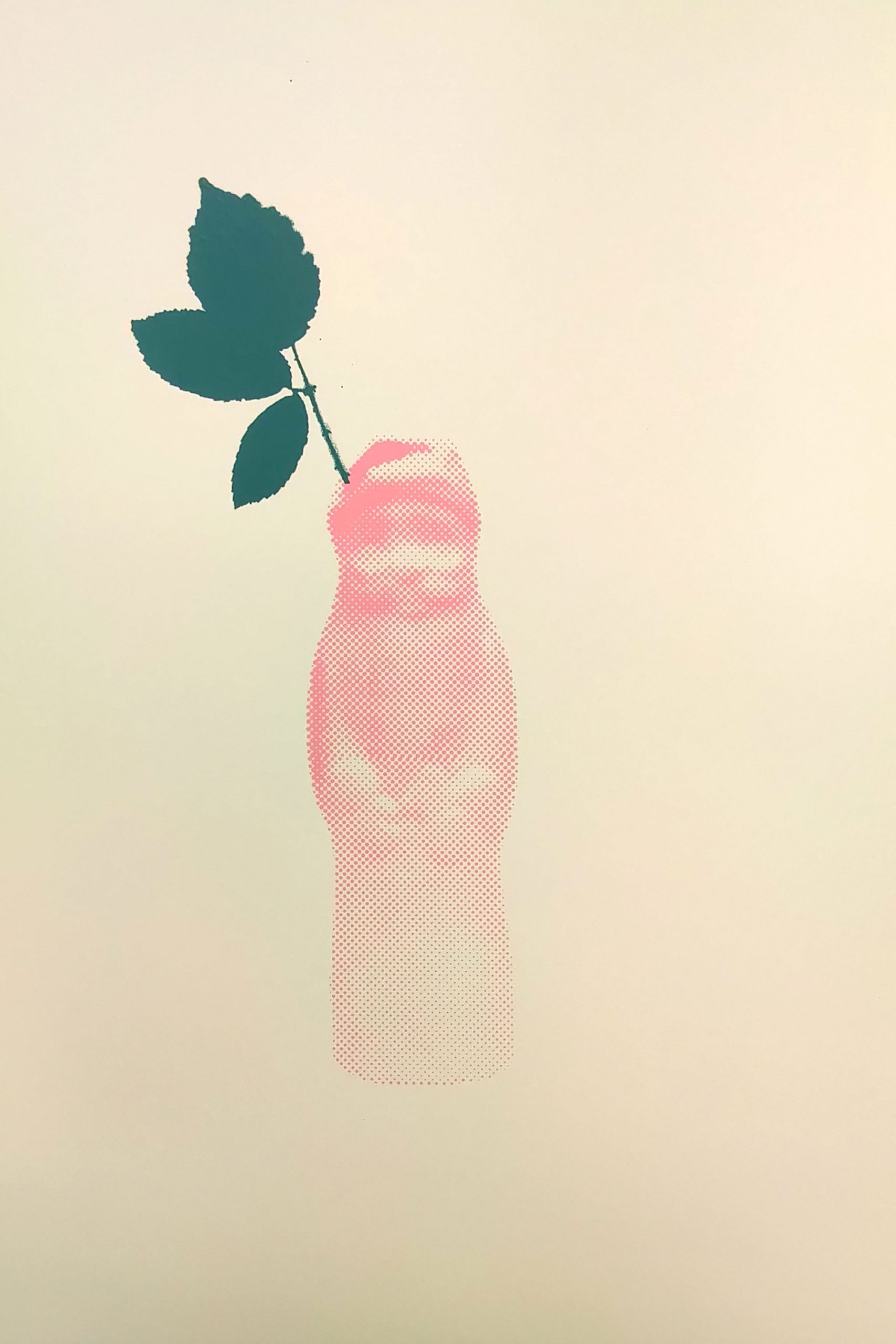
The Group of Thoughtless is a vase collection, each of which was created from a chocolate figure that I transformed into porcelain and I bit off each figures‘ head before firing.
The Group of Thoughtless is a vase collection, each of which was created from a chocolate figure that I transformed into porcelain and I bit off each figures‘ head before firing.
The first bite of a chocolate figure attracts us most because we want to know for sure if there is some surprise inside, for example some tasty filling. By biting off the head of each figure, I damaged it, but at the same time we got access to the hollow inside, which in the form of a vase can have a specific function. This destructive act has thus given us something new – and perhaps even more useful?
Skupina bezhlavých
porcelánové vázy, autorská serigrafie, 2021/2022
Skupina bezhlavých je kolekce váz, z nichž každá byla vytvořena z figurky čokoládového Mikuláše, kterou jsem přetransformovala do porcelánové figurky a před výpalem jsem každé figurce ukousla hlavičku.
U čokoládové figurky nás nejvíce přitahuje to první kousnutí, kdy se můžeme na vlastní oči přesvědčit, zdali se uvnitř nenachází nějaké překvapení třeba ve stylu náplně. Tím, že jsem každé figurce ukousla hlavičku, došlo sice k jejímu poškození, ale zároveň se nám zpřístupnila dutina uvnitř, která ve formě vázy může splňovat nějakou konkrétní úlohu. Tento destruktivní akt nám tím pádem dal vzniknout něčemu novému – a možná i užitečnějšímu?
The group of thoughtless
Porzellan Vasen 2021/2022
„The Group of Thoughtless“ ist eine Vasenkollektion, von denen jede aus einem Schokoladen-Weihnachtsmann hergestellt wurde, der dann in eine Porzellanfigur transformiert wurde, der ich am Ende vor dem Brennen den Kopf abgebissen habe.
Bei der Schoko-Figur lockt uns der erste Biss, womit wir unsere Neugier befriedigen können, weil wir drinnen eine Überraschung z. B. im Sinne einer Füllung erwarten. Dadurch, dass ich jeder Figur den Kopf abbissen habe, habe ich sie zwar beschädigt, aber gleichzeitig wurde Zugang zu der Höhle innerhalb der Figur erhalten, die in Form einer Vase eine bestimmte Funktion erfüllen kann.
Hat also dieser zerstörerische Akt etwas Neues – und vielleicht sogar Nützlicheres – entstehen lassen?
Lost in the structure
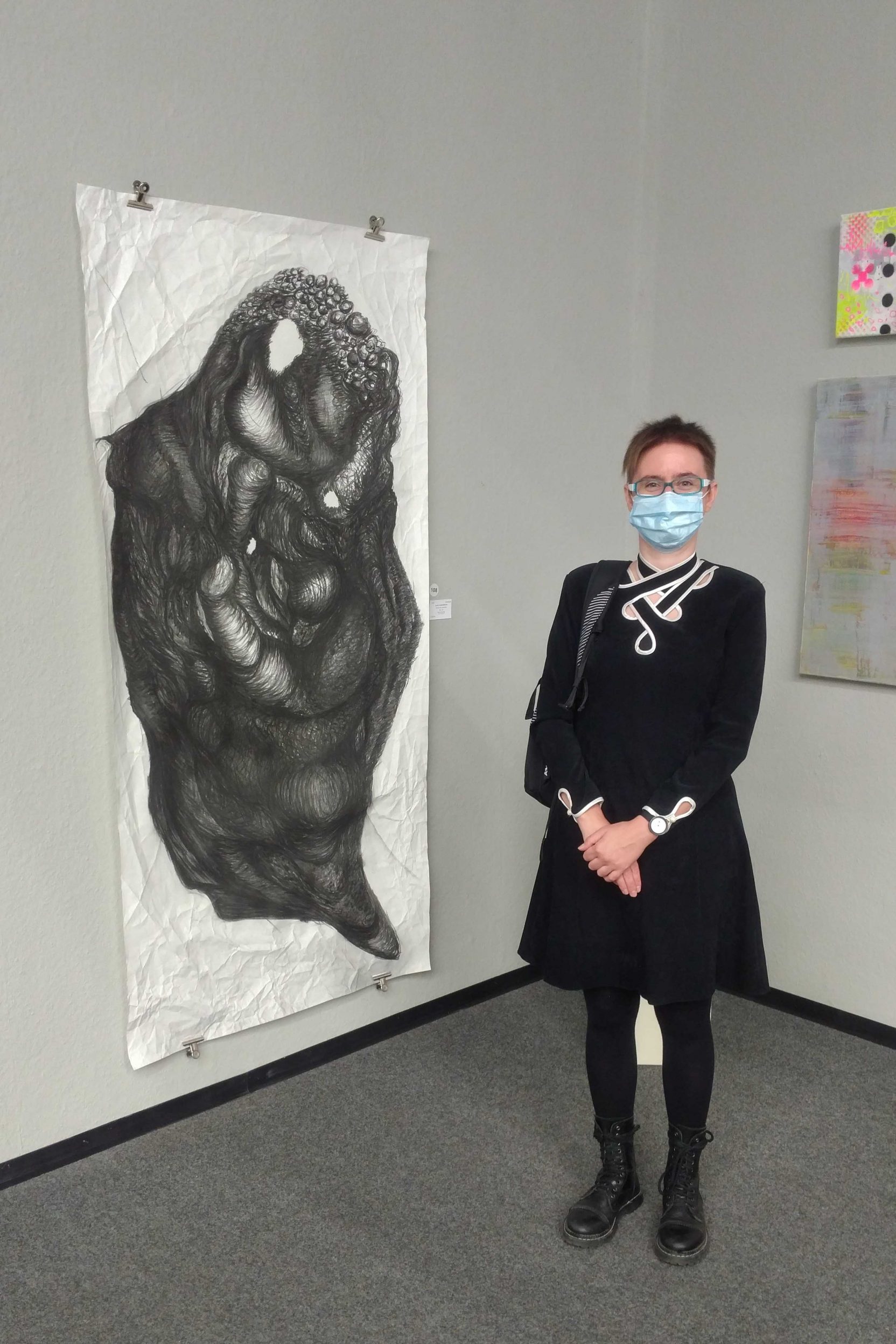
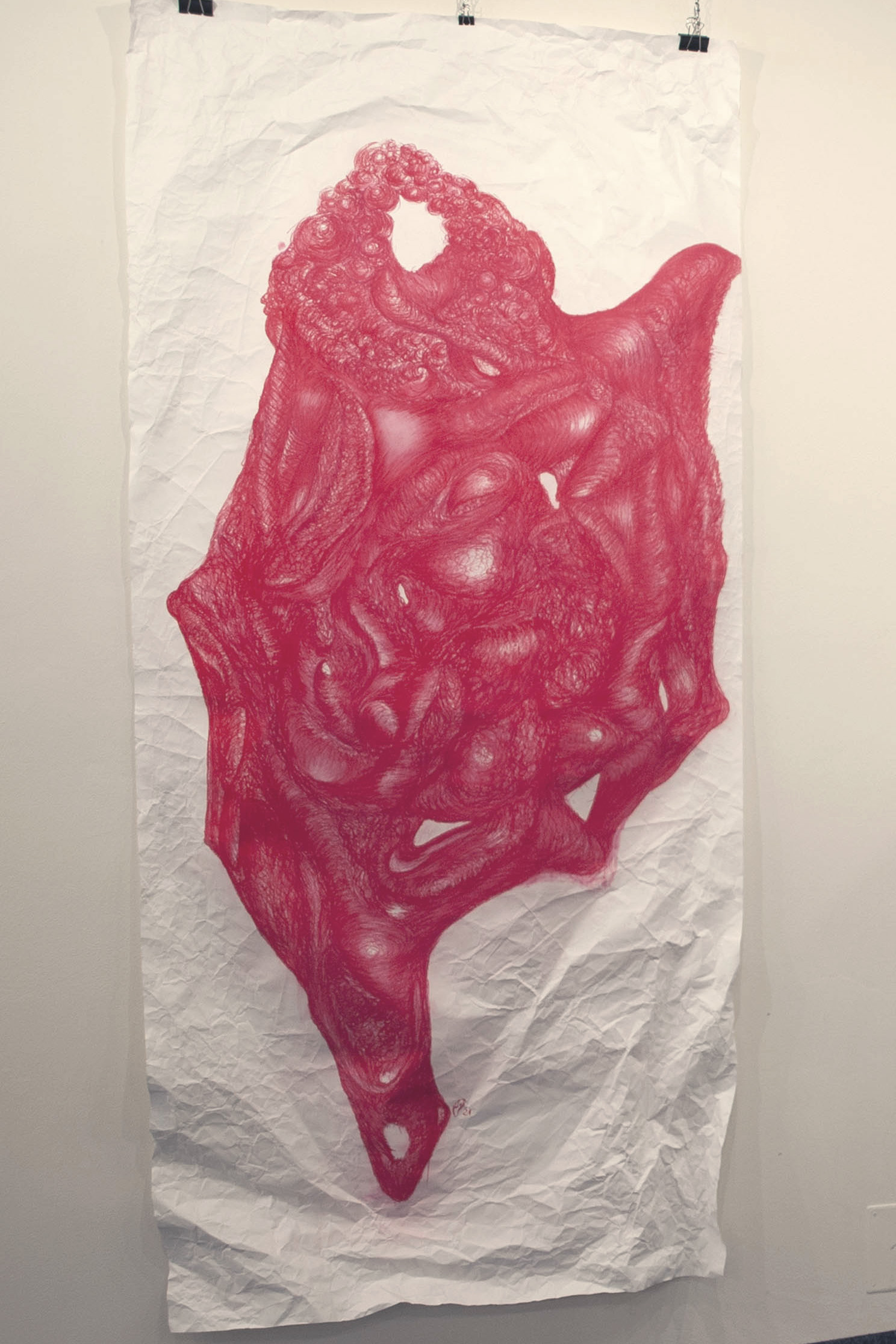
charcoal and soft pastel drawings, 200x100x10cm, 2020
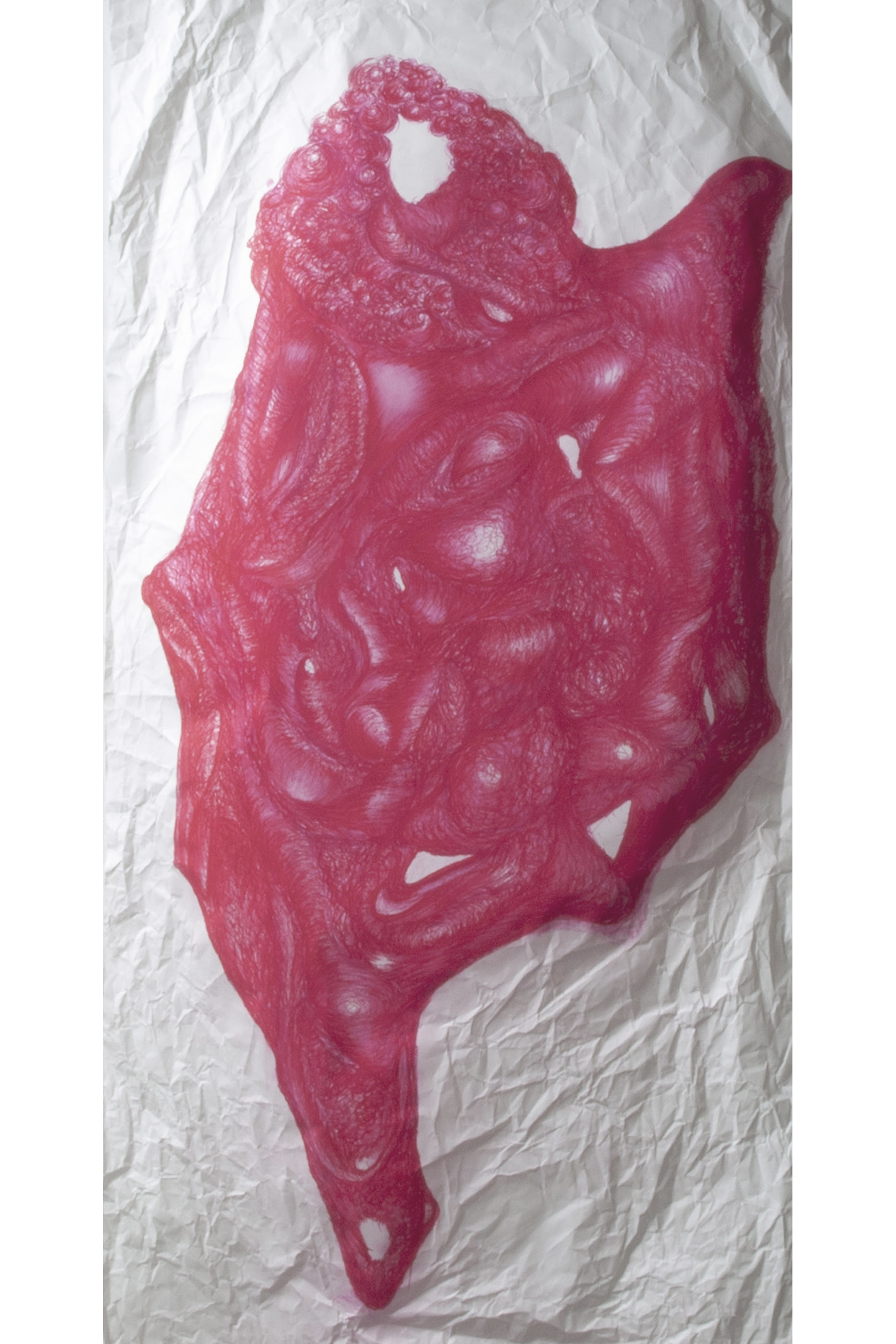
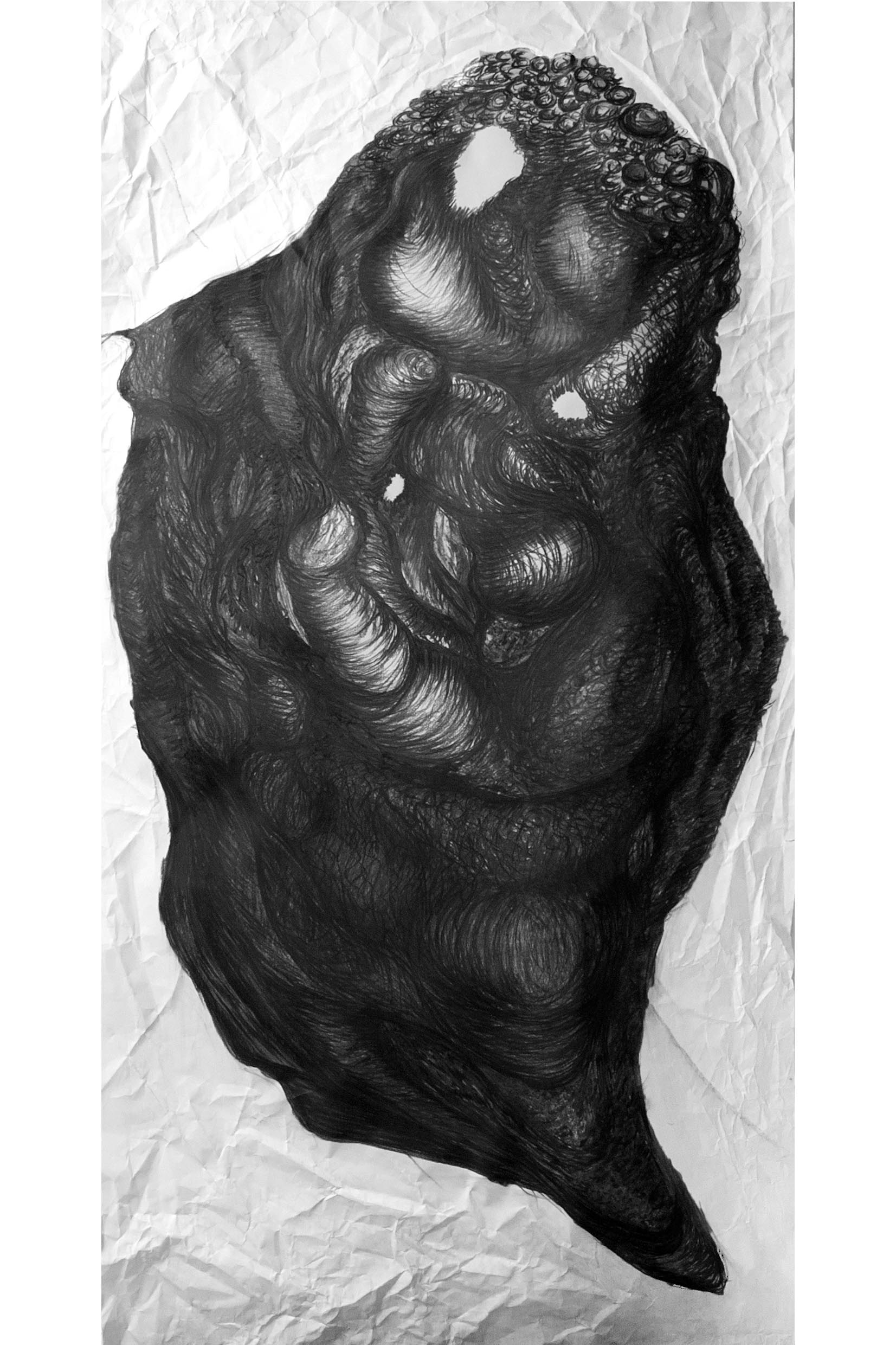
Will a drawing lose or gain some of its value if the paper becomes crumpled?
Lost in the structure
charcoal and soft pastel drawings 200x100x10cm, 2021
Will a drawing lose or gain some of its value if the paper becomes crumpled? Scribbling, doodling or even crumpling paper are emotionally soaked activities that somehow help us deal with our turbulent emotions. While the child’s scribbling is generally a sign of joy and creativity, in adults it is a behaviour which like the biting-off the heads of chocolate figures can be described as a kind of obsession. Scribbling and crumpling paper therefore breaks down some of the established mechanisms of out thinking.
And this protest against the established norm of not scribbling or crumpling serves precisely to weaken our stormy emotions. A heap of balls of crumpled paper that doesn’t mean anything to us anymore may remind us of the dissatisfaction with the quality of our work, and a cocoon of tissues or receipts in our trouser pocket reminds us of the fear or boredom we tried to overcome through calming crumpling.
In case of “Lost In The Structure”, which seems to look like a crumpled scribble, this destructive crumpling allowed the paper to bulge and so give it another physical dimension.
Lost in the structure
kresby, 200 x 100 x 10cm 2021
Ztratí nebo získá kresba něco na své hodnotě, pokud se papír pokrčí? Škrtání, čmárání nebo taky mačkání papíru jsou emocemi prosáklé činnosti, které nám nějakým způsobem pomáhají se vypořádat s rozbouřenými emocemi. Zatímco dětská čmáranice je obecně odrazem veselí a tvořivosti, u dospělých jsou to projevy, které se podobně jako ukousávání hlaviček dají označit za určitou obsesi. Čmárání a mačkání papíru tak do jisté míry nabourává některé zaběhlé mechanismy našeho chování.
A tento výstup proti zavedenému normálu nic nikam nečmárat a nic nekrčit nám slouží právě tomu, abychom své rozbouřené emoce oslabili. Hromada koulí zmačkaného papíru, která už pro nás nemá žádnou hodnotu, nám může připomínat nespokojenost s kvalitou naší odvedené práce, a zámotek kapesníku nebo účtenky v kapse u kalhot nám připomíná strach nebo nudu, kterou jsme se snažili potlačit skrz uklidňující žmoulání.
U kreseb „Lost In the Structure“, které se můžou jevit jako zmuchlaná čmáranice, umožnilo toto destruktivní zmuchlání papír pod kresbou vyboulit a dát ji tak další fyzický rozměr.
Lost in the structure
Zeichnung, 200 x 100 x 10cm, 2020
Falls Papier geknittert ist, gewinnt oder verliert die Zeichnung ihren Wert? Kritzeln, Kritzeleien oder auch Zerknüllen des Papiers sind emotional geprägte Tätigkeiten, die uns helfen können, mit unseren turbulenten Gefühlen irgendwie umzugehen.
In der Regel widerspiegelt das Kinderkritzeln Freude und Kreativität, bei Erwachsenen geht es im Gegensatz um eine Erscheinung, die genauso gut wie das Kopfabbeißen als eine Art der Obsession bezeichnet werden kann. Kritzeln und knittern des Papiers zerstören dann zu einem gewissen Ausmaß einige der festgelegten Mechanismen unseres Denkens.
Und dieser Auftritt gegen die etablierte Norm, weder zu kritzeln noch zu knittern, dient genau dazu, unsere turbulenten Emotionen zu schwächen. Ein Haufen zerknüllter Papierknäuel, die für uns keinen Wert mehr haben, kann uns an die Unzufriedenheit mit der Qualität unserer Arbeit erinnern. Ein Kokon von Taschentüchern oder ein Beleg in der Hosentasche erinnert uns weiter an die Angst oder Langeweile, die wir durch beruhigenden Wickel versucht haben, zu unterdrücken.
Bei den „Lost In the Structure“-Zeichnungen, die wie eine zerknitterte Kritzelei aussehen mögen, führte dieses zerstörerische Zerknüllen dazu, dass sich das Papier unter der Zeichnung gewölbt hat, was ihr eine weitere physische Dimension verliehen hat.
Be in touch
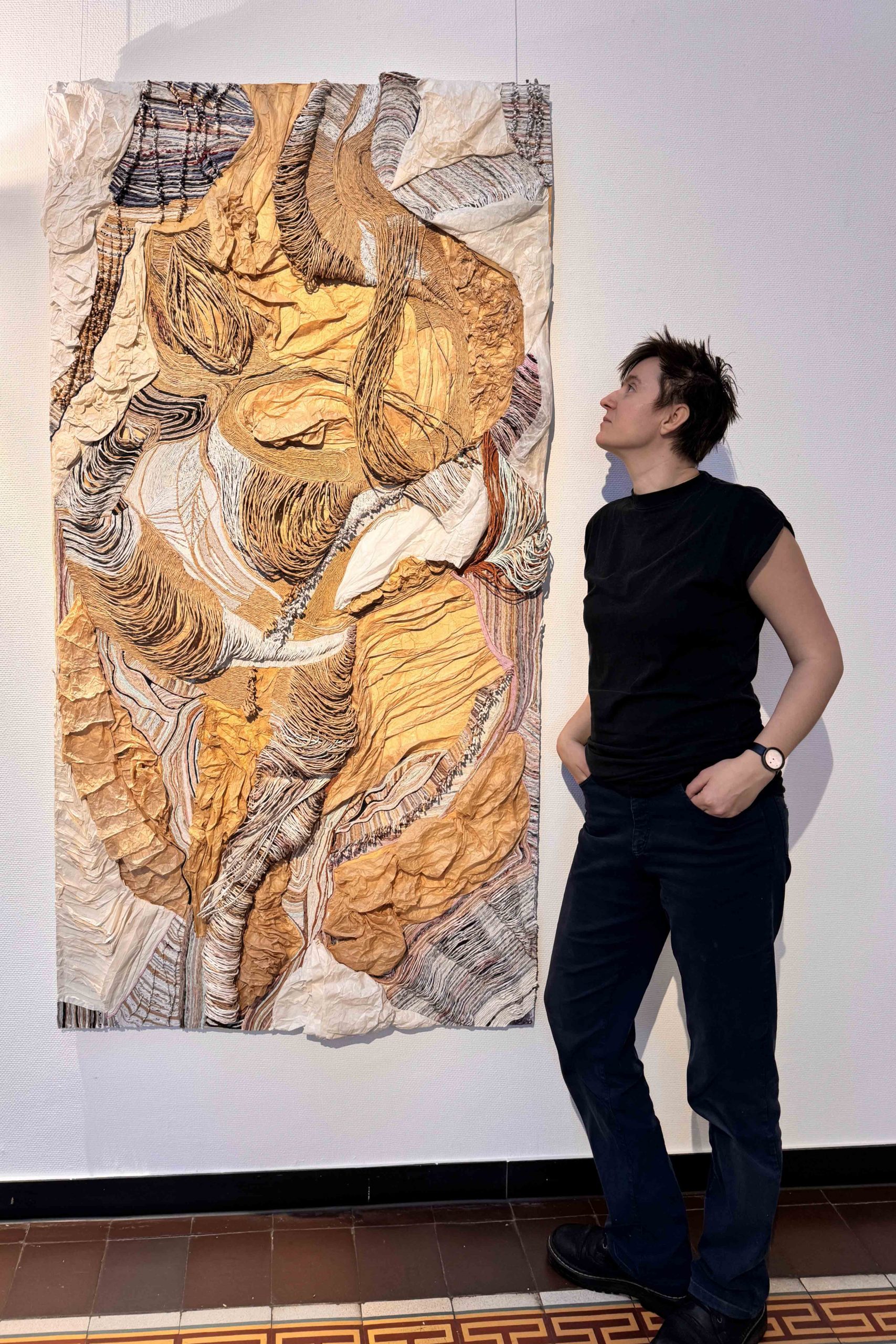
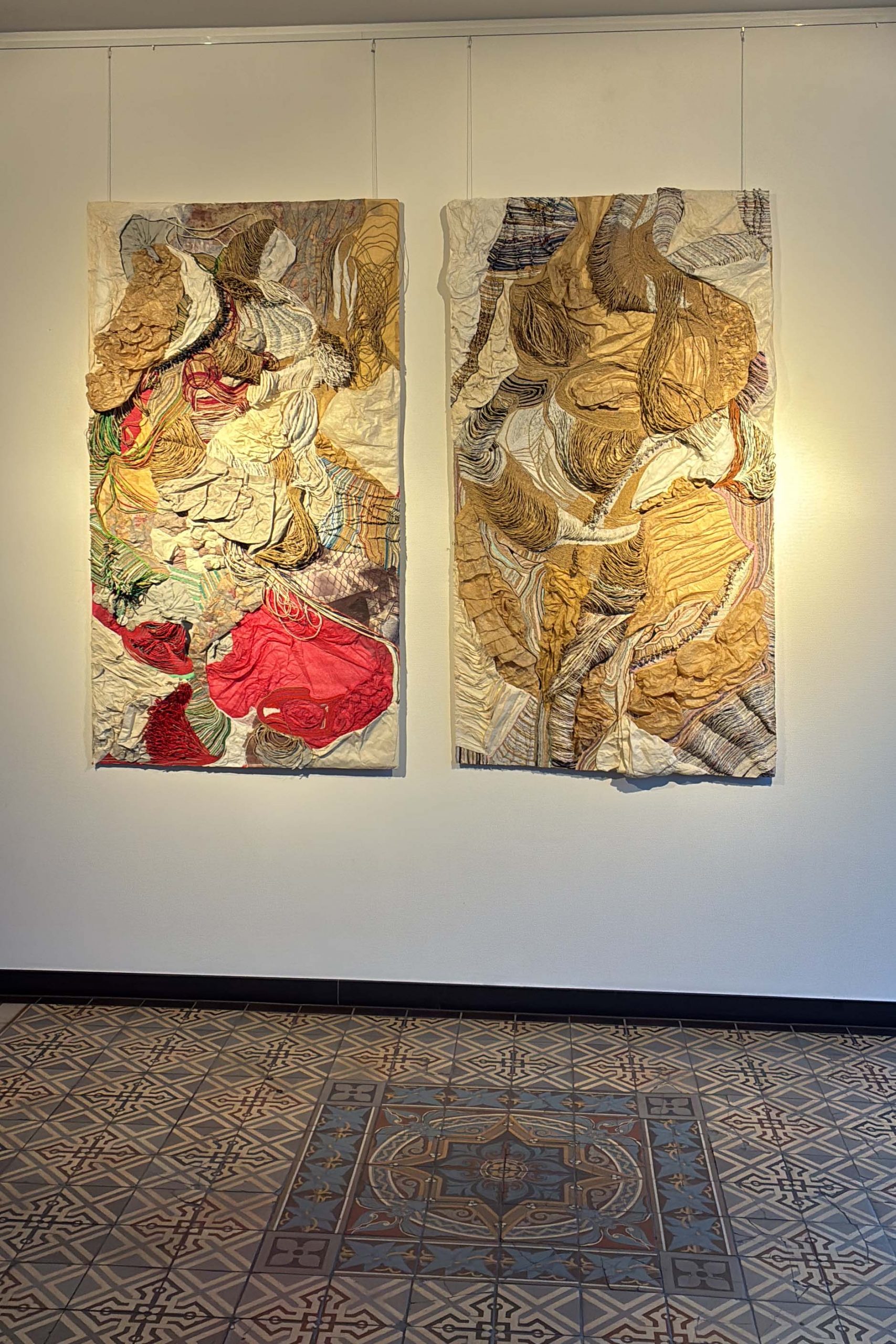
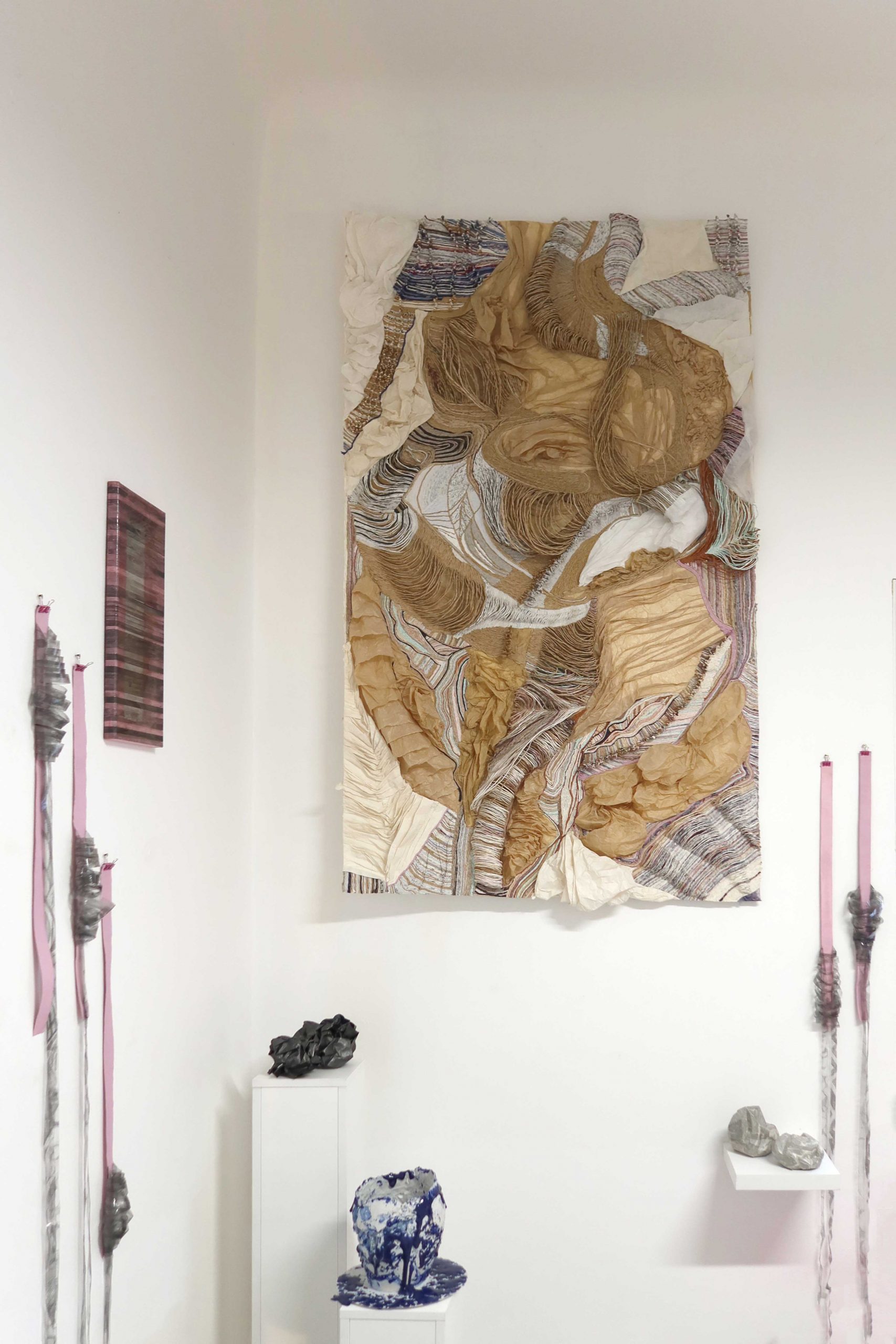
paper collage, 180 x 100 x 15 cm, 2020/2021
Be in touch
paper collage 2020/2021 180x100x15cm
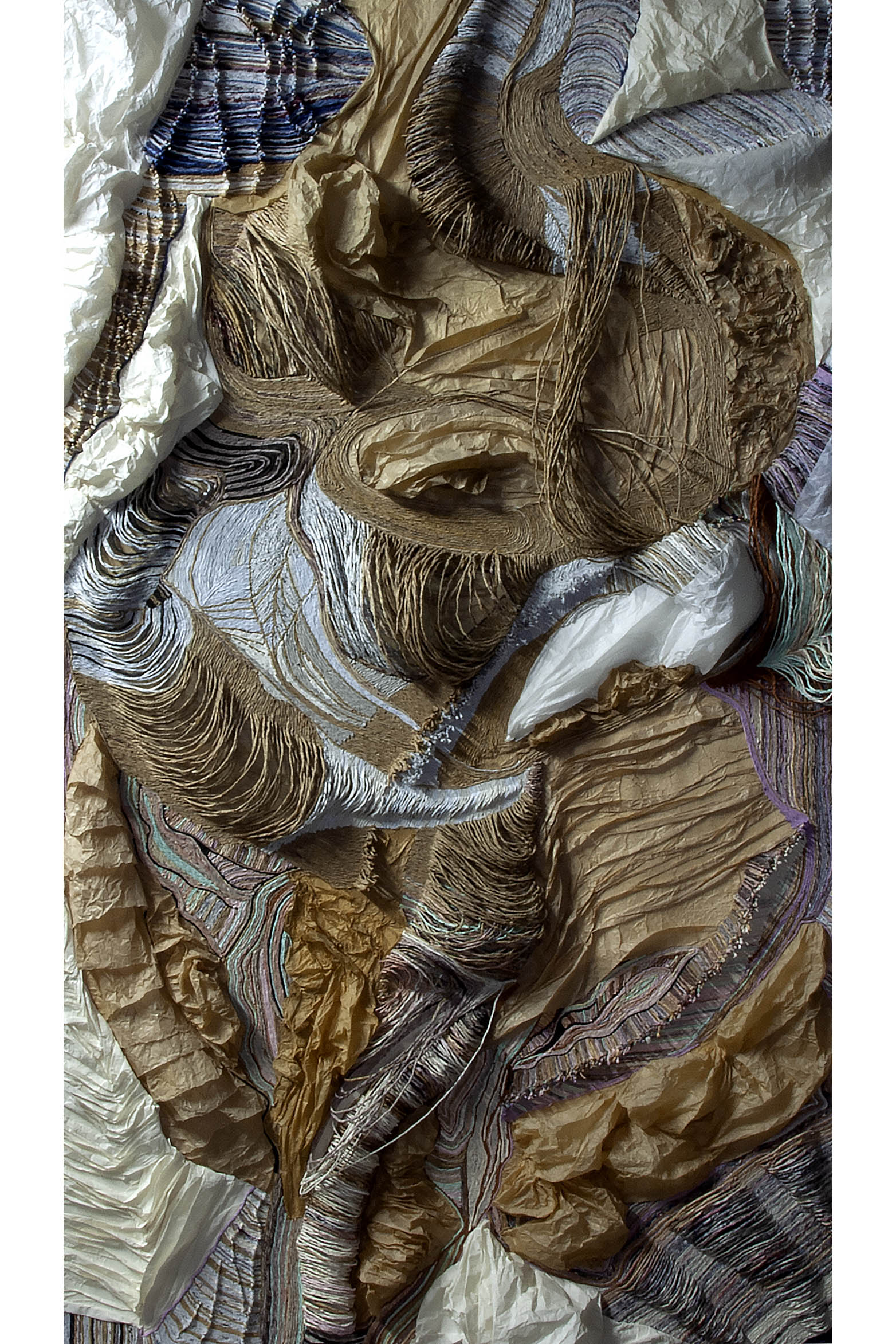
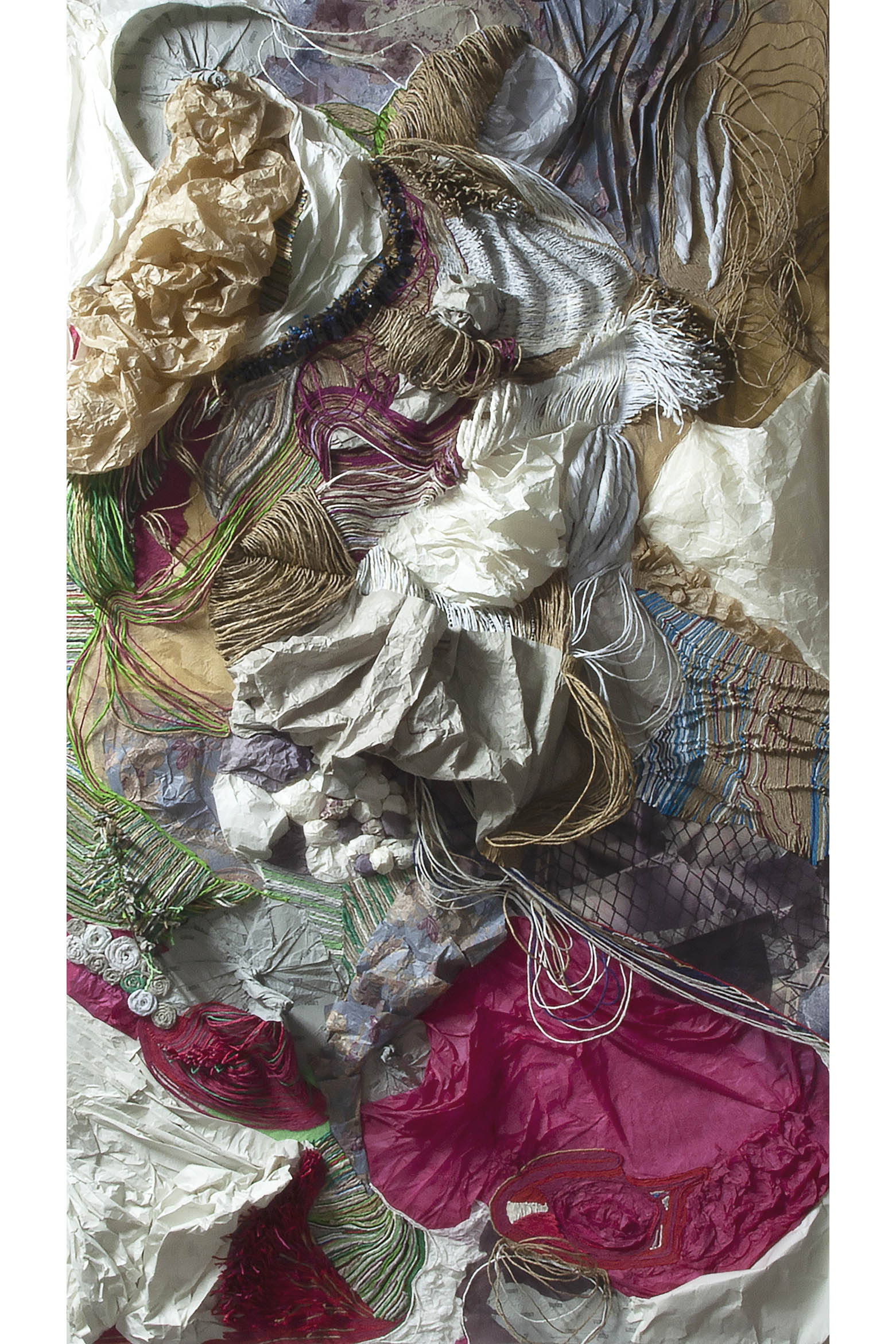
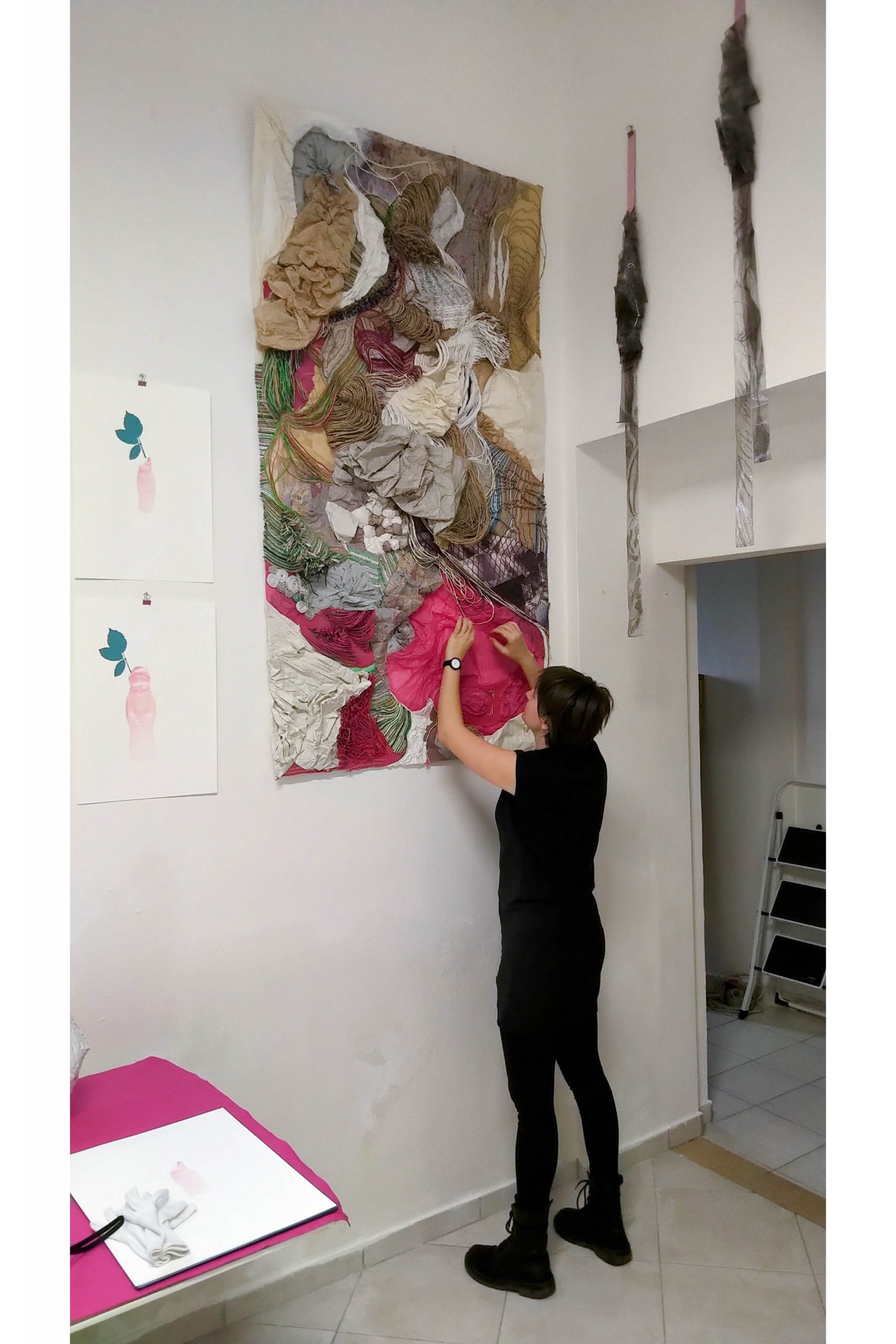
Transformation through wringing, wrinkling and crumpling is used in works called Be In Touch. Here, I have used the plasticity of silk paper to create clumps of different structures that are meant to not only visually but also haptically overload the viewer. The viewer shall be immersed in their own complexity.
Be in touch
papírová koláž, 180 x 100 x 15cm 2020/2021
Transformace skrz žmoulání, motání a krčení je dále použita v dílech Be In Touch. Zde jsem využila tvárnost jemného papíru k vytvoření chumlů různých struktur, které mají diváka nejenom vizuálně, ale také hapticky přetížit a tím ho pohltit do své vlastní komplexnosti.
Be in touch
Papier Collage 180 x 100 x 15cm 2020/2021
Die Transformation durch das Knittern, Zerknüllen und Wickeln ist weiter in Be In Touch verwendet. Hier habe ich die Transformationsmöglichkeiten des Seidenpapiers benutz, um Klumpen unterschiedlicher Strukturen zu schaffen. Diese sollen die Kunstinteressierten nicht nur visuell, sondern auch haptisch überfordern, damit sie in ihre eigene Komplexität verschlungen werden.
Space Between
paint, fabric, frames 2017/2018
How to finally reach the end of a dark corridor that we don't know where it goes?
Fear that we must necessarily overcome before opening a door leading to the unknown. Into fantasy, another dimension or existing reality, or will we return back to the starting point? And is it even possible to return when in life we turn into a different person with each experience?
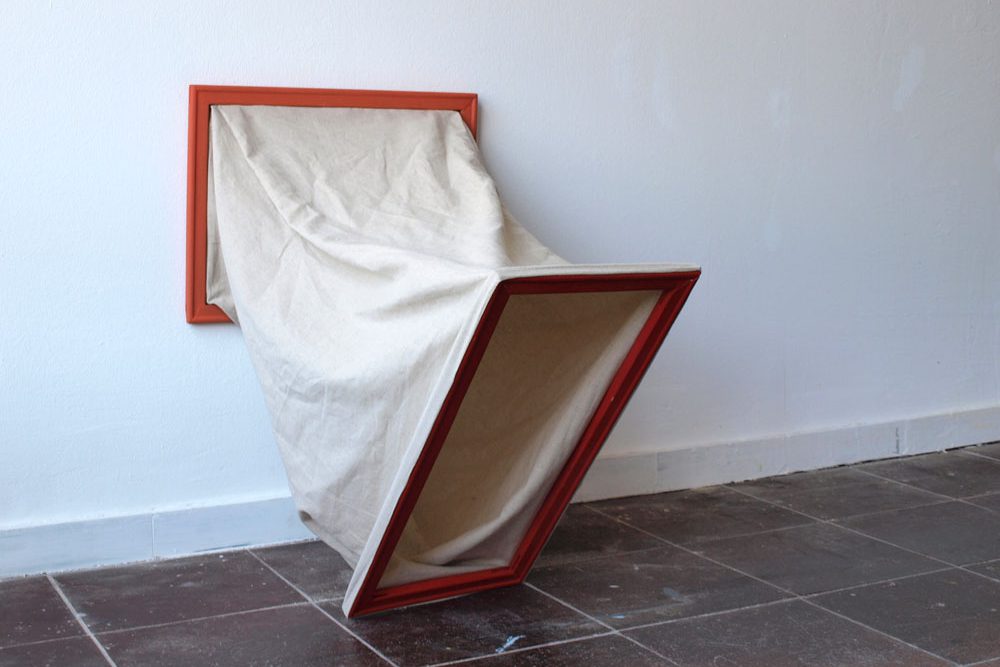
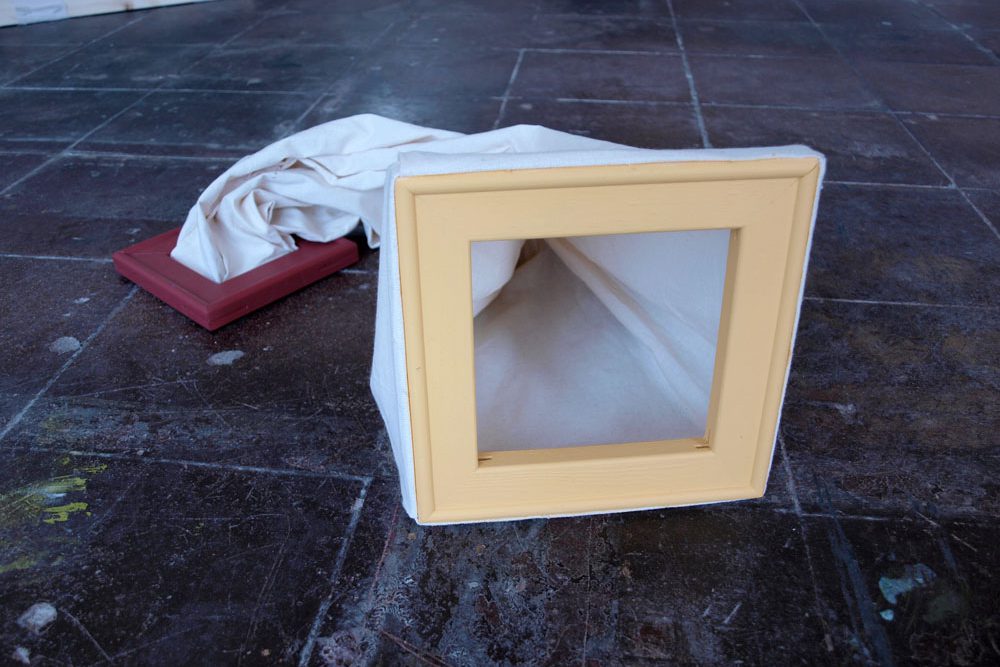
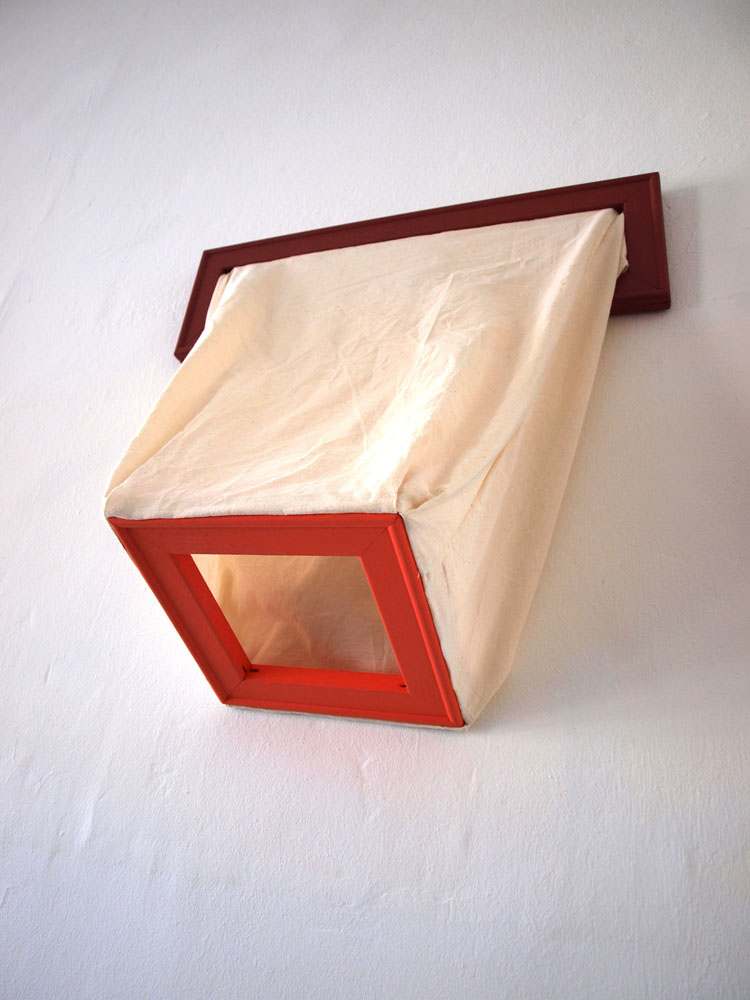
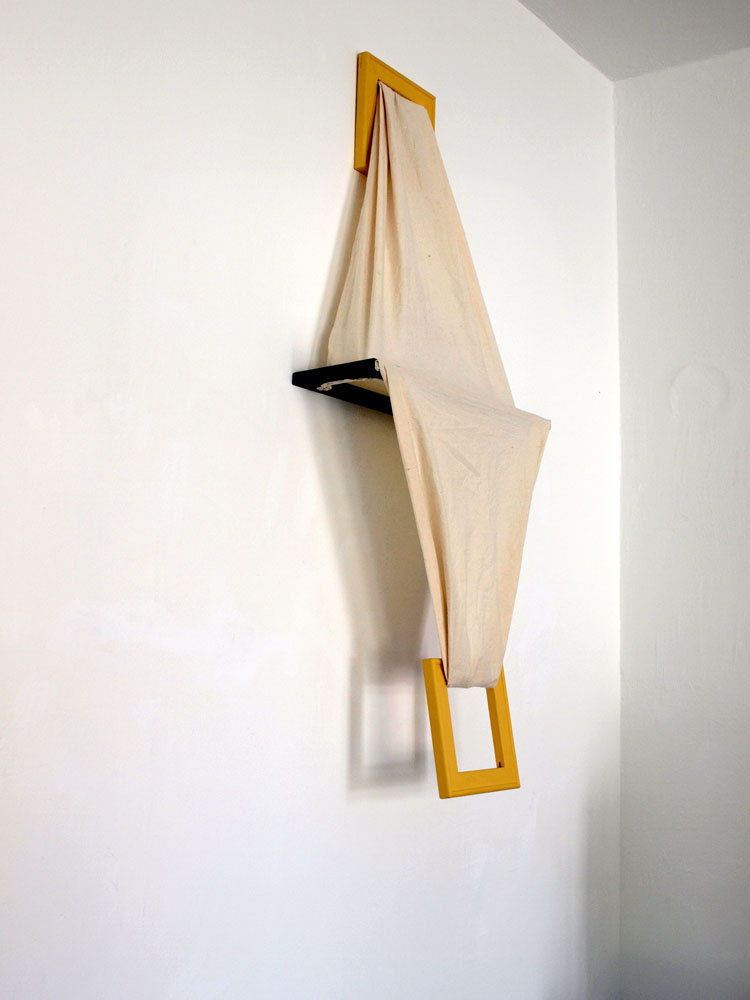
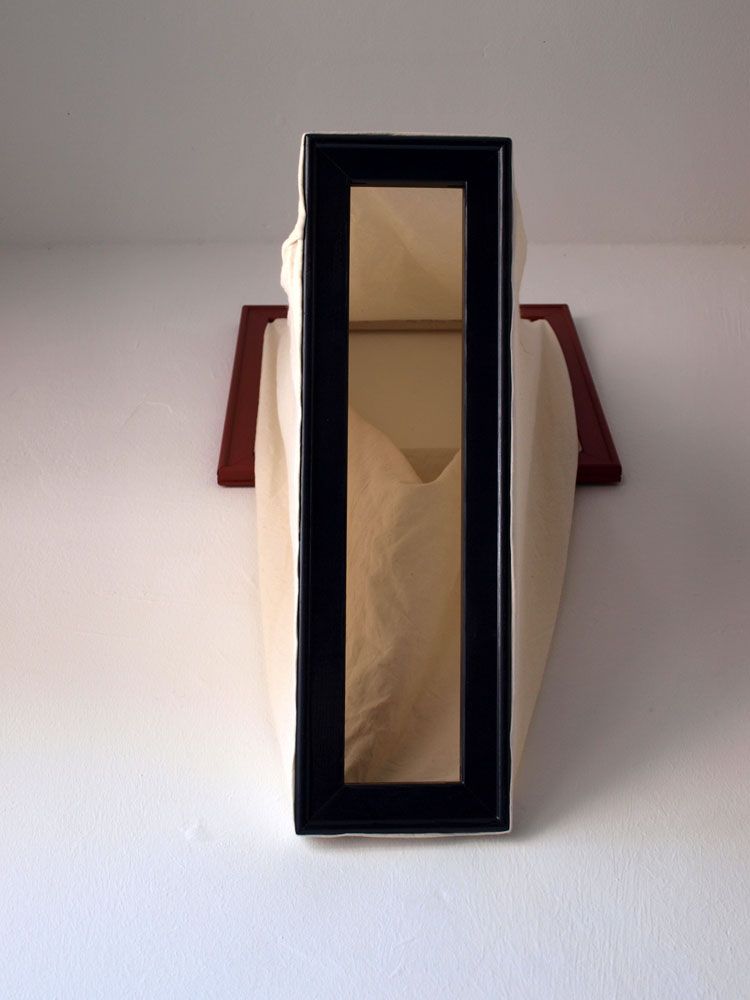
Artworks under the name “Space between” are based on a crawl tube, which is a typical piece of playground equipment. Black fabric attached to two rings on each end creating a tunnel to the unknown.
The tunnel could be narrow, curved, and if it got tangled up, also impassable. Even as a child, I was fascinated by exploring the world behind an imaginary wall or obstacle, which served as the primary inspiration for these works. For this reason, a combination of blind frames and canvas was chosen, but they were not used as is usual in painting. Here, the symbolic of a painting as a „window“ into another reality becomes figuratively real and thus takes on another physical dimension.
How can we explore new opportunities if we don’t dare go through the dark tunnel?
Místo mezi
barva, plátno, rámy 2017/2018
Jak zdárně dojít na konec temné chodby, o které nevíme, kam vede? Strach, který musíme překonat, něž otevřeme dveře neznámo kam. Do fantazie, jiného rozměru, do jiné existující reality nebo se navrátíme zpět do počátečního bodu? A je vůbec kam se vrátit, když s každou další životní zkušeností už dávno nejsme tím, kým jsme bývali?
Kolekce děl s názvem „Místo mezi“ vychází z mých vzpomínek na dětskou prolézačku. Dva velké kruhy spojené černou látkou tvořící tunel do neznáma. Tunel mohl být rovný i zakřivený. Pokud by se zamotal, tak i neprůchozí. Už jako dítě mě velmi fascinovalo zkoumat svět za pomyslnou zdí či překážkou, což sloužilo jako primární inspirace při vzniku těchto děl. Z toho důvodu byla zvolena kombinace napínacích rámů a malířského plátna, které ale nebyly použity tak, jako je tomu v malbě obvyklé. Přeneseně se zde symbolika malby jako „okna“ do jiné reality stává skutečnou a nabývá tak dalšího fyzického rozměru.
Jak můžeme prozkoumat nové možnosti, pokud se neodvážíme projít temným tunelem?
Space between
Farbe, Leinwand, Keilrahnen 2017/2018
Wie kann man das Ende eines dunklen Korridors erreichen, ohne zu wissen, wohin er führt? Angst, die man überwinden muss, bevor man die Tür ins Unbekannte aufmacht. In die Welt der Fantasie, in eine andere Dimension, eine nächste Realität, oder kehrt man in den Ausgangspunkt zurück? Und ist es wirklich möglich, zurückzukehren, wenn man mit jeder neuen Lebenserfahrung nicht mehr der ist, der man einmal war?
Die Kollektion „Space between“ basiert auf einer Kriechröhre, einem typischen Spielplatzgerät. Schwarzer Stoff, der an zwei Ringen an beiden Enden befestigt ist und einen Tunnel ins Unbekannte bildet.
Der Tunnel konnte gerade oder gekrümmt sein, und wenn er sich verknotete, auch unpassierbar. Seit meiner Kindheit hat mich fasziniert, die Welt hinter einer imaginären Wand oder einem Hindernis zu entdecken. Diese Faszination diente als Einbildungskraft für diese Kollektion. Aus diesem Grund wurde die Kombination von Keilrahmen und Leinwänden benutzt, ungewöhnlich für Malerei. Im übertragenen Sinne kommt hier die Symbolik der Malerei als „Fenster in eine andere Realität“ zum Ausdruck, mit dem Unterschied, dass das Fenster eine weitere physische Dimension hat.
Wie kann man neue Möglichkeiten entdecken, wenn man sich nicht traut, durch den dunklen Tunnel zu gehen?